
Disability lawyer specialization verification is the process of confirming an attorney's focus, experience, licensing, and ethical standing to ensure competent Social Security disability claim representation. Choosing the wrong attorney can cost you months of delays and a denied claim. The steps to verify a disability attorney's qualifications are specific and official. State bar directories, board certification records, and organizations like NOSSCR give you concrete tools to check lawyer specialization before you commit. This guide walks through each verification step so you hire someone with the right credentials, not just a general practice attorney who handles disability cases on the side.
How to identify if a lawyer specializes in Social Security disability law
A true disability specialist dedicates the majority of their practice to Social Security disability cases, not a fraction of it. The clearest indicator is the percentage of their caseload that involves SSDI and SSI matters. Ask directly: "What percentage of your practice is Social Security disability law?" Any answer below 50% signals a generalist, not a specialist.
Hearing experience is the second critical indicator. Experienced disability attorneys often maintain ALJ hearing win rates above 60%. That figure matters because Administrative Law Judge hearings are where most approved claims are won or lost. A lawyer who rarely appears before ALJs lacks the pattern recognition that comes from repeated exposure to how specific judges rule.
Two directories give you a reliable starting point to find verified specialists:
- NOSSCR (National Organization of Social Security Claimants' Representatives): The NOSSCR directory lists attorneys and representatives who have committed to Social Security disability practice. Membership is not a guarantee of quality, but it signals intentional focus on this area of law.
- State bar referral services: Most state bars maintain searchable directories that include practice area designations. Search for attorneys who list Social Security disability or administrative law as a primary area.
- Direct consultation questions: Ask how many ALJ hearings the attorney has handled in the past 12 months, what their approval rate is, and whether they personally attend hearings or delegate to staff.
Pro Tip: Ask for the attorney's NOSSCR membership number and verify it directly on the NOSSCR website. Membership is publicly searchable and takes under a minute to confirm.
How to check a lawyer's license and disciplinary history
Every licensed attorney in the United States must maintain an active status with their state bar. Checking a lawyer's license via official state bar directories takes less than 2 minutes and reveals both active status and any public disciplinary history. That two-minute check can prevent months of problems.
State bar lookup tools are free and publicly accessible. Go to your state bar's official website and search the attorney's full name or bar number. Look for these specific data points:
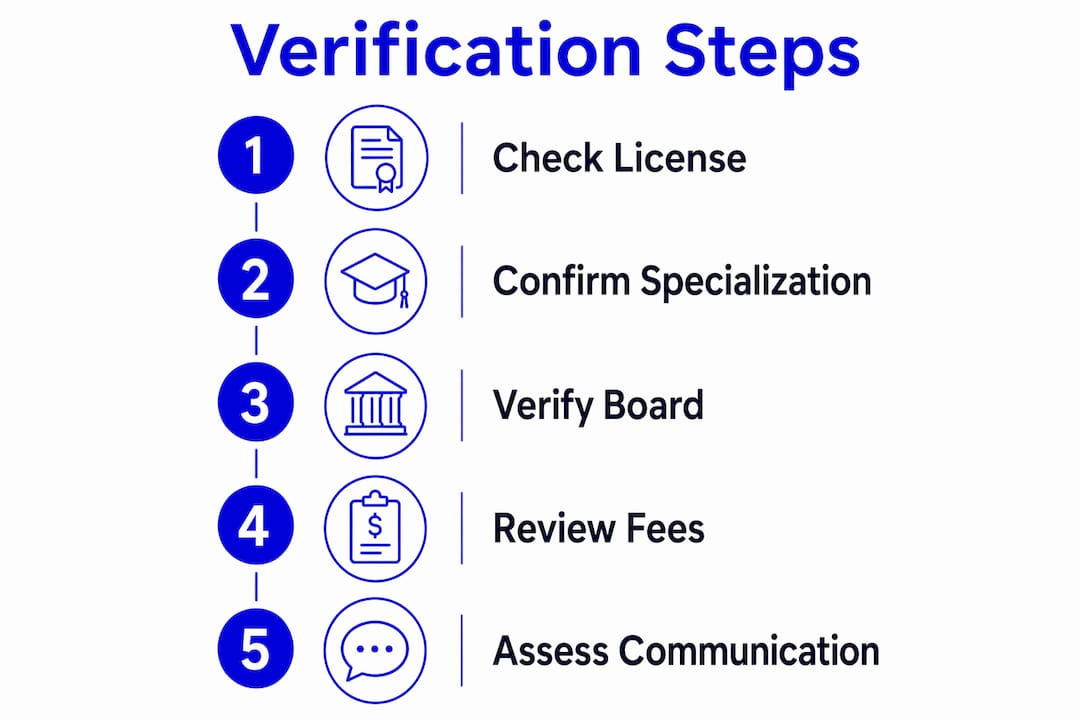
- License status: The record should read "active" or "eligible to practice." Any other status, including "inactive," "suspended," or "disbarred," means the attorney cannot legally represent you.
- Disciplinary history: Public records show formal complaints, reprimands, suspensions, and disbarments. One old reprimand may not disqualify an attorney, but a pattern of complaints is a clear warning sign.
- Admission date: A recent admission date combined with a claim of extensive disability experience is a contradiction worth questioning.
Federal practice authorization is a separate credential from state licensing. Being admitted to a state bar does not automatically authorize practice before the Social Security Administration or federal district courts. Confirm the attorney is specifically authorized for SSA administrative proceedings if your case may involve federal court appeals.
| Verification step | Where to check | What to confirm |
|---|---|---|
| State bar license status | State bar official website | "Active" or "eligible to practice" |
| Disciplinary history | State bar public records | No pattern of complaints or suspensions |
| Federal SSA authorization | Attorney directly or SSA records | Authorized to practice before SSA |
| NOSSCR membership | NOSSCR.org directory | Listed as a current member |
What does board certification mean for disability attorneys?
Board certification is one of the few objective ways to verify attorney expertise beyond self-claimed specialization. It requires an attorney to meet documented standards: a minimum number of years in practice, peer references from other attorneys and judges, continuing legal education in the specialty area, and often a written examination.
The National Board of Legal Specialty Certification (NBLSC) offers certification in Social Security disability law. Attorneys who hold this credential have been independently evaluated. That evaluation is the key distinction. A general attorney can call themselves a "disability specialist" on a website without any formal review. A board-certified attorney has passed external scrutiny.
To check for board certification status:
- Visit the NBLSC website and search the attorney's name in the certification directory.
- Ask the attorney directly whether they hold board certification and in which specialty.
- Request the certifying organization's name so you can verify independently.
The absence of board certification does not disqualify an attorney. Many skilled disability lawyers are not board-certified. The presence of certification, however, adds a layer of verified credibility that self-claimed specialization cannot match. Treat it as a positive signal, not a mandatory requirement.
How to evaluate fee structures and communication practices
Legitimate disability attorneys work on contingency. Social Security disability lawyers charge 25% of backpay, capped at $7,200 in 2025, with no upfront fees and no charge if the case is lost. That fee structure is federally regulated. Any attorney who deviates from it significantly warrants scrutiny.
Red flags in fee discussions are direct indicators of a problem:
- Upfront payment requests: No legitimate disability attorney requires payment before winning your case. Any request for a retainer or upfront fee is a warning sign.
- Guaranteed win promises: Reputable disability lawyers give realistic assessments, not guarantees. Outcomes depend on medical evidence and ALJ discretion. A guarantee is a sales tactic, not a legal reality.
- Vague fee explanations: If the attorney cannot clearly explain how their fee is calculated or what the federal cap is, that is a sign of inexperience or dishonesty.
Communication practices reveal how the attorney manages cases day to day. Most disability clients communicate primarily with paralegals rather than the attorney directly. That is normal and efficient. The critical question is who personally attends your ALJ hearing. Ask explicitly: "Will you personally appear at my hearing, or will a staff member represent me?" The answer shapes your entire case outcome.
Pro Tip: Request a written fee agreement before signing anything. The agreement should state the contingency percentage, the federal cap amount, and who attends your hearing. A legitimate attorney provides this without hesitation.
Common mistakes when verifying a disability attorney's qualifications
Claimants make predictable errors when checking lawyer specialization. Recognizing these mistakes in advance saves time and protects your claim.
- Assuming any licensed attorney qualifies. State bar admission covers all areas of law. A licensed attorney with no disability experience is not a disability specialist. Verify practice focus separately from license status.
- Skipping federal practice authorization. State licensing and federal authorization are different credentials. If your case reaches federal court, your attorney must be separately admitted to practice there.
- Not confirming who attends hearings. Some firms assign cases to junior attorneys or non-attorney representatives for ALJ hearings. Confirm the specific person who will appear with you before you sign a representation agreement.
- Failing to cross-check contact information. Verify that the attorney's phone number, address, and bar number match official state bar records. Discrepancies can indicate a fraudulent listing.
- Waiting too long to hire. The Social Security appeals process has strict deadlines. Missing a 60-day appeal window can end your claim permanently. Hire a qualified attorney as early as possible, ideally before your initial application is denied.
"The best time to verify a disability attorney's credentials is before your first consultation, not after you've signed a representation agreement. Verification takes minutes. Undoing a bad hire takes months."
Key Takeaways
Verifying a disability lawyer's specialization requires checking practice focus, license status, board certification, fee structure, and hearing attendance before signing any agreement.
| Point | Details |
|---|---|
| Confirm practice focus | Ask what percentage of the attorney's caseload is SSDI and SSI matters. |
| Check state bar records | Use the official state bar directory to confirm active license and clean disciplinary history. |
| Verify federal authorization | State bar admission does not cover SSA or federal court practice; confirm separately. |
| Evaluate fee structure | Legitimate attorneys charge 25% of backpay, capped at $7,200, with no upfront fees. |
| Ask who attends hearings | Confirm the attorney personally appears at your ALJ hearing, not a staff substitute. |
Why verification is the step most claimants skip
I have reviewed hundreds of disability cases over the years, and the pattern is consistent. Claimants who lose at the ALJ hearing level often hired the first attorney who returned their call. They checked nothing. They asked no pointed questions. They assumed a law license meant disability expertise.
The uncomfortable truth is that specialization drastically improves success odds. An attorney who appears before ALJs weekly knows which medical records matter, how to frame residual functional capacity arguments, and how specific judges respond to certain evidence. A generalist does not have that knowledge base, regardless of how confident they sound in a consultation.
Empathy matters too. An attorney who communicates clearly, sets realistic expectations, and keeps you informed throughout the process reduces the stress of an already difficult situation. But empathy without verified credentials is not enough. You need both. The verification steps in this article take less than an hour total. That hour protects months of your time and your access to benefits you may genuinely need.
Use official tools. Ask pointed questions. Do not accept vague answers about experience or fees. The attorneys who resist specific questions about their credentials are telling you something important.
— Gerard
Ssdilawyer connects you with verified disability specialists
Ssdilawyer exists specifically to address the verification problem. Finding a qualified disability attorney on your own requires checking multiple directories, asking the right questions, and knowing what red flags to look for.
Ssdilawyer's platform connects claimants with experienced disability attorneys who focus on SSDI and SSI cases, work on federally regulated contingency fees, and are prepared to represent you at ALJ hearings. The attorneys in the network have been screened for practice focus and licensing status. You can also use Ssdilawyer's resources to understand your representation options before making any commitment. No upfront cost. No obligation to hire.
FAQ
What does it mean to verify a disability lawyer's specialization?
Verification means confirming that an attorney focuses primarily on Social Security disability law, holds an active state bar license, has no significant disciplinary history, and is authorized to practice before the SSA. It goes beyond checking a website bio.
How do I check if a disability attorney is licensed?
Visit your state bar's official website and search the attorney's name or bar number. The record shows license status, admission date, and any public disciplinary actions. The process takes under 2 minutes.
What is NOSSCR and why does it matter?
NOSSCR is the National Organization of Social Security Claimants' Representatives. Its member directory lists attorneys committed to Social Security disability practice, making it a reliable starting point to find verified specialists.
What fee should a disability lawyer charge?
Disability attorneys charge 25% of backpay, capped at $7,200, with no upfront fees. This structure is federally regulated. Any attorney requesting payment before winning your case is a red flag.
Does board certification matter when choosing a disability attorney?
Board certification demonstrates independently verified expertise in Social Security disability law. It is not mandatory, but it confirms that the attorney has met documented standards beyond basic licensing.