
Yes, chronic migraine can qualify you for Social Security Disability Insurance, but only when three conditions line up: your migraines keep you from earning above the Substantial Gainful Activity threshold, the impairment has lasted or will last at least 12 months, and your medical file contains objective evidence tied to a residual functional capacity that rules out full-time work. Start a daily migraine journal now, and ask your treating clinician to document your limits in terms the Social Security Administration recognizes.
TL;DR:
- Claimants must demonstrate their migraines prevent earning above the SGA limit of $1,620 per month in 2025 and have an illness lasting or expected to last at least 12 months.
- Strong medical documentation, including neurologist records, imaging, and neuropsychological testing, is essential to establish objective evidence and functional limitations recognized by SSA.
- Building a detailed headache journal and including clear, work-related language from clinicians improves case strength and reduces risk of early denial.
- Claimants should prepare comprehensive work histories, medical records timelines, and employer statements to support consistency and credibility of their disability claim.
- Legal representation can significantly increase the likelihood of success, especially with complex or denied cases, by optimizing evidence collection and navigating appeals.
Table of Contents
- How the SSA Evaluates Chronic Migraine Disability Claims
- SGA Limits, the 12-Month Rule, and Your Timeline
- Medical Evidence Checklist for a Chronic Migraine Disability Claim
- Filing Your Claim Without Triggering an Early Denial
- When a Denial Isn't the End of the Road
- Living With Chronic Migraine While Fighting for SSDI
- How Ssdilawyer Connects You With SSDI Attorneys Who Know Migraine Cases
- Where to Verify These Rules Yourself
- Sources
- FAQ
How the SSA Evaluates Chronic Migraine Disability Claims
Chronic migraine has no dedicated listing in the SSA's Blue Book, so examiners lean on SSR 19-4p, the ruling that governs primary headache disorders. It requires a medically determinable impairment, meaning a licensed provider documents your diagnosis using accepted clinical methods, not just your reported pain levels.
From there, the SSA checks two paths. First, does your migraine pattern equal the severity of a listed neurological condition, often compared against epilepsy criteria because both involve unpredictable, disabling episodes? Second, if it doesn't meet that bar, examiners build a residual functional capacity assessment instead.
That RFC becomes the deciding document in most migraine cases. Reviewers combine:
- Headache frequency and duration alongside any comorbid conditions
- Cognitive effects during and between attacks
- Medication side effects that limit sustained attention or stamina
- How all these factors interact when work demands are layered on top
SGA Limits, the 12-Month Rule, and Your Timeline
Two thresholds decide whether you even reach a medical review. The first is earnings. In 2025, the SSA set the monthly Substantial Gainful Activity limit at $1,620 for non-blind applicants — earn consistently above that and your claim gets denied on technical grounds before a medical examiner even opens your file. This figure adjusts annually, so check the current SGA threshold before you apply.
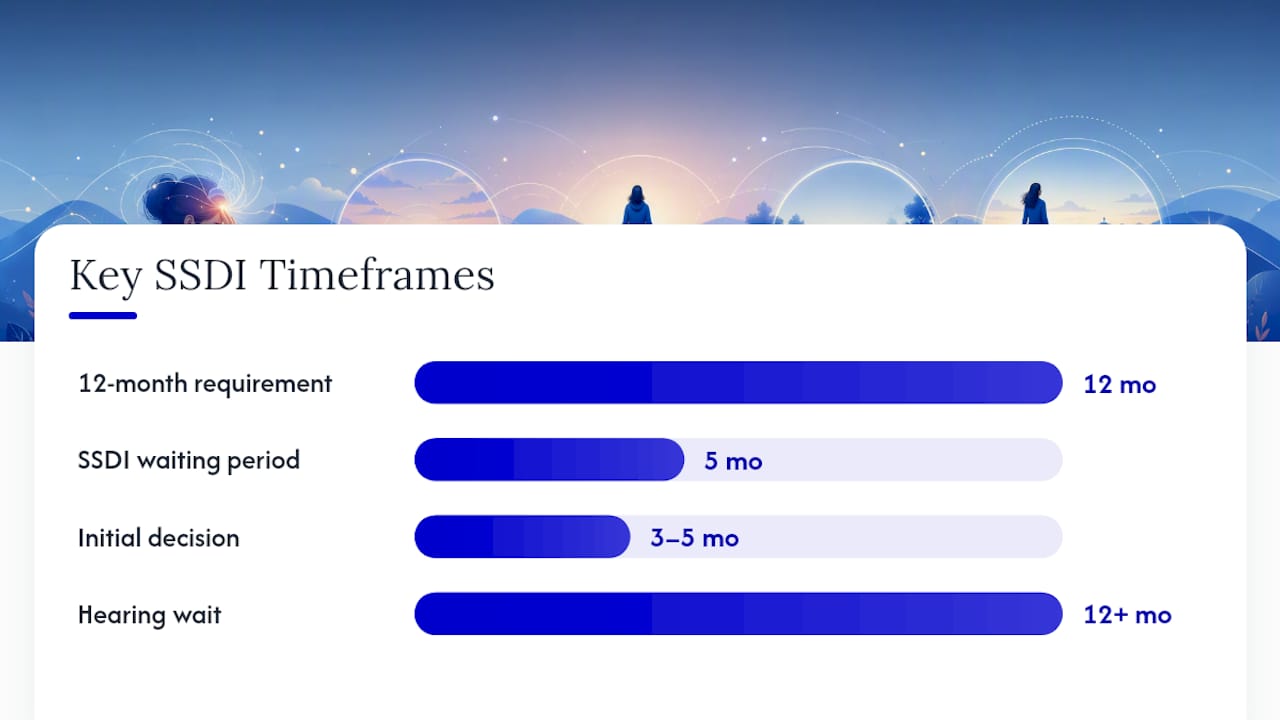
The second hurdle is duration. Your migraine disorder must have lasted, or be expected to last, 12 continuous months. Establishing an onset date matters here: your neurologist's records should show when frequency and severity crossed into disabling territory, not just when you were first diagnosed.
Once approved, a five-month waiting period applies before SSDI payments begin, and:
- Initial decisions typically take three to five months
- Reconsideration adds another few months if denied
- A hearing before an administrative law judge can take a year or longer in many jurisdictions
Medical Evidence Checklist for a Chronic Migraine Disability Claim
Weak documentation sinks more migraine claims than weak facts do. Build your file with these priorities:
- Neurology records spanning at least six to twelve months, showing consistent diagnosis and treatment adjustments.
- Emergency room and urgent care visits, which corroborate severity better than outpatient notes alone.
- A full medication trial history, including preventive drugs, abortive treatments, Botox injections, and CGRP inhibitor trials, along with why each failed or fell short.
- Imaging studies (MRI or CT) that rule out secondary causes, which the SSA often expects before accepting a primary headache diagnosis.
- Headache-day counts of 15 or more per month, paired with MIDAS or HIT-6 questionnaire scores that quantify functional impact.
- Cognitive or neuropsychological testing, especially valuable given that more than half of chronic migraine patients show measurable interictal cognitive impairment in attention, memory, or processing speed.
The language your clinician uses matters as much as the data itself. A note stating "patient reports headaches" carries far less weight than one stating "patient cannot tolerate fluorescent lighting for a full shift" or "unpredictable absenteeism averaging six days monthly."
Pro Tip: Ask your neurologist directly to include phrases that map to work limitations, like tolerance for light and noise, ability to sustain concentration, and expected monthly absences. Vague sympathy notes rarely survive SSA review.
Filing Your Claim Without Triggering an Early Denial
You can apply online through the SSA, by phone, or at a local field office. Whichever channel you choose, prepare these before you start:
- A complete work history covering the last 15 years, including job titles and physical or cognitive demands
- A medical records timeline listing every provider, visit date, and treatment change
- Your migraine journal, showing frequency, duration, triggers, and functional impact day by day
- Statements from employers or supervisors describing missed work or accommodation attempts
Avoid submitting a claim built only on your own symptom descriptions. Examiners weigh treating-source statements far more heavily, and if your file is thin, the SSA may schedule a consultative exam. Don't skip it. Refusing or missing that appointment is one of the fastest ways a migraine disability for benefits claim gets denied outright. Reviewing the two-test framework SSDI uses before you file helps you spot gaps in your own file early.
When a Denial Isn't the End of the Road
Most migraine claims face at least one denial before approval, often because the initial file lacked objective findings or a clear functional-limitations statement. The appeals ladder runs in a fixed order:
- Reconsideration, where a different examiner reviews your existing file plus any new evidence you add.
- A hearing before an administrative law judge, where testimony, updated medical records, and vocational expert input carry real weight.
- Appeals Council review, reserved for cases involving a legal or procedural error.
- Federal court, the final option for exhausted administrative appeals.
This is the stage where legal representation tends to matter most. Attorneys who handle SSDI cases know how to request targeted consultative exams, translate clinical notes into RFC-ready language, and prepare claimants for the specific questions an ALJ asks about daily functioning. Reviewing examples of successful SSDI appeals shows how much a well-developed medical file changes outcomes at the hearing stage.
Living With Chronic Migraine While Fighting for SSDI
Chronic migraine disability claims move slowly, and that mismatch between how you feel day to day and how long the system takes is its own kind of exhausting. What separates approved claims from denied ones usually isn't the severity of the pain. It's the consistency of the paperwork behind it.
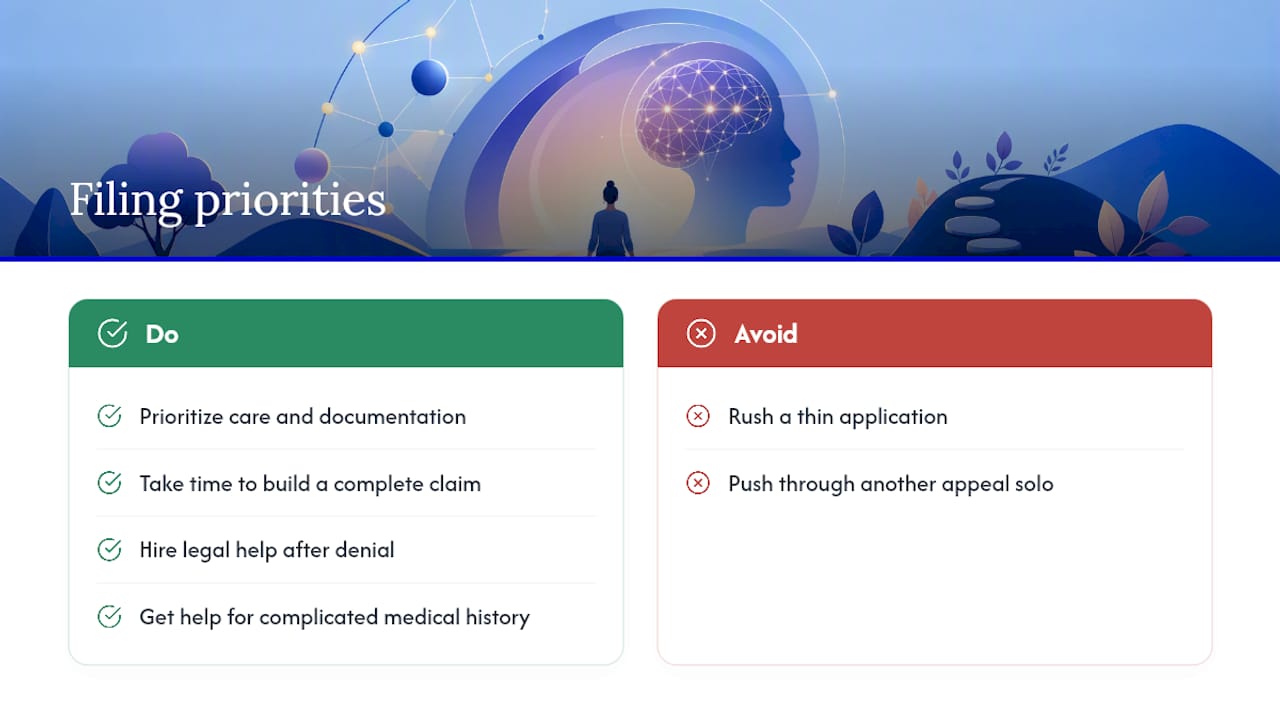
Prioritize your care and your documentation over speed. A rushed, thin application almost always comes back denied, costing you more time than a properly built one would have. If you've already been denied once, or your medical history feels too complicated to organize alone, that's the moment to bring in legal help rather than push through another appeal solo.
How Ssdilawyer Connects You With SSDI Attorneys Who Know Migraine Cases
A matching service can connect claimants dealing with chronic migraine disability to attorneys familiar with SSR 19-4p and building an RFC that reflects real functional limits.
Matching claimants with attorneys can be particularly helpful in situations such as multiple denials without clear evidence gaps, upcoming ALJ hearings without representation, or when medical records are extensive and not well coordinated among specialists. During intake, you describe your diagnosis history, treatment attempts, and work limitations, and you can be connected with an attorney experienced in migraine-based claims for a case review. If you're heading into a hearing or facing a denial you don't understand, start your case review at Ssdilawyer before your appeal deadline passes.
Where to Verify These Rules Yourself
For policy questions, go straight to the source rather than secondhand summaries:
- SSR 19-4p for how the SSA defines and evaluates primary headache disorders
- The SSA Blue Book adult listings for how the sequential evaluation process works
- The SSA Red Book for current SGA figures and work incentive rules
- The CaMEO Study for peer-reviewed data on how chronic migraine affects careers and finances
Use SSA sources for anything procedural or legal, and clinical studies like CaMEO when you need language describing the real-world burden of chronic migraine.
This article is general information, not a substitute for advice from a qualified doctor. Consult a qualified healthcare professional about your own circumstances before acting on anything here.
Sources
- Social Security Administration Red Book — new for 2025
- SSR 19-4p — Social Security Ruling: primary headache disorders
- Life With Migraine: Effects on Relationships, Career, and Finances From the CaMEO Study
- Neuropsychological deficits in chronic migraine patients
FAQ
How Hard Is It to Get Disability for Chronic Migraines?
It's harder than for conditions with a dedicated Blue Book listing, since migraine claims rely on RFC development under SSR 19-4p rather than a straightforward checklist. Claims with detailed neurologist records, headache-day counts, and documented functional limits succeed far more often than those relying on symptom reports alone.
Is Migraine a Chronic Illness?
Migraine becomes chronic when a person experiences 15 or more headache days per month for at least three months, with at least eight of those days showing migraine features. This distinction matters for SSDI because chronic migraine carries documented higher disability and financial burden than episodic migraine, according to the CaMEO Study.
Can I Get 100% Disability for Migraines?
SSDI doesn't use a percentage rating system like VA disability does. Instead, the SSA determines whether you can perform any substantial gainful activity at all, meaning your claim is either approved or denied based on your full medical and vocational picture.
Can I Claim Disability for Chronic Migraines?
Yes, if you meet the SGA earnings limit, currently $1,620 monthly for non-blind applicants in 2025, and can show the condition has lasted or will last 12 months with supporting medical evidence. Working with an attorney matched through Ssdilawyer can help you build the documentation SSA examiners expect to see.