File your written hearing request within 60 days after receiving the prior notice. The Social Security Administration presumes you received it five days after the date on the notice. Submit or identify every piece of written evidence at least five business days before the hearing to avoid exclusion. Contact a representative early so records and deadlines get handled correctly.
TL;DR:
- Social Security presumes receipt five days after the notice date; if you file late, explain the delay in writing and request an extension for good cause.
- Social Security usually sends hearing notices at least 75 days ahead; waiving that advance notice can speed scheduling, but the evidence deadline remains unchanged.
- Hearings may take place in person, by phone, or by video; testimony is recorded under oath, and an expert may address medical or work questions.
- Hearing loss claims rely on audiometric and word recognition tests that meet the specific criteria in Blue Book listings 2.10 and 2.11, not diagnosis alone.
- Request records as soon as the hearing is scheduled, keep dated proof of every request, and identify missing records in writing before the deadline.
Table of Contents
- How to request a hearing and the deadlines you cannot miss
- What happens at the hearing and who will be there
- Gathering and submitting evidence: meeting the five-business-day rule
- Preparing your testimony and sample questions to practice
- Representation: optional status, fee types, and how to choose a representative
- Accommodations and communication access: requesting interpreters and other supports
- Practical checklist and timeline you can follow from notice to decision
- Author perspective from SSDILawyer.co on preparing hearing-ready records
- How SSDILawyer.co can connect you with experienced disability attorneys and free resources
- FAQ
- Sources
How to request a hearing and the deadlines you cannot miss
A hearing request can go in several accepted ways: through Form HA-501, through online filing, or by letter to the field office or hearing office listed on your notice. Each method starts the same clock.
The 60-day filing rule runs from when you receive your reconsideration notice. Social Security presumes you received it five days after the date on the notice. Miss the window and an administrative law judge can still accept the request, but you generally need to explain the delay and ask for an extension for good cause.
Social Security usually sends the hearing notice at least 75 days before the scheduled date. You can waive that advance notice using Form HA-510 if you want a faster hearing date, though the five-business-day evidence deadline still applies regardless of the waiver.
A few practical points worth tracking:
- Your hearing office's contact information appears on the notice itself; keep it for every follow-up call or filing.
- When a deadline lands on a weekend or federal holiday, the filing date generally shifts to the next business day.
- Extension requests should state the reason in writing and go in as soon as you realize you are late.
For more on protecting your appeal window, see our guide on filing within 60 days and building the record.
What happens at the hearing and who will be there
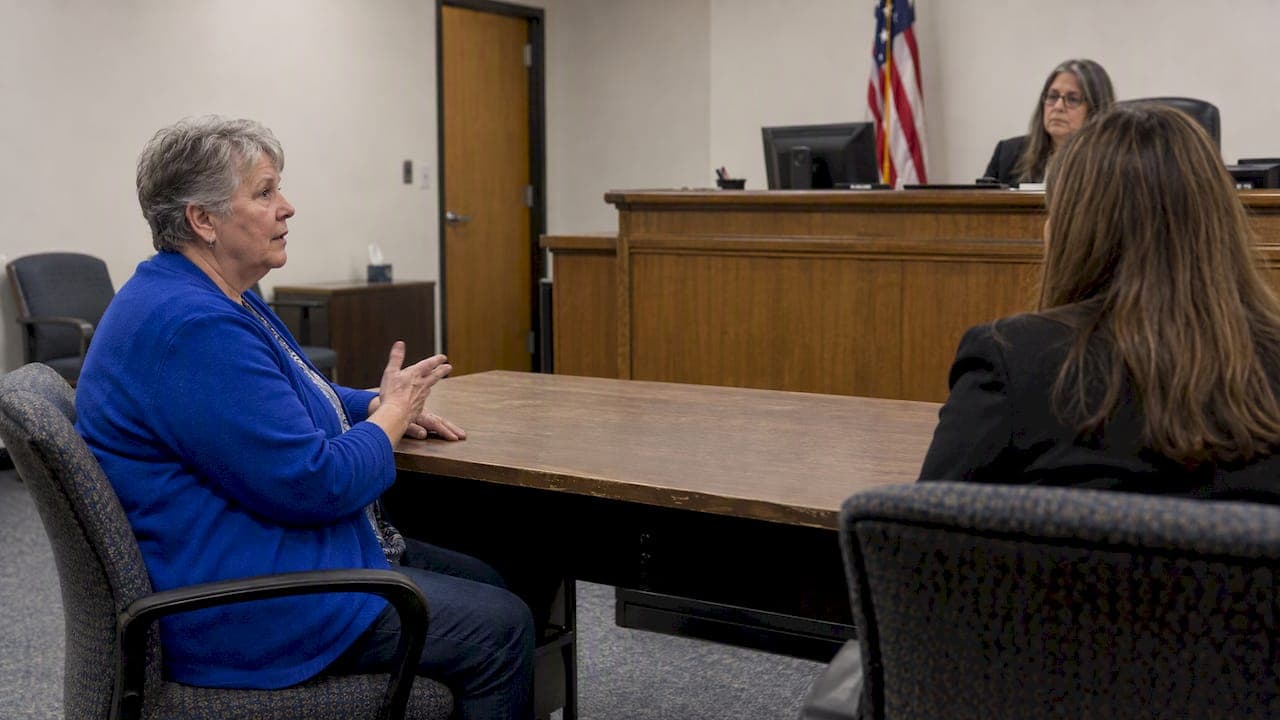
A disability hearing is informal compared to a courtroom, but it is recorded and testimony is given under oath or affirmation. The administrative law judge explains the issues in your case, asks questions, and bases the decision on your medical record and the rules that apply to your claim.
Participants vary by case, but commonly include:
- The claimant, who answers questions about medical history and daily functioning.
- A representative, if one has been hired, who may question witnesses and raise legal arguments.
- A medical or vocational expert, called to address specific medical or work-related questions.
- Witnesses, such as a family member or former coworker, who can describe functional limitations firsthand.
Hearings can happen in person, by phone, or by video, and your notice will specify the format along with what documents or identification to bring. If you need to adjourn or you realize you will miss the hearing, call the hearing office immediately and follow up with a written explanation. For a closer look at the format itself, read our explainer on what an ALJ hearing actually involves.
Gathering and submitting evidence: meeting the five-business-day rule
Hearing-ready evidence usually includes medical and psychiatric records, treatment notes, medication lists, and statements from employers or people who know your daily routine. For hearing-related claims, this also means audiometric and word-recognition testing that matches the criteria in SSA's Blue Book listings 2.10 and 2.11, including the one-year disabled period Listing 2.11 allows after cochlear implantation.

Social Security requires claimants to submit or identify all written evidence no later than five business days before the hearing. Evidence submitted after that point can be excluded unless a recognized exception applies, so treat the deadline as firm rather than a guideline.
A workable process looks like this:
- Request records from every treating provider as soon as the hearing is scheduled, not the week before.
- Keep dated proof of each request, whether that is a sent email, a certified mail receipt, or a fax confirmation.
- Follow up with providers who have not responded after a reasonable interval.
- If a provider still will not release records, ask the hearing office about options for obtaining them.
- Identify any outstanding records to the hearing office in writing before the five-day deadline, even if the records themselves have not arrived yet.
HALLEX guidance shapes how an administrative law judge handles late evidence and extension requests, so documenting every attempt gives your representative something concrete to point to if a record arrives late.
Pro Tip: Keep a simple log with the date of each records request, the provider's name, and how you sent it. That log becomes your proof if anything is missing on hearing day.
Preparing your testimony and sample questions to practice
A concise timeline of symptoms, treatments, work attempts, and functional limits does more for your hearing than a stack of medical jargon. Judges are listening for how your condition plays out day to day, not just a diagnosis.
For hearing-related claims, concrete examples carry weight:
- Difficulty following conversations in groups or noisy settings.
- Needing instructions repeated, especially over the phone.
- Being unable to safely operate machinery that requires auditory alerts.
Administrative law judges commonly ask about treatment dates, current medications, work history, a typical day's activities, and how symptoms vary. Practicing short, factual answers to these beats memorizing a script.
Lay witnesses and treating providers can reinforce your testimony if you coordinate with them beforehand: ask them to focus on specific examples of what they have observed rather than general impressions, and confirm any written statements are dated and signed.
Pro Tip: Practice answering "what does a bad day look like" out loud. It is one of the most common questions and the hardest to answer well without preparation.
Representation: optional status, fee types, and how to choose a representative
Representation at a disability hearing is optional, but it changes how much of the preparation work falls on you. Some organizations provide free or low-cost legal help, and many representatives work on a contingent-fee basis, collecting a fee only if your claim is approved.
A representative typically reviews your file, gathers outstanding records, questions witnesses and experts at the hearing, and files any follow-up paperwork the judge requests. That work overlaps heavily with the deadlines already covered here, which is part of why claimants often bring one in early rather than at the last minute.
You can look for representation through your hearing office's referral list, local legal aid organizations, or a matching resource like SSDILawyer.co. Before signing anything, ask:
- How much experience does the representative have with your specific hearing office?
- How is the fee structured, and does SSA need to approve it?
- Who handles the case day to day, and how often will you get updates?
Get every fee term in writing before you sign. Our guide to attorney-client agreements for disability cases walks through what a fair agreement should include.
Accommodations and communication access: requesting interpreters and other supports
If you need an interpreter, ASL services, or another accommodation, request it using the contact information printed on your hearing notice, and do it as early as possible.
Two federal resources support communication access, though neither serves as medical evidence of disability:
- Telecommunications Relay Services (TRS), which help people with hearing or speech disabilities communicate by phone.
- The FCC's iCanConnect program, which provides equipment and training for eligible low-income deaf-blind individuals nationwide.
Put every accommodation request in writing and keep a copy. If an accommodation does not show up on hearing day, raise it immediately with the hearing office staff before the proceeding starts.
Practical checklist and timeline you can follow from notice to decision
Breaking preparation into stages keeps the deadlines from colliding at the last minute.
- Right away: confirm every detail on your notice, decide whether waiving the 75-day advance notice makes sense for you, file any outstanding hearing request within the 60-day window, and start requesting medical records.
- As preparation continues: collect records as they arrive, schedule any specialized testing the Blue Book requires for your condition, gather lay witness statements, and contact potential representatives if you have not already.
- Five business days before the hearing: submit or formally identify all remaining evidence to the hearing office, and document any outstanding requests you are still waiting on.
- After the hearing: track how long a decision is taking and know your next steps if the outcome is not favorable.
Public OIG and SSA reporting shows ALJ allowance rates have recently landed in the low to mid-50% range, a reminder that reaching a hearing does not guarantee approval and that the strength of your record still matters most. If a decision comes back unfavorable, the next step is generally requesting Appeals Council review within the timeframe stated on the decision notice.
Author perspective from SSDILawyer.co on preparing hearing-ready records
Advocates who handle these hearings regularly tend to push the same priorities: start records requests the day a hearing gets scheduled, write functional descriptions in plain terms instead of clinical language, and confirm accommodations well before the hearing date rather than at check-in.
We built SSDILawyer.co to connect claimants with experienced SSDI attorneys and to offer resources about the SSDI process. Timing varies by hearing office and by judge, and two cases with similar medical records can still move through the system at different speeds. Treating the deadlines above as fixed, rather than flexible, is the one variable within your control.
— Gerard
How SSDILawyer.co can connect you with experienced disability attorneys and free resources
We match claimants with experienced SSDI attorneys and provide resources about the SSDI process. Getting connected early can help you start preparing for your hearing sooner.
Before signing with any representative, whether through our matching service or elsewhere, review the fee agreement line by line and ask the evaluation questions covered in the representation section above. If you are ready to see what representation could look like for your case, visit Ssdilawyer.
This article is general information, not a substitute for advice from a qualified lawyer. Consult a qualified legal professional about your own circumstances before acting on anything here.
FAQ
How hard is it to get disability for hearing loss?
Approval depends on whether your audiometric and word-recognition testing meets the specific criteria in SSA's Blue Book listings 2.10 and 2.11. Claims with complete, properly documented testing and clear functional limitations tend to move through review more smoothly than claims missing that documentation.
Can you get cash assistance while waiting for disability?
Some claimants qualify for other support, such as state general assistance programs or unemployment benefits in certain situations, while an SSDI or SSI claim is pending. Eligibility rules vary by state and program, so check with your local benefits office rather than assuming any one option applies to your situation.
What is going on with SSDI?
SSDI continues to operate as the federal disability insurance program it has always been, with claims moving through initial review, reconsideration, and an ALJ hearing if needed. Processing times and allowance rates shift from year to year based on SSA and OIG reporting, but the filing deadlines and evidence rules described above remain the fixed parts of the process.
What are the odds of winning a SSDI hearing?
Recent OIG and SSA data put ALJ allowance rates in the low to mid-50% range, though outcomes depend heavily on the strength and completeness of the medical record. A well-documented file with clear functional evidence generally gives a judge more to work with than a thin one.
Do I need a lawyer for my SSDI hearing?
Representation is optional, and SSA directs claimants to local resources, including legal aid organizations and representative referral lists, for help finding one. Many representatives work on contingency, meaning they are paid only if your claim is approved, which is worth confirming in writing before you sign anything.