A local disability attorney is a licensed legal professional who specializes in Social Security disability claims and represents claimants at every stage, from initial applications through federal appeals. Finding the right one is the single most consequential decision you will make for your SSDI case. About 60% of initial disability applications are denied, which means most claimants will need professional legal help to reach approval. Knowing how to find a local disability attorney, what credentials to prioritize, and which free resources exist can determine whether you receive the benefits you are owed.
What qualifications to look for in a local disability attorney
The strongest disability attorneys specialize exclusively in Social Security disability law. General practice attorneys handle divorces, contracts, and criminal matters. A disability specialist focuses entirely on SSA regulations, hearing procedures, and medical evidence standards. That focus produces better results.
Credentials and specialization to verify:
- Exclusive or primary focus on Social Security disability law
- Experience with your specific medical condition and its documentation requirements
- Familiarity with the local hearing office and its Administrative Law Judges
- Active, clean license with your state bar association
- Membership in the National Organization of Social Security Claimants' Representatives (NOSSCR)
Local ALJ familiarity directly influences case outcomes. Judges have documented tendencies: some weigh certain medical evidence more heavily, others apply stricter vocational standards. An attorney who has appeared before your assigned ALJ dozens of times knows those patterns. A national call-center firm typically does not.
Fee structure is equally important to understand before you sign anything. Most disability attorneys work on a contingency fee basis, meaning you pay nothing unless you win. The Social Security Administration caps that fee at 25% of your backpay, with a maximum of $7,200 under 2025 SSA rules. That cap protects you from runaway legal costs. Any attorney who demands upfront payment or guarantees approval is a red flag.

Pro Tip: Ask specifically how many cases the attorney has won at the hearing level in your local office, not just their overall approval rate. Hearing-level wins reflect real ALJ experience.
Communication matters as much as credentials. Accessible direct contact with the handling attorney is a major factor clients cite when comparing national firms to local practices. If your first consultation involves three transfers and a paralegal who cannot answer basic questions, that pattern will continue throughout your case.
Where to search for local disability attorneys and pro bono options
Finding a qualified attorney starts with knowing which directories and institutions actually serve disability claimants, not just general legal consumers.
- NOSSCR directory. The National Organization of Social Security Claimants' Representatives maintains a searchable directory of attorneys who focus on disability law. Filter by state and city to identify specialists near your hearing office.
- State and local bar association referral services. These services connect you with licensed attorneys in your area. Note that bar association referrals often lead to paid attorneys rather than free representation. Use them to build a list, then verify each attorney's disability focus separately.
- Legal aid organizations. Search for your county or city legal aid office. Many provide free representation for disability claimants who meet income requirements.
- Nonprofit disability advocacy groups. Organizations focused on specific conditions, such as mental health, physical disability, or veterans' issues, often maintain attorney referral networks.
- Law school clinics. Several accredited law schools operate Social Security disability clinics supervised by licensed attorneys. These clinics operate on academic calendars, so availability shifts between semesters. Apply early and ask about their intake schedule.
Pro bono eligibility and what to expect:
| Criteria | Details |
|---|---|
| Income threshold | 125% of Federal Poverty Guidelines, equal to $19,950 for a single individual in 2026 |
| Documentation required | Pay stubs, tax returns, benefit statements, and bank records |
| Waitlist reality | Free legal aid is limited and often oversubscribed; apply as early as possible |
| Clinic availability | Law school clinics close during summer and winter breaks |
Pro Tip: Apply to multiple legal aid programs simultaneously. Capacity varies by organization, and one program's waitlist does not block you from another's intake.
Ssdilawyer connects claimants with experienced disability attorneys who handle local cases on a contingency basis. That means no income threshold blocks your access. If you do not qualify for pro bono help or face a long waitlist, a no upfront cost attorney through Ssdilawyer is a direct alternative.
How to vet and compare local disability attorneys
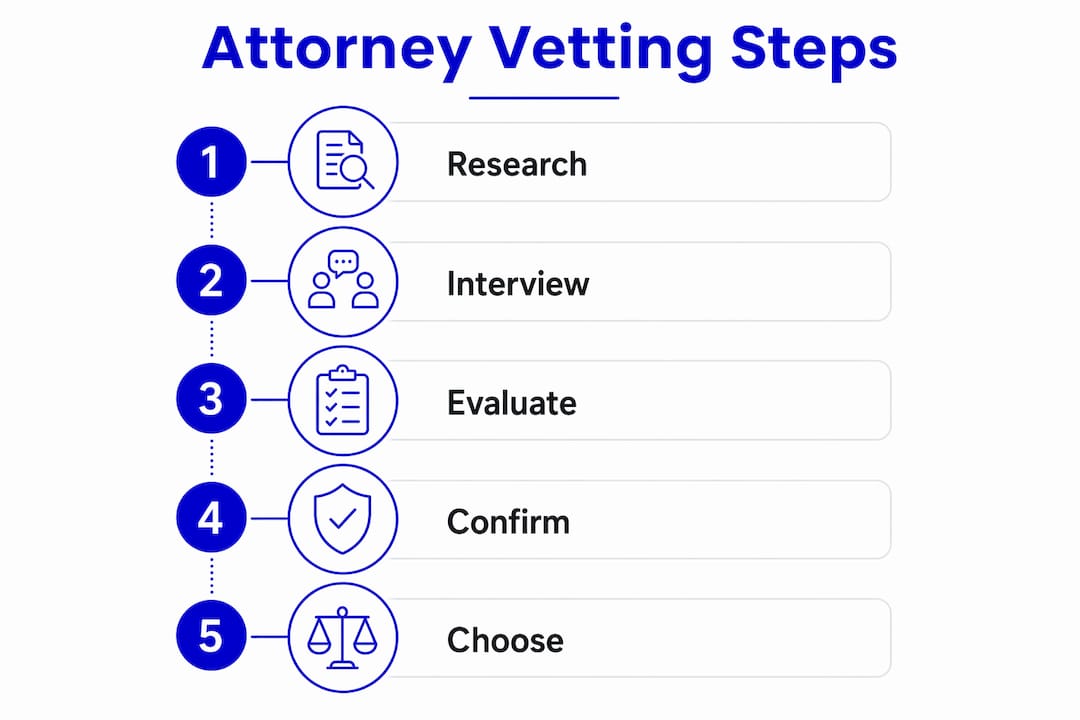
Researching attorneys before you hire them takes less than an hour and prevents costly mistakes. The process has three clear steps: verify credentials, review results, and assess communication.
Verification checklist:
- Confirm active license status through your state bar association's online lookup tool
- Check for disciplinary actions, suspensions, or complaints on file
- Search the attorney's name alongside your city and "Social Security disability" to find independent reviews
- Ask the attorney directly how many hearing-level cases they have handled in your local office
- Confirm who will actually work your case. Will it be the attorney you meet, or a paralegal?
The strongest disability attorneys show demonstrable results with clients who have similar medical conditions and appeared before the same local judges. Ask for that specific information, not just a general win rate.
The national firm versus local practice question deserves a direct answer. National disability law firms may have more resources but often lack the personalized service and local judicial familiarity that smaller local attorneys provide. A large firm may assign your case to a rotating staff of non-attorneys. A local attorney who has appeared before your ALJ twenty times brings knowledge no call center can replicate. For a full breakdown of firm types, the 2026 selection guide from Ssdilawyer covers the tradeoffs in detail.
Understanding the contingency fee structure and SSA caps prevents surprises during your case. Confirm in writing that the fee is contingency-based, that it will not exceed 25% of backpay, and that the $7,200 SSA cap applies. Get the fee agreement signed before any work begins.
Common mistakes to avoid when working with a disability attorney
Most claimants make at least one avoidable mistake during the attorney search. These mistakes cost time, and in disability cases, time directly affects your backpay amount and appeal deadlines.
Mistakes that derail disability cases:
- Waiting until an appeal deadline is two weeks away before searching for an attorney. The SSA gives you 60 days to appeal a denial. Starting your attorney search on day 55 leaves almost no time for a proper consultation or case review.
- Assuming all legal aid offices have open capacity. Free legal aid programs operate on limited budgets and grant cycles, and many maintain waitlists that stretch months.
- Hiring a general practice attorney who handles disability cases occasionally. Social Security disability law is procedurally specific. An attorney without regular SSA hearing experience will miss details that a specialist catches automatically.
- Submitting incomplete medical records. Your attorney can only argue what the record supports. Gaps in treatment history, missing specialist notes, or outdated assessments weaken even strong cases.
"The attorney-client relationship in disability cases depends on your willingness to share complete information. An attorney who does not know about a secondary condition cannot argue it. Bring every medical record, every treatment note, and every prescription history to your first meeting."
Pro Tip: Use your free consultation to test responsiveness. If the attorney or their staff takes more than 48 hours to return your call after you have expressed interest, that delay will repeat throughout your case.
The role of a disability attorney in your appeal extends well beyond paperwork. A skilled attorney prepares your hearing testimony, cross-examines vocational experts, and identifies procedural errors in the SSA's denial. That preparation requires time. Engaging an attorney early gives them the runway to build a complete case file.
Key Takeaways
Finding a qualified local disability attorney requires verifying specialization, confirming local ALJ experience, and applying for pro bono resources early before waitlists close.
| Point | Details |
|---|---|
| Specialization matters | Hire an attorney who focuses exclusively on Social Security disability law, not general practice. |
| Local ALJ knowledge wins cases | Attorneys familiar with your local hearing office understand judge tendencies that affect outcomes. |
| Contingency fees protect you | The SSA caps attorney fees at 25% of backpay with a $7,200 maximum, so no upfront cost is required. |
| Pro bono has income limits | Free legal aid requires income at or below 125% of Federal Poverty Guidelines ($19,950 for one person in 2026). |
| Start your search early | Appeal deadlines run 60 days from denial. Waiting too long eliminates your best attorney options. |
Why local knowledge matters more than firm size
I have reviewed hundreds of disability cases over the years, and the pattern is consistent: claimants who hired large national firms expecting superior results were often disappointed. Not because those firms lack competent attorneys, but because local knowledge is genuinely irreplaceable in Social Security disability hearings.
Administrative Law Judges are not interchangeable. One judge in a given hearing office may approve cases involving chronic pain at a higher rate than a colleague in the same building. A local attorney who has appeared before that judge fifty times knows exactly how to frame medical evidence, which vocational experts to challenge, and when to request a fully favorable decision versus a partially favorable one. No amount of firm size compensates for that specific, earned knowledge.
The other factor I see claimants underestimate is timing. Engaging an attorney after the first denial, rather than at the reconsideration or hearing stage, gives the attorney time to identify errors in the original application and correct them before they compound. The benefits of hiring a disability attorney early are measurable in both approval rates and backpay amounts.
If you are pursuing pro bono representation, persistence is not optional. Free legal aid is genuinely scarce. Apply to every program you qualify for, follow up weekly, and have a contingency plan. A contingency-fee attorney costs you nothing unless you win, which makes them a practical fallback when free options are full.
— Gerard
Ssdilawyer connects you with local disability attorneys
Ssdilawyer specializes in connecting claimants with experienced Social Security disability attorneys who know their local hearing offices and handle cases on a contingency basis.
There is no upfront cost and no income threshold to meet. Ssdilawyer's network includes attorneys with documented experience at the hearing level across multiple states. Whether you are filing an initial application, responding to a denial, or preparing for an ALJ hearing, a free case evaluation connects you with an attorney who knows your local process. The contingency fee structure means the attorney's incentive aligns directly with your approval. Start with a consultation, bring your medical records, and let a specialist assess your case before any deadline passes.
FAQ
What does a local disability attorney do?
A local disability attorney represents claimants in Social Security disability cases, handling applications, appeals, and ALJ hearings. Their local experience with specific judges and hearing offices directly affects case strategy and outcomes.
How do I find a pro bono disability lawyer near me?
Contact your county legal aid office, search the NOSSCR directory, and check local law school clinics. Pro bono eligibility generally requires income at or below 125% of the Federal Poverty Guidelines, which is $19,950 for a single person in 2026.
What questions should I ask a disability attorney before hiring?
Ask how many hearing-level cases they have won in your local office, who will handle your case day-to-day, and confirm the fee is contingency-based with the SSA's 25% cap applied.
How much does a disability attorney cost?
Most disability attorneys charge no upfront fee. The SSA caps contingency fees at 25% of backpay with a maximum of $7,200 under current SSA rules, so you pay only if you win.
When should I start looking for a disability attorney?
Start immediately after receiving a denial notice. The SSA allows 60 days to file an appeal, and finding a qualified attorney takes time. Waiting until the deadline approaches limits your options significantly.