Getting a second opinion from a specialized Social Security disability attorney can change the outcome of your claim. Here is what to know before you start:
- Specialization in SSDI/SSI law is not optional. General practice attorneys lack the procedural depth required for Social Security appeals.
- Experience at the ALJ hearing level matters. Ask about hearing volume and documented success rates.
- Ethical attorneys do not promise guaranteed wins or charge upfront fees.
- Clear communication during consultations is a baseline requirement, not a bonus.
- A second opinion identifies case weaknesses, gaps in medical evidence, and missed legal strategies.
Table of Contents
- Why specialized Social Security disability attorneys matter for second opinions
- Criteria to evaluate when seeking a second opinion disability attorney
- When is the right time to seek a second opinion on your claim?
- How Ssdilawyer connects you with the right disability attorney
- What does a second opinion disability attorney actually cost?
- Ssdilawyer is the direct path to a vetted disability attorney
- Key Takeaways
Why specialized Social Security disability attorneys matter for second opinions
Disability law is highly procedural, and general practitioners routinely lack the specific knowledge of SSA regulations and ALJ hearing protocols required to win appeals. A specialist understands the SSA's grid rules, knows how to challenge vocational expert testimony, and has handled the exact procedural sequence your case will follow.
Specialists also know how to obtain and prepare Residual Functional Capacity forms from treating physicians. These RFC forms translate medical diagnoses into the functional limitation language the SSA actually uses to evaluate claims. A generalist rarely knows how to prompt a physician to complete one correctly.
- Non-specialists risk submitting incomplete evidence or missing procedural deadlines.
- Specialists have higher hearing win rates because they prepare cases specifically for ALJ review.
- Specialization increases the likelihood of approval at the hearing stage, where most claims are ultimately decided.
Criteria to evaluate when seeking a second opinion disability attorney
A qualified disability attorney must focus primarily or exclusively on Social Security disability cases and carry a track record of successful ALJ hearings. Use these criteria when evaluating candidates:
- Practice focus: Confirm that Social Security disability law is the attorney's primary or sole area of practice. Review their attorney specialization before scheduling a consultation.
- Hearing volume and success rate: Ask directly how many ALJ hearings they handle per year and what percentage result in approval.
- Communication standards: Attorneys who communicate clearly and remain accessible throughout the process are a baseline requirement. Pressure tactics or unreachability are red flags.
- Ethical conduct: No upfront fees, no guaranteed wins. Disability attorneys work on contingency, meaning you pay only if you win.
- Condition-specific knowledge: The attorney should demonstrate familiarity with your specific medical condition and how it maps to SSA functional standards.
Pro Tip: Before your consultation, prepare written questions covering how the attorney gathers medical evidence, handles RFC forms, and approaches vocational expert cross-examination. Bring your denial notice and any prior correspondence from the SSA.
For a structured list of attorney evaluation questions, review Ssdilawyer's track record evaluation guide before your appointment.
When is the right time to seek a second opinion on your claim?
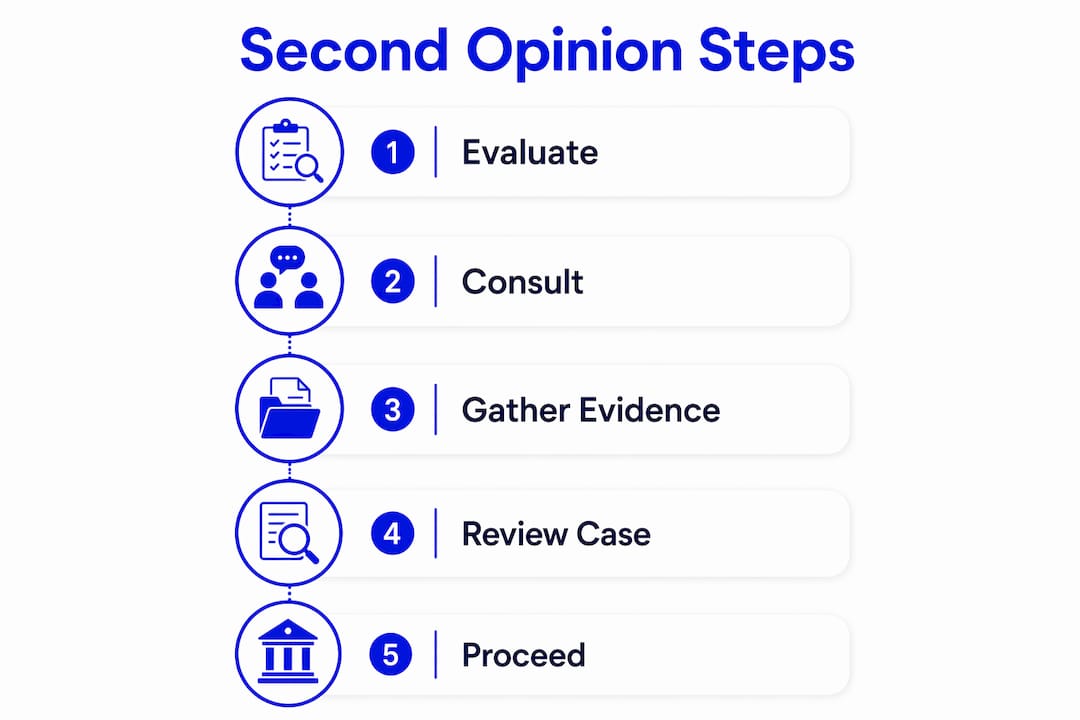
Engage an attorney after your initial denial but before reconsideration or your ALJ hearing. That window allows time to build the medical record, obtain RFC forms, and correct procedural errors before they become permanent problems.
Waiting too long is one of the most common mistakes claimants make. After a denial, you have a strict 60-day window to file an appeal. Missing that deadline can close the case entirely.
- Earlier attorney involvement allows for strategic development of medical evidence prior to the hearing.
- A second opinion at this stage can surface conflicting legal advice and provide a clearer path forward.
- Delayed legal help weakens appeal preparation and risks losing critical procedural deadlines.
If you are unsure whether your situation requires immediate attention, Ssdilawyer's guide on signs you need an attorney outlines specific triggers that warrant immediate legal consultation.

How Ssdilawyer connects you with the right disability attorney
Ssdilawyer.co connects claimants with specialized disability attorneys who have verified experience handling SSDI and SSI appeals. The platform vets attorneys for practice focus, ALJ hearing experience, communication standards, and documented success rates.
- Attorneys in the network focus on SSDI and SSI cases, not general practice.
- The platform prioritizes attorneys with proven ALJ hearing records.
- Consultation scheduling and case evaluation support are available to help claimants prepare for second opinion meetings.
- Clients receive guidance grounded in authoritative legal sources and SSA procedural standards.
Responsive communication is a core criterion in the vetting process. Clear legal representation depends on attorneys who explain case strengths and weaknesses candidly from the first consultation.
What does a second opinion disability attorney actually cost?
Disability attorneys in the United States work on a contingency basis. You pay no upfront fees. If you lose, you owe nothing.
When you win, the fee is capped by SSA rules at a percentage of your past-due benefits (backpay). The SSA approves the fee arrangement directly, so there is no ambiguity about what you owe. Out-of-pocket costs such as fees for medical records or copying may apply and are typically advanced by the firm, then deducted from your settlement at the end. Always ask for a written breakdown of these costs during your consultation.
A second opinion consultation itself is generally free. Most disability attorneys offer no-cost initial consultations, which means evaluating a new attorney carries no financial risk.
Ssdilawyer is the direct path to a vetted disability attorney
Ssdilawyer was built for claimants who need experienced legal representation without the guesswork of searching on their own. The platform connects you directly with attorneys who specialize in SSDI and SSI appeals, have documented ALJ hearing experience, and meet clear communication standards.
If you have already received a denial or are preparing for a hearing, the time to act is now. Start your case evaluation at Ssdilawyer.co and get connected with a qualified disability attorney who can review your claim and identify the strongest path forward.
Key Takeaways
A second opinion from a specialized SSDI attorney, engaged promptly after denial, is the single most effective step to strengthen a disability appeal before an ALJ hearing.
| Point | Details |
|---|---|
| Specialization is required | Attorneys must focus primarily on SSDI/SSI law, not general practice, to handle SSA procedures effectively. |
| Timing after denial | Engage an attorney after initial denial and before reconsideration to allow time for evidence development. |
| Contingency fee structure | Disability attorneys charge no upfront fees; the SSA caps fees at 25% of past-due benefits if you win. |
| RFC forms are decisive | Specialized attorneys know how to guide physicians in completing RFC forms that meet SSA evidentiary standards. |
| Ssdilawyer | Connects claimants with vetted, specialized disability attorneys for second opinions and SSDI/SSI appeals. |