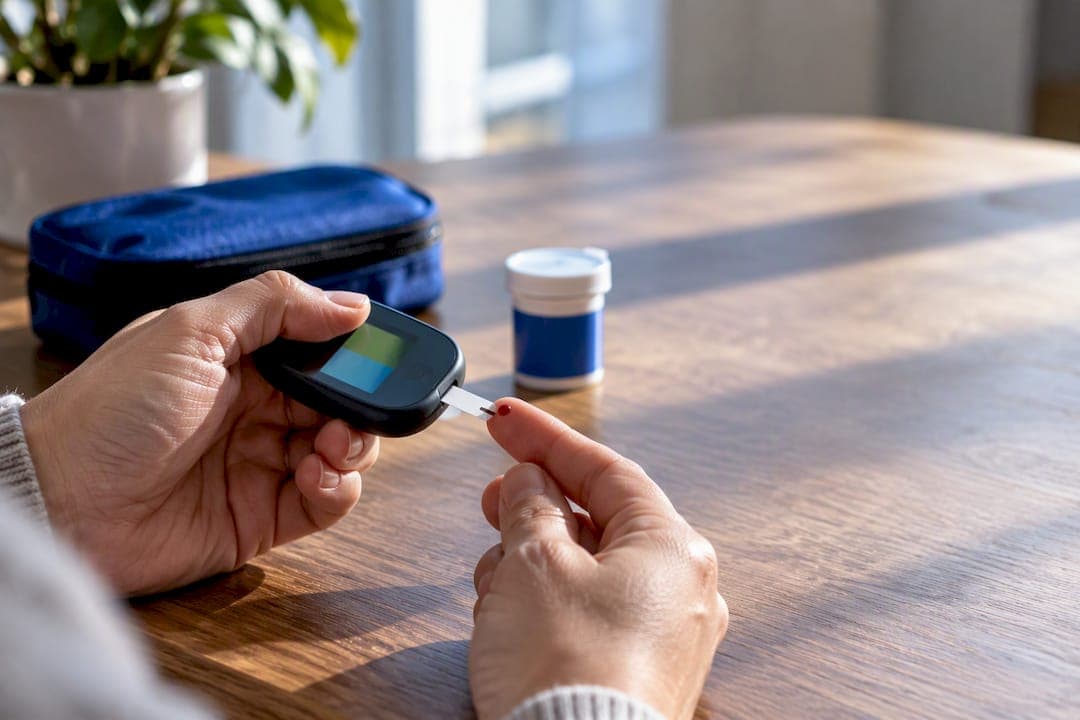
Diabetes can qualify for Social Security Disability Insurance, but only when its complications, not the diagnosis itself, stop you from sustaining full-time work for at least 12 months. The Social Security Administration wants documented functional limits: nerve damage that affects your gait, vision loss that fails acuity tests, kidney failure requiring dialysis, or hospitalizations from dangerous blood sugar swings. If you're building a claim, your first move is gathering complete medical records and pinning down the date your symptoms began interfering with work.
TL;DR:
- Documented complications such as nerve damage, vision loss, kidney failure, or recurrent hospitalizations from blood sugar issues are required to qualify for SSDI due to diabetes.
- Objective evidence like nerve conduction studies, visual tests, dialysis records, and hospital summaries are crucial to establish the severity and functional impact of a claimant’s diabetic complications.
- The combined effect of multiple moderate complications can suffice for approval, even if no single issue meets the listing, provided evidence clearly shows aggregate severity.
- Demonstrating consistent decline over time with trends in A1c, kidney function, and detailed function statements from specialists significantly strengthens a claim.
- Early and thorough evidence gathering, including precise onset dates and matching medical records with claim descriptions, is vital to prevent initial denial and support appeals.
Table of Contents
- How Does SSA Decide SSDI for Diabetes Claims?
- Which Diabetes Complications Meet SSDI Listing Criteria?
- What Medical Evidence Do You Need for a Diabetes SSDI Claim?
- How Do You File a Strong Initial SSDI Application?
- What Happens After You Apply: Timelines and Appeals
- How Do 2026 SGA and Work Incentive Rules Affect Eligibility?
- When Should You Get an Attorney for a Diabetes SSDI Claim?
- Do Co-Occurring Conditions Change Your SSDI Odds?
- How Severe Do Diabetic Symptoms Need to Be for Approval?
- Will SSA Review Your Diabetes Claim Again Later?
- What Support Resources Exist for Diabetics Receiving SSDI?
- Can Diabetes-Related Impairments Not Listed in the Blue Book Still Qualify?
- A Few Honest Lessons From Diabetes SSDI Claims
- Get Matched With an SSDI Attorney Through Ssdilawyer
- Key SSA Resources for Your Diabetes Claim
- Sources
- FAQ
How Does SSA Decide SSDI for Diabetes Claims?
The Social Security Administration runs every disability claim, diabetes included, through a five-step sequential evaluation. Step one asks whether you're currently working above the substantial gainful activity level. Step two asks whether your diabetes and any related conditions are "severe," meaning they meaningfully limit basic work activities. Step three checks whether your impairments meet or equal a listing in the Blue Book. If not, steps four and five assess your residual functional capacity against your past work and any other job you could realistically perform.
There's no standalone "diabetes" listing in the Blue Book. Instead, SSR 14-2p directs adjudicators to evaluate diabetes through the complications it causes, cross-referencing whichever body-system listing fits: neuropathy under the neurological listings, retinopathy under vision, nephropathy under kidney disease. A diagnosis alone rarely satisfies SSA's threshold; the ruling is explicit that documented functional limitations from complications are what drive the decision, not the A1c number on its own.
The Blue Book's endocrine section, 9.00, walks through how diabetic complications like recurrent diabetic ketoacidosis (DKA) and chronic hyperglycemia get folded into other listings. This matters because claimants sometimes assume there's one clean box to check. There isn't. Instead, an adjudicator has to connect the dots across multiple listings, and the burden falls on you to supply the paper trail that lets them do it. When no single listing fits perfectly, SSA can still find that your combined limitations "equal" a listing in severity, which is why documenting every complication, not just the most dramatic one, actually strengthens a file.
Which Diabetes Complications Meet SSDI Listing Criteria?
Certain complications carry the clearest paths to meeting or equaling a listing, provided the medical record backs them up with objective findings.
- Peripheral neuropathy: Nerve damage that affects gait, balance, or the ability to stand and walk for sustained periods can meet neurological listings when documented with clinical exams showing sensory loss, muscle weakness, or an inability to use a hand effectively for fine motor tasks.
- Retinopathy and vision loss: SSA maps this to Section 2.00 and requires formal visual acuity and visual field testing, not just a note that your eyesight has "gotten worse."
- Nephropathy and kidney failure: Diabetic kidney disease that progresses to dialysis typically falls under Section 6.00, and dialysis records tend to carry significant weight because they're objective and recurring.
- Recurrent DKA and severe hypoglycemia: Repeated hospitalizations for ketoacidosis, or documented episodes of hypoglycemia causing seizures, loss of consciousness, or cognitive impairment, can support a claim even without a single "textbook" complication.
- Combined complications: A claimant with moderate neuropathy plus early-stage retinopathy plus a history of hypoglycemic episodes may not meet any one listing outright, but the combined effect can still equal listing-level severity.
The common thread across all five is documentation frequency. One eye exam showing declining acuity is a data point. Three years of exams showing progressive decline, paired with a specialist's functional assessment, is a case.
What Medical Evidence Do You Need for a Diabetes SSDI Claim?
SSA's evidentiary standard is unambiguous: claims need "objective medical evidence," meaning medical signs and laboratory findings that establish a medically determinable impairment, according to the SSA's own evidence guidance. Provider opinions matter, but they carry more weight when they're anchored to test results an adjudicator can independently verify.
Here's how to prioritize what you collect:
- A1c trends over time rather than a single reading, since SSA weighs a pattern of poor control more heavily than one bad lab day.
- Ophthalmology reports with documented visual acuity and visual field results, not general chart notes.
- EMG and nerve conduction velocity (NCV) studies confirming peripheral neuropathy with objective severity measures.
- eGFR and creatinine trends, plus dialysis logs if applicable, to establish kidney function decline.
- Hospitalization and DKA records, including admission notes and discharge summaries that describe the severity of each episode.
- A detailed function statement from your treating physician that translates diagnoses into specific limits: how long you can stand, how much you can lift, how often hypoglycemia disrupts your day, and whether cognitive effects linger after an episode.
Organize everything chronologically, and note your onset date, the point your limitations became severe enough to interfere with full-time work, clearly at the top of your file. Third-party statements from a spouse, coworker, or former supervisor describing what they observed can reinforce medical evidence, especially for symptoms like hypoglycemic confusion that don't always show up cleanly in a clinical setting.
Pro Tip: Ask your endocrinologist to write function statements in terms SSA actually uses, like "can stand for no more than 15 minutes at a time" or "experiences hypoglycemic episodes requiring rest three to four times weekly," instead of general language like "patient struggles with fatigue."

How Do You File a Strong Initial SSDI Application?
A rushed application is one of the most common reasons diabetes claims get denied on the first pass. Building the packet with intention upfront saves months later.
- Choose an onset date tied to a specific medical event, like a DKA hospitalization or the date an ophthalmologist documented vision loss, rather than a vague guess.
- Attach complete records: lab results, hospital discharge summaries, ophthalmology and nephrology reports, and any physical therapy or specialist notes tied to your complications.
- In the SSA's Work History Report and Function Report, describe your job duties in specific physical and cognitive terms (how much standing, lifting, or concentration your job required) so the adjudicator can compare that against your documented limits.
- Avoid vague language like "I can't work anymore." Instead, describe concrete restrictions: "I can't stand longer than 10 minutes without numbness in my feet" or "I've had four hypoglycemic episodes at work in the past six months requiring me to stop tasks."
- Double check that every complication mentioned in your Function Report has a matching medical record. Gaps between what you claim and what your records show are one of the fastest routes to denial.
What Happens After You Apply: Timelines and Appeals
SSDI carries a five-month waiting period from your established onset date before benefits can begin, even for an approved claim. That means the sooner your onset date is documented and defensible, the sooner your benefit clock effectively starts.
Initial denials are common, and diabetes claims are frequently denied because the file shows a diagnosis without matching functional evidence. If you're denied, reconsideration is the first appeal step, where Disability Determination Services (DDS) reviews the file again, often with updated medical evidence you submit. If reconsideration fails, the next stage is a hearing before an Administrative Law Judge (ALJ), where you can testify directly about your limitations and submit additional records, including newer test results or updated function statements.
Each stage is a genuine opportunity to strengthen the record, not just repeat the same paperwork. A claimant denied at the initial level because of thin neuropathy documentation, for instance, can use the reconsideration period to get a formal EMG/NCV study on record. Our SSDI appeals guide walks through what to expect at each phase.
Representative fees during appeals are governed by SSA's fee-authorization process, meaning an attorney generally can't collect payment until SSA approves the fee agreement or petition, which protects claimants from open-ended billing.

How Do 2026 SGA and Work Incentive Rules Affect Eligibility?
Earning too much can disqualify a diabetes claim regardless of how severe your complications are. For 2026, the substantial gainful activity threshold is $1,690 per month for non-blind individuals and $2,830 per month for those who are statutorily blind. Earn above that consistently, and SSA generally considers you capable of substantial work, which can end eligibility at step one of the evaluation.
2026 Work Incentive Numbers: SGA threshold is $1,690/month (non-blind) or $2,830/month (blind); a Trial Work Period service month is triggered at $1,210 in earnings.
The Trial Work Period lets existing beneficiaries test working without immediately losing benefits, counting toward nine service months regardless of whether earnings exceed SGA. Once the TWP ends, the Extended Period of Eligibility kicks in, generally continuing benefits for months you earn below SGA and suspending them for months above it. Impairment-related work expenses, like specialized glucose monitoring supplies needed specifically for work, may reduce countable earnings when reported. Report all earnings promptly. Undisclosed income is one of the more common triggers for overpayment notices down the line.
When Should You Get an Attorney for a Diabetes SSDI Claim?
Representation tends to matter most at reconsideration and ALJ hearings, where the case often hinges on translating medical records into SSA's residual functional capacity framework, a task legal practitioners say benefits from experience with how SSA develops evidence. An attorney can identify missing test results, request targeted function statements from your specialists, and prepare you for the kinds of questions an ALJ asks about daily functioning.
Fee arrangements are typically contingency-based and require SSA's approval before any payment changes hands, so there's no upfront cost risk for the claimant. Ssdilawyer connects claimants with experienced SSDI attorneys who handle exactly this kind of case development, from assembling records at the initial filing stage through hearing preparation, and our guide on legal representation benefits breaks down what a lawyer actually does at each stage.
Do Co-Occurring Conditions Change Your SSDI Odds?
Diabetes rarely travels alone. Many claimants also manage hypertension, cardiovascular disease, obesity, depression, or sleep apnea, and SSA is required to consider the combined effect of all medically determinable impairments, not just diabetes in isolation. A claimant whose neuropathy alone might not meet a listing can have a much stronger case once cardiovascular limitations and depression-related concentration problems are factored into the residual functional capacity assessment.
This cuts both ways for evidence gathering. It means your file needs records from every treating specialist, not just your endocrinologist. A cardiologist's notes on exertional limits, a mental health provider's documentation of concentration or memory deficits from depression or diabetes-related cognitive effects, and a primary care physician's overall functional summary all feed into the same picture. Adjudicators are instructed to assess the combined impact, so leaving out a comorbid condition because it "seems secondary" to diabetes can actually weaken an otherwise solid claim. If you manage multiple chronic conditions, ask each specialist for a function statement, not just your endocrinologist, and make sure your Function Report mentions every condition that limits your day, not only the one you consider primary.
How Severe Do Diabetic Symptoms Need to Be for Approval?
Severity, in SSA's framework, is measured by functional impact and frequency, not by how a diagnosis reads on paper. A1c levels alone rarely settle a claim. What matters is whether your complications produce limitations severe enough to meet a listing outright or, through combined effect, equal one in severity.
For neuropathy, that generally means documented sensory loss or motor deficits significant enough to affect standing, walking, or fine motor tasks, not just occasional tingling. For retinopathy, it means visual acuity or field test results that fall below the specific numeric thresholds in Section 2.00, not a general note about blurry vision. For episodes like DKA or severe hypoglycemia, frequency and documentation matter enormously. An ALJ weighs one hospitalization very differently from four documented episodes across 18 months, especially when medical records show they occurred despite consistent treatment adherence.
This is also where combined severity becomes critical for claimants whose individual complications each fall short of meeting a listing. SSA's medical equivalence standard allows an adjudicator to find that the aggregate limitations from neuropathy, mild retinopathy, and recurring hypoglycemic events amount to the same level of severity as fully meeting one listing, even though no single complication does it alone. That's a judgment call, and it depends entirely on how thoroughly each complication is documented across the full medical record.
Will SSA Review Your Diabetes Claim Again Later?
Once approved, diabetes SSDI recipients aren't necessarily finished proving their case. SSA periodically conducts Continuing Disability Reviews (CDRs) to confirm the impairment still meets the disability standard, and the review frequency generally depends on how likely SSA expects your condition to improve.
Diabetes complications like nephropathy requiring dialysis or advanced retinopathy are often classified as unlikely to improve, which typically means a longer interval between reviews, sometimes five to seven years. Conditions considered more likely to improve with treatment adjustments might trigger reviews closer to every three years. During a CDR, SSA looks for updated medical evidence showing whether your functional limitations have changed. If your neuropathy has stabilized with treatment but you've since developed nephropathy, updated records showing that progression can actually support continued eligibility rather than threaten it. The practical takeaway: keep seeing your specialists regularly even after approval, since a CDR with a thin recent medical record is a common reason benefits get flagged for termination, not because the underlying condition improved, but because the paperwork didn't keep pace.
What Support Resources Exist for Diabetics Receiving SSDI?
Beyond the benefit check itself, several resources help SSDI recipients manage the practical realities of living with diabetes-related disability. Medicare eligibility typically begins 24 months after your SSDI entitlement date, and understanding how that timing interacts with your existing health coverage matters for planning continuous diabetes care. If you run into coverage disputes or need help navigating appeals for Medicare-related denials, services like Simply Insurance's appeals assistance specialize in exactly that kind of grievance support.
SSA's own Ticket to Work program offers a path back toward employment for beneficiaries who want to test their capacity to work without immediately jeopardizing benefits, working in tandem with the Trial Work Period rules already covered. Diabetes-specific organizations, including the American Diabetes Association, provide guidance on workplace rights and disability protections that run parallel to, but separate from, the SSDI process, worth understanding since civil-rights protections and SSA's medical disability standard aren't the same thing. Support groups, whether through a hospital's endocrinology department or a local diabetes association chapter, also help claimants stay consistent with the specialist visits that keep medical records current for both initial approval and future CDRs.
Can Diabetes-Related Impairments Not Listed in the Blue Book Still Qualify?
Plenty of diabetes-related limitations don't map cleanly to a Blue Book listing at all, and SSA still has to account for them. Chronic fatigue from poor glycemic control, cognitive fog following hypoglycemic episodes, or the cumulative toll of managing a demanding treatment regimen alongside a full-time job don't always show up as a formal diagnosis with a corresponding listing.
SSA handles these through the residual functional capacity assessment at steps four and five of the sequential evaluation, rather than through listing-level analysis. Even if no single impairment meets or equals a listing, an adjudicator has to determine what you can still do functionally, factoring in symptoms like fatigue, brain fog, or the unpredictability of blood sugar swings that make sustained, reliable attendance difficult. This is where a detailed function report and a specific physician statement carry outsized weight, since these non-listed impairments often live or die on subjective-sounding symptoms backed by objective corroboration, like documented hypoglycemic episodes or a sleep study showing diabetes-related fatigue has a physiological basis. Claimants sometimes assume that if a symptom isn't in the Blue Book, it doesn't count. It counts. It just requires a different kind of documentation to prove.
A Few Honest Lessons From Diabetes SSDI Claims
The denied claims I've seen almost always share the same gap: a diagnosis well documented, but functional limits barely mentioned. A single detailed physician statement, written in SSA's language rather than clinical shorthand, often moves a case more than another year of lab work. If you've had a DKA episode or a severe hypoglycemic event, write down what happened the same week, before memory smooths over the details that actually matter to an adjudicator.
— Gerard
Get Matched With an SSDI Attorney Through Ssdilawyer
Building a diabetes SSDI file, tracking A1c trends, chasing down specialist function statements, timing an onset date correctly, takes real hours most claimants don't have while managing a chronic illness. Matching services exist that connect you with experienced disability attorneys who handle evidence assembly and appeal preparation, reducing the need to learn SSA's evidentiary rules while managing your health.
The process starts with a short intake form describing your diagnosis, work history, and where you are in the claims process, whether you haven't filed yet, you're facing a denial, or you have a hearing scheduled. From there, Matching services connect you with attorneys suited to your case, and fee arrangements typically require SSA's fee-authorization process to ensure no billing occurs without SSA approval first. If you're ready to stop guessing at what evidence you need, start your SSDI case review today and get paired with someone who's built these files before.
Key SSA Resources for Your Diabetes Claim
Consult SSR 14-2p for how diabetes is evaluated, the Blue Book's endocrine section for complication mapping, the SGA thresholds page for earnings limits, and the 2026 COLA fact sheet for updated benefit figures. Each source directly supports evidence you'll cite in a filing or appeal.
This article is general information, not a substitute for advice from a qualified lawyer. Consult a qualified legal professional about your own circumstances before acting on anything here.
FAQ
Is It Hard to Get Disability for Diabetes?
Getting approved for SSDI with diabetes alone is difficult because SSA requires documented complications, not just a diagnosis. Claims with strong objective evidence of neuropathy, retinopathy, nephropathy, or recurrent DKA and hypoglycemia tend to fare better, especially when a function statement ties those complications to specific work limits.
How Much Is a Disability Check for Diabetes?
SSDI payments aren't based on your diagnosis but on your work history and average lifetime earnings, so there's no set amount specific to diabetes. Our SSDI benefits overview explains how SSA calculates individual payment amounts.
Is Diabetes 100% Disability?
A claimant with well-controlled diabetes and no significant complications generally would not qualify, while severe, well-documented complications across multiple body systems can support a fully disabling finding.
What Benefits Can I Claim With Type 2 Diabetes?
Type 2 diabetes claimants may qualify for SSDI if complications create work-preventing limitations documented for 12 months or more, following the same eligibility standards SSA applies to type 1 diabetes. Beyond SSDI, some claimants also qualify for Medicare coverage roughly 24 months after their SSDI entitlement date begins.