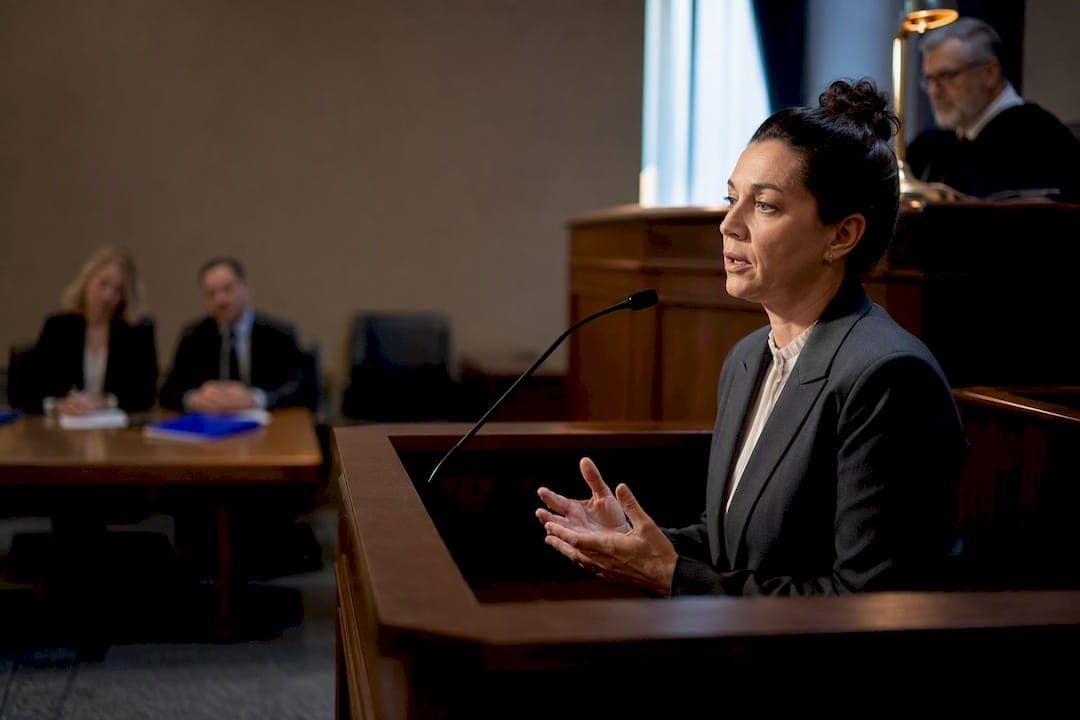
The questions that decide most SSDI hearings target five things: whether the vocational expert actually reviewed your file, what occupational data source and codes back their job numbers, whether jobs survive added limits like unscheduled breaks or off-task time, how they classified your past work, and whether they'll disclose their methods on the record. Getting clear answers on each usually determines whether the judge finds jobs you can still do.
TL;DR:
- Vocational experts must review the complete vocational record and disclose their data sources and assessment methods to establish credibility.
- Asking about the specific occupational database, survey year, and SOC or DOT codes helps identify potential gaps or outdated job figures.
- Questioning job limitations, such as unscheduled breaks or use of assistive devices, tests whether identified jobs remain available under real restrictions.
- Clarifying how past relevant work was classified and whether skills transfer to other jobs can significantly impact the judge’s determination of work capability.
- Well-structured cross-examination layered around documented limitations exposes the point where job numbers collapse, which often determines the case’s outcome.
Table of Contents
- Vocational Expert Questions to Ask at Your Hearing
- How to Challenge Vocational Expert Testimony Effectively
- What SSR 24-3p and HALLEX Require From Vocational Experts
- Why Vocational Testimony Decides Steps Four and Five
- Hearing Prep Checklist for Claimants and Representatives
- A Note on Strategy and Pacing
- Finding an Attorney Who Knows How to Question a Vocational Expert
- Sources
- FAQ
Vocational Expert Questions to Ask at Your Hearing
A vocational expert (VE) is a neutral witness the Social Security Administration calls to testify about jobs in the national economy that match a claimant's residual functional capacity (RFC). Your representative gets to cross-examine that witness, and the questions asked shape whether the judge finds you disabled at step four or step five. Below are the question categories that carry the most weight organized by what each is designed to expose.
Verification questions. Before anything substantive, pin down the VE's basis for testifying.
- "Did you review the complete vocational file, including my work history reports and any consultative exam findings?"
- "Have you met or examined me directly, or is your testimony based solely on the file?"
- "Can you provide a current copy of your CV or résumé for the record?"
- "Do you have any financial or professional relationship with the agency or this office beyond your role as an independent expert?"
The VE Handbook expects experts to arrive ready to answer exactly these questions, and a VE who hesitates or can't produce a CV on request has already handed you a credibility problem to raise on appeal, according to the VE Handbook published by SSA's Office of Hearings Operations_Handbook-508.pdf).
Data-source questions. This is where SSR 24-3p gives you real leverage. Ask:
- "What specific occupational data source did you rely on for these job numbers, and is it the OEWS, SkillTRAN's Job Browser Pro, or another database?"
- "What SOC and DOT codes correspond to the jobs you've identified?"
- "What year's survey data are you citing, and was any adjustment made to convert code-level or industry-level numbers into occupation-specific counts?"
Hypothetical-limit questions. These test whether the VE's job numbers hold up once real restrictions are added.
- "If the claimant also needs unscheduled breaks, would the jobs you cited remain available?"
- "If the claimant requires a cane or other assistive device for ambulation, does that change your answer?"
- "At what level of off-task time do the identified jobs stop being viable?"
Classification and transferability questions. Past work matters for step four, so ask:
- "How did you classify my past relevant work under the Dictionary of Occupational Titles, and do you agree that classification matches how the job was actually performed?"
- "Are there transferable skills from that work, and if so, which specific skills transfer to the jobs you've identified?"
When a live hearing isn't practical, these same questions work as written interrogatories, though SSA generally favors live testimony because it allows immediate follow-up, per HALLEX I-2-5-57 on written interrogatories. If the VE's written answers raise new issues, you can request supplemental data or ask the judge to schedule a further hearing.
Pro Tip: Write your top three data-source questions on an index card before the hearing. Judges move fast, and a rehearsed sequence keeps your representative from freezing when the VE gives an evasive answer.
How to Challenge Vocational Expert Testimony Effectively
Cross-examination wins claims when it's built around one goal: finding the exact point where the VE's job numbers collapse. That means adding limitations one at a time rather than all at once.
Start with the RFC the judge seems likely to adopt, then layer on restrictions your medical record actually supports, like a sit/stand option, limited reaching, or moderate concentration deficits. Watch for the moment the VE says "no jobs remain" or "job numbers would erode significantly." That tipping point is often the difference between a denial and an approval, since research on cross-examining vocational experts published by the Michigan Bar Journal shows staged hypotheticals are one of the most reliable ways to surface a favorable answer at step five.
Other moves that change outcomes:
- Force the VE to walk through their job-number methodology step by step, including any adjustment from national to regional figures.
- Flag any DOT conflict directly. If the VE names a job requiring frequent overhead reaching but your RFC bars it, make the VE reconcile that conflict on the record rather than letting it slide.
- If the VE refuses to disclose a private survey's underlying data, don't let the refusal pass quietly. The Supreme Court's Biestek v. Berryhill decision confirmed that a refusal doesn't automatically disqualify testimony, but it's a factor a reviewing court can weigh, so get the refusal stated plainly for the transcript.
- Note any unsupported extrapolation, such as jumping from a broad SOC code to a specific claimant-applicable job count without explaining how.
If the VE can't or won't answer, your representative can request interrogatories, a supplemental hearing, or a motion to compel additional vocational evidence. Documented gaps are what appeals councils and federal courts look for when reviewing whether substantial evidence supported the decision.
What SSR 24-3p and HALLEX Require From Vocational Experts
SSR 24-3p, effective in 2025, requires VEs to identify the specific occupational sources behind their testimony and explain their general approach to estimating job numbers, a real shift from earlier practice where vague sourcing often went unchallenged, according to SSR 24-3p itself. HALLEX I-2-6-74 reinforces this by directing ALJs to confirm the VE examined the full vocational record and to probe data sources directly, per HALLEX I-2-6-74.
| Source cited by VE | What to ask for |
|---|---|
| OEWS (Occupational Employment and Wage Statistics) | Survey year and whether figures were adjusted for RFC-specific limits |
| SkillTRAN's Job Browser Pro | The specific SOC/DOT code queried and the resulting count |
| Private market surveys | Whether the underlying data will be produced if requested |
Ask the VE to name the exact SOC or DOT code for each job cited and state the job count that code returns in their own chosen source for the current year. Discrepancies between a stale survey and current labor data are exactly the kind of gap SSR 24-3p was written to close.
Why Vocational Testimony Decides Steps Four and Five
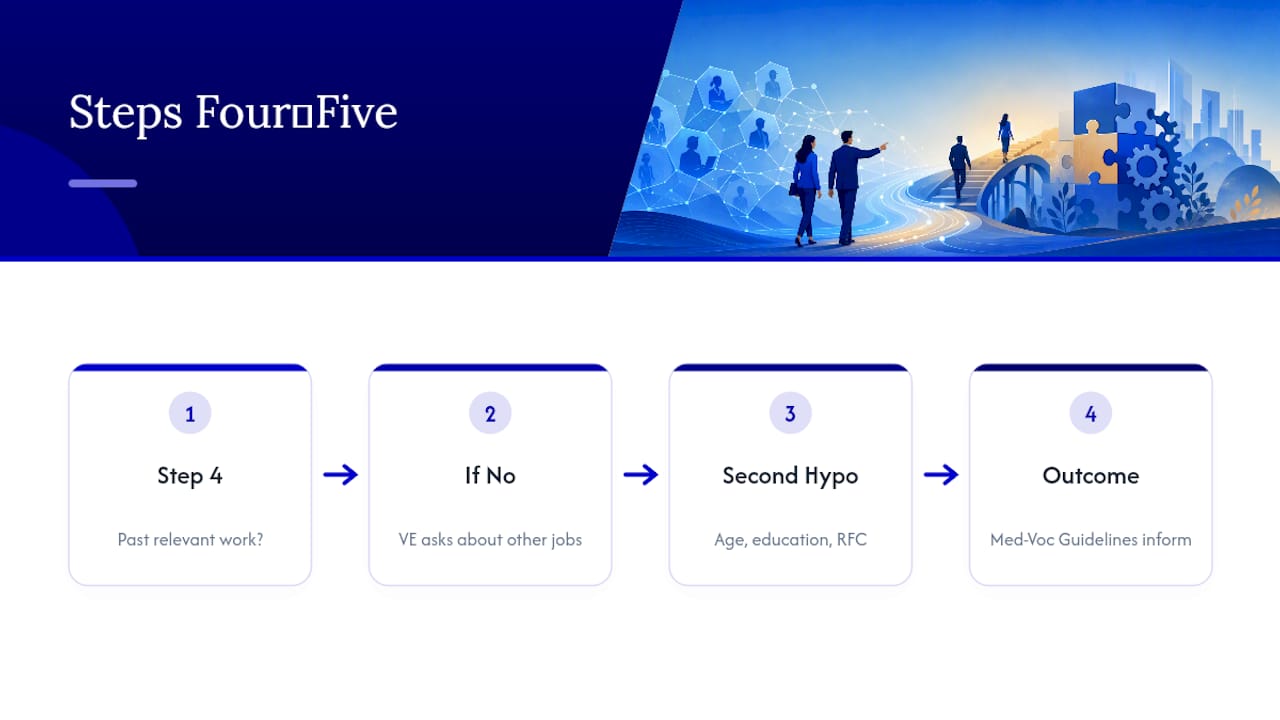
At step four, the judge asks the VE whether someone with your RFC could still perform your past relevant work, as you did it or as it's generally performed. If the answer is no, the case moves to step five, where the VE testifies about other jobs existing in significant numbers nationally.
Age, education, and RFC all feed into that second hypothetical, and the VE's answer about "significant numbers" often becomes the single fact the judge relies on to deny or approve a claim. The Medical Vocational Guidelines explain how those grids interact with a claimant's RFC and age category, which is worth reviewing before your hearing.
Hearing Prep Checklist for Claimants and Representatives
Before the hearing, confirm the VE reviewed your pay stubs, tax returns, written job descriptions, and any consultative exam reports.
- Draft two or three staged hypotheticals that add unscheduled breaks, off-task percentages, or assistive-device use.
- Ask your representative to request the VE's data source and SOC/DOT codes in writing beforehand.
- Build your RFC narrative around documented limitations; the physical-jobs RFC guide shows how work history details strengthen this.
Pro Tip: Bring a one-page limitation summary for your representative to reference while questioning the VE. It keeps hypotheticals grounded in your actual medical record instead of generic phrasing.
A Note on Strategy and Pacing
Staged hypotheticals only work if they're built on real medical evidence, and a refusal or data gap only helps you if it's stated plainly for the transcript. Keep every exchange focused on the record, not the argument.
— Gerard
Finding an Attorney Who Knows How to Question a Vocational Expert
Cross-examining a vocational expert well takes practice most claimants never get a chance to build. Some legal services connect claimants with attorneys who prepare these questions and handle VE cross-examination as a routine part of hearing work, rather than something you're improvising for the first time in front of a judge.
Reach out after a denial, before your hearing is scheduled, or as soon as a vocational expert's report raises concerns about job numbers or data sources. An experienced attorney can also help you build the RFC narrative that supports tougher hypotheticals, using resources like the medical-vocational allowance checklist to identify which limitations matter most for your case. If your claim involves a dependent's SSI benefits alongside your own, the SSI eligibility and appeals resource covers related considerations. Submit an inquiry through Ssdilawyer to get matched with counsel before your next hearing date, or review how to evaluate an attorney's hearing track record if you're comparing representation options.
Sources
This article is general information, not a substitute for advice from a qualified lawyer. Consult a qualified legal professional about your own circumstances before acting on anything here.
FAQ
What happens if the vocational expert says I cannot find any jobs?
If the VE testifies no jobs exist that match your RFC, the judge typically finds you disabled at step five, since SSA has failed to meet its burden of identifying work you can still perform.
How much do vocational experts get paid?
SSA sets VE fees through its contracting process, and rates vary by region and case complexity; the specific figure isn't publicly standardized, so ask your representative to confirm local rates if it matters to your case.
What questions are typically asked when qualifying an expert witness?
Judges and representatives usually confirm the VE's credentials, request a current CV, ask whether they reviewed the full file, and establish they have no conflict of interest before substantive testimony begins.
What are vocational experts?
A vocational expert is a neutral witness SSA calls at disability hearings to testify about a claimant's past work and whether other jobs exist in significant numbers given the claimant's RFC, age, and education.