COPD can qualify for SSDI approval through Social Security's Blue Book Listing 3.02, which covers four separate pathways: spirometry (3.02A), diffusion capacity (3.02B), blood gas or oxygen levels (3.02C), and repeated hospitalizations (3.02D). If your test results don't meet those thresholds, a Residual Functional Capacity assessment can still support approval by documenting how COPD limits your ability to work. Before filing, gather post-bronchodilator spirometry results, DLCO or ABG readings, hospital discharge records, and any oxygen prescription.
TL;DR:
- Meeting post-bronchodilator FEV1 thresholds based on your height can qualify you automatically under listing 3.02A, especially if your results are recent and reproducible.
- An abnormal DLCO adjusted for hemoglobin levels can support approval for emphysema-dominant COPD cases where airflow measures are borderline.
- Documented multiple hospitalizations for COPD exacerbations, each lasting at least 48 hours and spaced 30 days apart, can qualify under listing 3.02D without specific test thresholds.
- If your test numbers are close to thresholds, providing detailed records, including stable results and functional limits, plus applying promptly, improves your chances of approval.
- Organizing complete medical records, including all pulmonary function tests, hospitalization summaries, and physician notes referencing SSA criteria, is essential to avoid delays or denial.
Table of Contents
- What Is the COPD SSDI Disability Listing?
- What Medical Records Does SSA Require for a COPD Claim?
- Can You Get SSDI for COPD Without Meeting the Listing?
- How Do You Apply for SSDI With COPD?
- What Happens If Your COPD SSDI Claim Is Denied?
- How Should You Organize Your COPD SSDI Records?
- What Claimants Get Wrong About COPD and SSDI
- Get Matched With an SSDI Attorney Who Knows COPD Claims
- Where to Verify These COPD SSDI Rules
- Sources
- FAQ
What Is the COPD SSDI Disability Listing?
The Social Security Administration evaluates COPD under Blue Book Listing 3.02, officially titled Chronic Respiratory Disorders. This listing gives you four distinct ways to qualify automatically, without needing to prove functional limitations separately. Meet any one of the four, and SSA is supposed to approve your claim at the medical listing stage, often faster than an RFC-based approval.
Here's how each pathway works and what it actually requires.
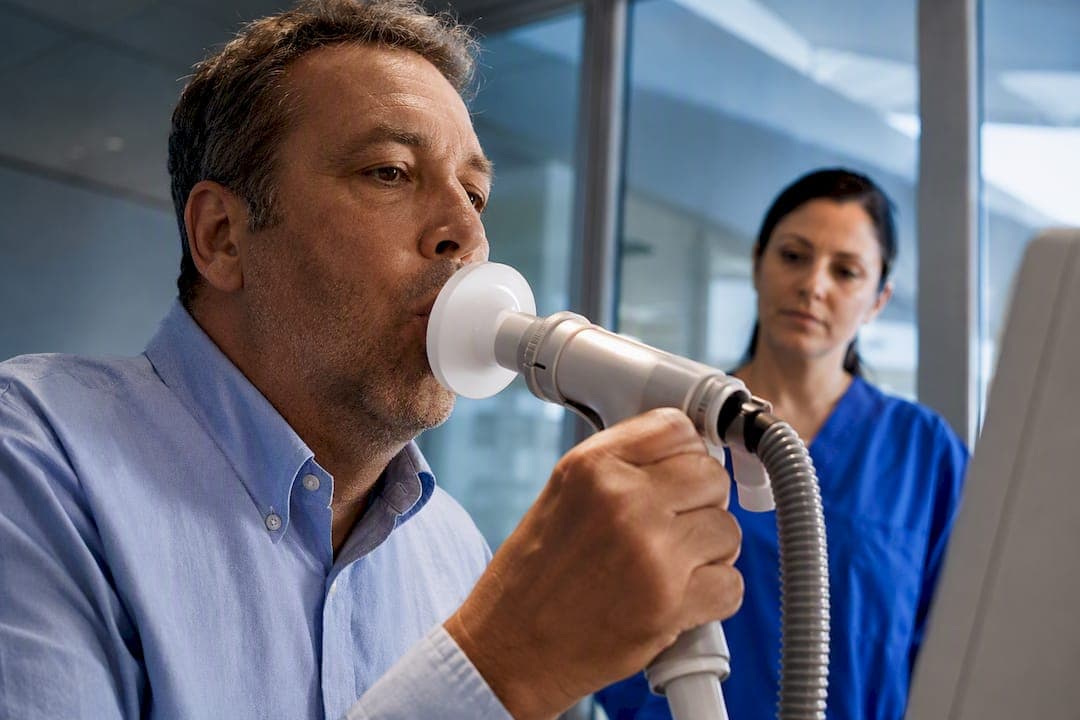
3.02A: Spirometry and FEV1 values. This pathway measures FEV1, the volume of air you can forcefully exhale in one second. SSA uses a table that adjusts the qualifying FEV1 threshold based on your height, since lung capacity naturally varies with body size. Critically, SSA requires post-bronchodilator values, the reading taken after you've used an inhaler or nebulizer treatment. A pre-bronchodilator result, even a low one, generally will not count toward this listing.
3.02B: DLCO and gas exchange. DLCO measures how efficiently oxygen moves from your lungs into your bloodstream, a different metric than airflow. This test matters most for people with emphysema-dominant COPD, where lung tissue damage impairs gas exchange even when airflow numbers look borderline on spirometry alone. If your FEV1 sits just above the 3.02A cutoff, an abnormal DLCO result can be the difference between denial and approval. DLCO values must be adjusted for hemoglobin levels, since anemia can distort the raw reading.
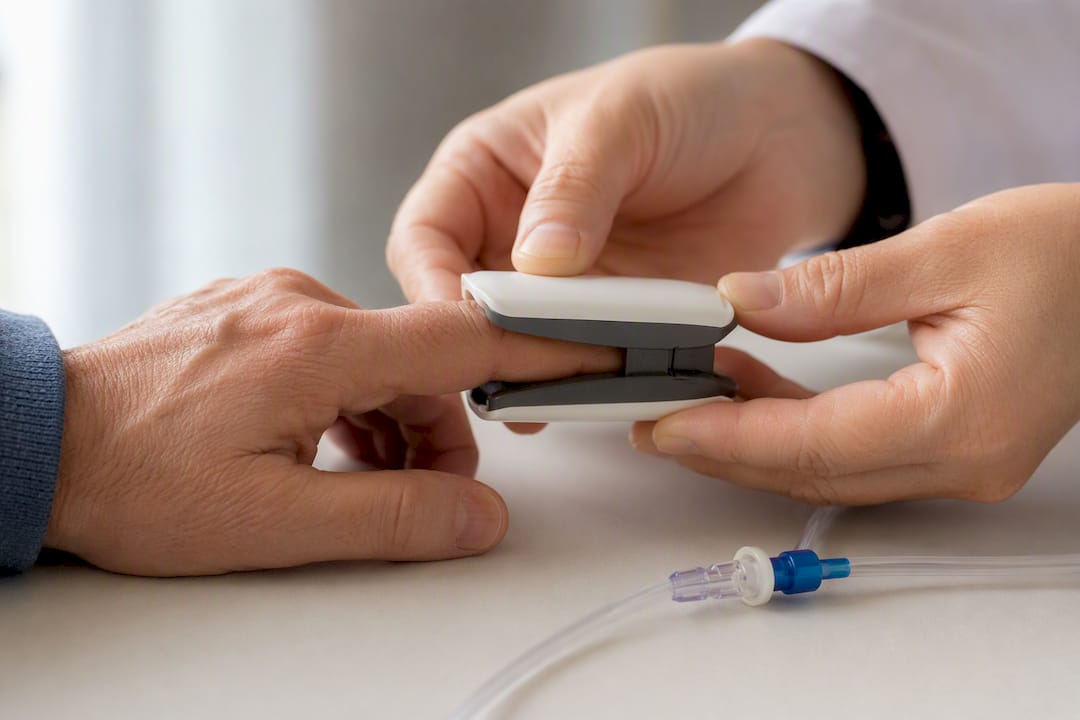
3.02C: Arterial blood gas and pulse oximetry. This pathway looks at oxygen levels directly, either through an arterial blood gas (ABG) test measuring partial pressure of oxygen (PO2), or through pulse oximetry readings. SSA sets specific PO2 and oxygen saturation thresholds that vary by altitude, since people living at higher elevations naturally run lower oxygen readings. If you're on supplemental oxygen, your treating physician's documentation of the prescribed flow rate and hours of daily use becomes part of this evidence.
3.02D: Hospitalization frequency. This pathway doesn't require any specific test number. Instead, it counts how often COPD has landed you in the hospital. SSA's POMS guidance requires three hospitalizations within a 12-month period, each lasting at least 48 hours, spaced at least 30 days apart. Emergency room visits that didn't result in formal admission typically don't count, even if you spent hours in an ER bed. Discharge summaries need to clearly tie each admission to a COPD exacerbation, not an unrelated illness.
A few things trip people up across all four pathways:
- Test results have to reflect your condition on a "stable" baseline, not during a temporary flare that resolved with treatment.
- SSA compares your best-documented test result to the listing tables, so submitting multiple PFTs over time can help if your lung function has been declining.
- Meeting a listing exactly is not the only route. If your numbers fall just short, that doesn't end your claim. It shifts the analysis to Residual Functional Capacity, covered later in this guide.
What Medical Records Does SSA Require for a COPD Claim?
The SSA requires comprehensive medical evidence for a COPD claim: formal diagnosis, detailed medical history, physical exam findings, imaging, objective pulmonary function tests, and records showing how you've responded to prescribed treatment. Missing any one piece can stall a claim in review or trigger a request for a consultative exam, which adds months to processing.
Here's the practical inventory to request from your pulmonologist and any hospital that has treated you:
- Formal diagnosis documentation. A note establishing COPD (or emphysema, chronic bronchitis) with ICD codes and the date of diagnosis.
- Complete pulmonary function tests. Both pre- and post-bronchodilator values from spirometry, not just the summary page. Ask for the raw tracings too. DDS reviewers sometimes flag reports missing the actual flow curves.
- DLCO results, hemoglobin-adjusted. Request this specifically if spirometry alone looks borderline.
- Arterial blood gas or pulse oximetry logs. Ideally captured during normal daily activity, not just at rest in a clinic chair.
- Imaging. Chest X-rays or CT scans showing hyperinflation, emphysematous changes, or bullae.
- Oxygen prescription records. The exact flow rate, hours per day, and whether it's continuous or exertional-only.
- Hospital discharge summaries. For any COPD-related admission, with clear dates and length of stay.
- Treatment and medication notes. Documentation of inhalers, nebulizer treatments, oral steroids, and how well (or poorly) you've responded.
SSA's technical standards matter here. Acceptable spirometry testing generally requires three reproducible efforts during the session, and the lab report needs to explicitly note whether values are pre- or post-bronchodilator. A report that just says "FEV1: 1.1L" without that label often gets sent back for clarification, which slows your case down.
Pro Tip: When you schedule your next pulmonary function test, ask the technician's office directly whether they document post-bronchodilator values separately and whether the report includes hemoglobin-adjusted DLCO. Some outpatient labs default to formats built for insurance billing, not SSA disability standards, and that gap is one of the most common reasons DDS sends a case back for more testing.
If your pulmonologist is willing, ask them to reference the specific Blue Book listing number (3.02A, B, C, or D) in their clinical notes when your results are close to a threshold. It's not required, but a physician who understands what SSA is looking for tends to write notes that hold up better under review.
Can You Get SSDI for COPD Without Meeting the Listing?
Yes. If your test results don't meet Listing 3.02's specific thresholds, SSA moves to a Residual Functional Capacity, or RFC, assessment. RFC asks a more practical question: given your COPD and any other conditions, what can you still do in a work setting, eight hours a day, five days a week?
For COPD, the functional limits SSA weighs typically include:
- How far you can walk before needing to stop and catch your breath
- Whether you can sustain sitting or standing for a full shift without frequent breaks
- How often you need supplemental oxygen during normal activity, and for how long
- Whether exposure to dust, fumes, extreme temperatures, or poor air quality worsens your symptoms
- How fatigue and post-exertional recovery time affect a full workday
RFC isn't built from test numbers alone. SSA draws on your medical records, a daily activity questionnaire you fill out describing your limitations, statements from your treating pulmonologist, and sometimes a consultative exam with an SSA-contracted physician. A treating physician's written opinion carries real weight here, especially when it describes specific limits like "cannot walk more than one block without stopping" rather than a vague "significant shortness of breath."
Age matters more than most claimants expect. Under SSA's Grid Rules, claimants 50 and older with limited transferable job skills often have an easier path to approval, because the rules recognize that retraining for a new type of work becomes harder later in a career. An RFC that limits someone to less-than-sedentary work, or work requiring frequent rest breaks, tends to be especially persuasive for applicants in this age group. If you're in your late 50s or 60s with a work history in physical labor, that combination of age and RFC limitations can carry a claim that test numbers alone would not.
How Do You Apply for SSDI With COPD?
You can file at ssa.gov, by phone, or in person at a local Social Security office. Before SSA even looks at your medical evidence, it checks two non-medical requirements: whether you have enough work credits to qualify for SSDI, and whether your current earnings fall below the Substantial Gainful Activity threshold.
Once your application clears those checks, it moves to your state's Disability Determination Services office, known as DDS, for the medical review.
- DDS requests your medical records directly from providers you list on your application.
- If records are incomplete or dated, DDS may schedule a consultative exam with an independent physician.
- Responding quickly to DDS requests for information matters. Delays on your end are one of the most common reasons a straightforward case drags on.
Processing timelines vary by state workload and how complete your file is, but published estimates put the average initial decision for COPD claims around 6.3 months, or roughly 193 days. Local DDS backlogs and consultative exam scheduling can push that longer.
SSDI also carries a five-month waiting period from your established disability onset date before benefits begin. If your claim takes longer than five months to approve, which is common, you're entitled to back pay covering the gap. The average monthly SSDI payment runs $1,630, with a maximum of $4,152, depending on your lifetime earnings record, so back pay on a delayed claim can add up to a meaningful lump sum once approved.
What Happens If Your COPD SSDI Claim Is Denied?
A denial isn't the end of the process. It's the first of several appeal stages, each with strict deadlines you cannot afford to miss.
- Reconsideration. File within 60 days of your denial letter. A different DDS examiner reviews your file, so this is the moment to add anything missing the first time: updated PFTs, a new DLCO or ABG result, or additional hospitalization records.
- Hearing before an Administrative Law Judge. Again, a 60-day deadline applies from the reconsideration denial. This is where a written RFC statement from your treating pulmonologist, and documentation of daily activity limitations, tends to carry the most weight. Judges want specifics, not general descriptions of feeling short of breath.
- Appeals Council review. If the judge denies your claim, you have 60 days to request Council review. The Council can uphold the denial, send the case back to the judge, or in rarer cases reverse it directly.
- Federal court. The final stage, and the least common. This involves filing a civil action in federal district court, typically only pursued with legal representation.
The SSA's appeals process makes clear that missing a 60-day deadline at any stage can forfeit your right to continue that specific appeal, forcing you to start over with a new application.
This is also the point where hiring an attorney tends to make a measurable difference, particularly at the hearing stage, where legal representation can shape how evidence is presented to the judge. A Blue Book–ready evidence strategy built before your hearing date, rather than assembled the week before, gives your attorney real material to work with.
How Should You Organize Your COPD SSDI Records?
Most claimants don't lose their case because COPD isn't severe enough. They lose it because the evidence sitting in a filing cabinet at their pulmonologist's office never made it into their SSA file in a form DDS could actually use. Organizing records before you file, or before an appeal hearing, is one of the highest-leverage things you can do.
Start by requesting records in this order and format:
- Diagnosis and initial workup notes, dated
- Every PFT report from the past two years, including raw tracings, not just summary pages
- DLCO results with hemoglobin adjustment noted
- ABG or pulse oximetry readings, especially any taken during activity rather than at rest
- Hospital discharge summaries for every COPD-related admission, with exact dates
- Oxygen prescription documentation showing flow rate and hours of use
- A written statement from your pulmonologist describing functional limits, if RFC applies to your case
When you request records, be specific. Ask the office directly: "Can you include post-bronchodilator spirometry values and hemoglobin-adjusted DLCO in this report?" Vague requests often come back incomplete.
Pro Tip: Build a simple index page listing every document you're submitting, with dates, so DDS reviewers don't have to hunt through a stack of paper to find your most recent hospitalization record. A one-page table takes ten minutes to build and can shave real time off a review.
This kind of record organization is exactly where SSDILawyer.co's guidance on case development tends to help claimants most, not by replacing your doctor's clinical judgment, but by making sure the paperwork that reaches SSA actually reflects the severity of your condition. Looking at examples of evidence packages that led to approval can also give you a realistic sense of what a complete file looks like before you submit your own.
What Claimants Get Wrong About COPD and SSDI
Most people preparing a COPD claim focus on proving they're sick. That's not actually what wins a case. SSA already assumes COPD is a serious diagnosis. What decides approval is whether your file gives a reviewer the exact numbers and documentation the Blue Book asks for, in the format it expects.
The three actions that matter most: get the right tests done correctly, with post-bronchodilator values and hemoglobin-adjusted DLCO explicitly noted, not buried in a lab's internal format. Document functional limits in concrete terms your doctor can put in writing, not vague descriptions of breathlessness. And if you're denied, file the next appeal immediately rather than waiting to gather more evidence first. You can add records during reconsideration, but you cannot recover a missed 60-day deadline.
If your FEV1 or DLCO numbers are close to a threshold, don't wait months hoping symptoms stabilize. Apply now with what you have, and supplement the file as new test results come in. Keeping a simple daily log of walking distance, oxygen use, and rest breaks needed is worth more at a hearing than most claimants expect.
— Gerard
Get Matched With an SSDI Attorney Who Knows COPD Claims
Ssdilawyer is the alternative to guessing your way through SSA's Blue Book criteria alone. For COPD cases specifically, where the difference between approval and denial often comes down to whether a DLCO reading was hemoglobin-adjusted or whether a hospitalization was documented correctly under the 48-hour rule, having someone who reads these files daily changes the outcome.
This kind of help matters most for complex RFC cases, second-stage denials, or anyone facing an upcoming hearing without a clear evidence strategy. A matching service can connect you with experienced SSDI attorneys who evaluate your medical file, identify gaps before DDS does, and help prepare testimony for a hearing. Understanding how legal representation affects claim outcomes at each appeal stage can help you decide whether now is the right time to bring in counsel.
Start by completing the short intake form at Ssdilawyer. You'll be matched with an attorney experienced in respiratory disability claims who can review your records and outline next steps at no upfront cost to you.
Where to Verify These COPD SSDI Rules
For the official rules governing COPD disability claims, go directly to the source rather than relying on secondhand summaries:
- SSA Blue Book Listing 3.00, Respiratory Disorders lays out the full text of the 3.02A through D pathways and the exact test tables.
- SSA POM SDI 34223.017 covers the technical hospitalization counting rules examiners use behind the scenes.
- SSA's main site hosts the application portal, appeals process pages, and current benefit payment figures.
- The CDC's COPD resources offer clinical background on staging and symptoms, useful context though not a substitute for SSA's own disability standards.
If you're also managing denied health insurance claims alongside your SSDI case, resources like guidance on disputing a denied health insurance claim can help you handle both fronts without losing track of deadlines on either.
Sources
- 3.00 Respiratory Disorders - Disability (SSA Blue Book)
- SSA - POMS: DI 34223.017 Respiratory Listings
- Social Security Administration (SSA)
- COPD disability benefits: How to claim and criteria (Medical News Today)
FAQ
How hard is it to get disability for COPD?
Approval depends heavily on whether your medical records meet SSA's specific Blue Book 3.02 thresholds or clearly document functional limits for an RFC-based claim. Cases with post-bronchodilator spirometry, DLCO, or documented hospitalizations tend to move more smoothly than those relying on a diagnosis alone.
How long does it take to get disability if you have COPD?
Initial decisions for COPD claims average around 6.3 months, or roughly 193 days, though local DDS backlogs and consultative exam scheduling can extend that. SSDI also has a built in five month waiting period from your disability onset date before payments start.
I have COPD. Do I qualify for disability benefits?
You may qualify if your test results meet one of the four pathways under Blue Book Listing 3.02, or if an RFC assessment shows your COPD limits you enough to prevent sustained work. Gathering spirometry, DLCO, ABG, or hospitalization records is the first step toward finding out.
What are the Social Security Disability guidelines for people with COPD?
SSA evaluates COPD under Listing 3.02, which covers spirometry (FEV1), DLCO, arterial blood gas or pulse oximetry, and repeated hospitalizations of at least 48 hours spaced 30 days apart. If none of those thresholds are met, SSA considers a Residual Functional Capacity evaluation based on how your symptoms limit daily work activity.