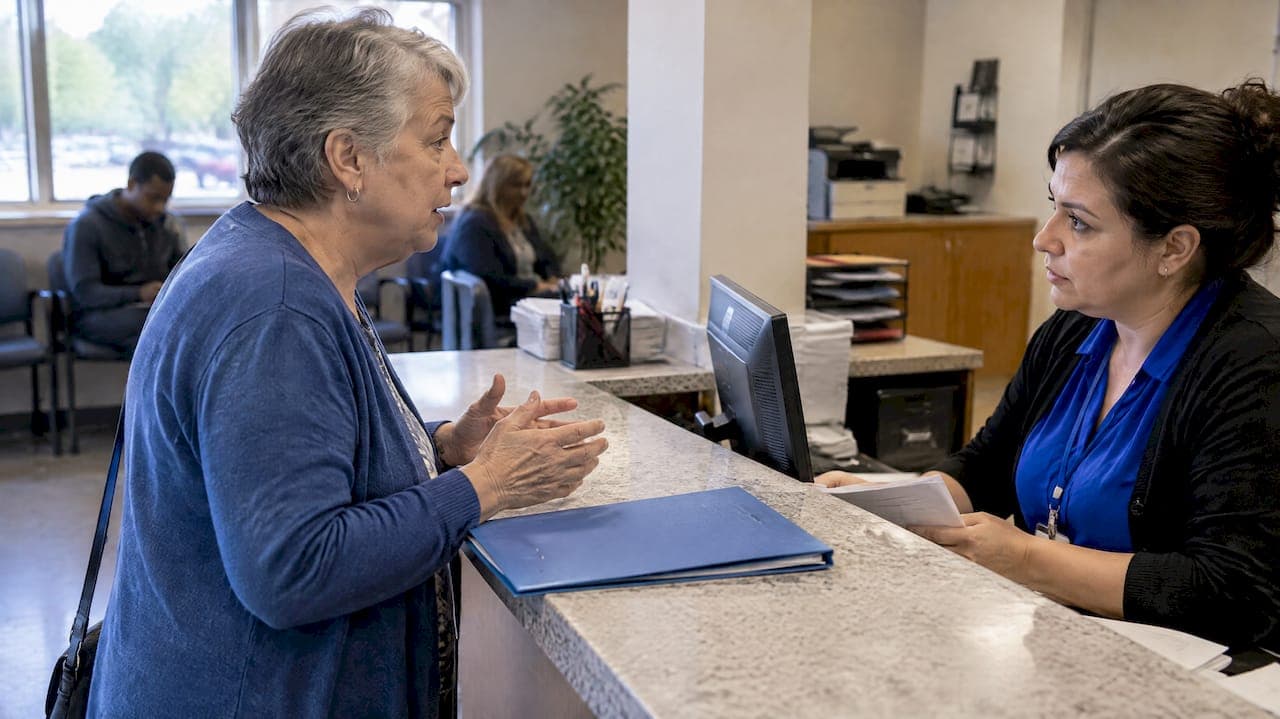
Yes, you can ask SSA to treat your case as a dire need case. SSA accepts dire need allegations and may expedite processing, but it does not guarantee approval. Contact your local SSA Field Office or the Office of Hearings Operations now and submit a short written dire need request with dated evidence of your crisis. Expedited review shortens the wait, but the medical and adjudicative standards for eligibility stay the same.
TL;DR:
- SSA generally accepts dire need allegations at face value and expedites processing, but approval still depends on meeting strict immediate threat criteria.
- Documented threats such as eviction notices, utility shutoff notices, unpaid prescriptions, or missed benefit payments with specific dates are crucial for qualifying.
- Submitting a short, clear letter with supporting dated evidence and following up within a few days can significantly speed up case handling.
- Once flagged, cases are prioritized for faster review or earlier hearings, but this does not guarantee approval or outcomes.
- Attorneys can improve success by drafting precise requests, organizing evidence, and directly following up with SSA offices.
Table of Contents
- What meets SSA's definition of dire need
- How to prepare and submit a dire need request
- What evidence to include with your request
- What happens after SSA receives your request
- When an attorney can make a difference
- How SSDILawyer.co helps claimants facing dire need
- FAQ
- Sources
What meets SSA's definition of dire need
SSA defines dire need in specific terms, not as a general sense of financial strain. According to POMS DI 23020.030, a dire need situation exists when a claimant lacks sufficient income or resources to meet an immediate threat to health or safety. That includes lack of food, medicine, medical care, or utilities, and it covers interruption of benefit payments as a trigger on its own.
The definition is narrow by design. SSA staff are looking for an immediate, documentable threat, not a prediction of future hardship.
Situations that typically qualify:
- An eviction or foreclosure notice with a stated date.
- A utility shutoff notice for electricity, gas, water, or heat.
- Inability to afford medication needed to sustain life or manage a serious condition.
- A missed or delayed benefit payment that has caused one of the above.
SSA will generally accept a claimant's allegation of dire need at face value when the request first comes in, according to POMS DI 23020.030. Staff are told to err toward designating the case as dire need rather than demanding proof up front, per HALLEX I-2-1-40. The designation is not permanent, though. If later evidence shows the crisis has passed, for example the eviction was resolved or the utility was restored, SSA can remove the flag and the case returns to standard processing.
That reversal risk is a reason to keep the Field Office updated if your situation changes, and to submit real dates and real documents from the start rather than a vague description of hardship.
How to prepare and submit a dire need request
The path depends on where your case sits. A pending initial application goes through your local SSA Field Office. A case already at the hearing level goes through the Office of Hearings Operations, known as OHO. If you are not sure which office has your file, SSA's national phone line can point you to the right one.
- Identify your case stage and the office that currently holds your file.
- Write a short letter. Use the exact phrase "dire need" so staff recognize it immediately, per HALLEX I-2-1-40.
- State the specific dates driving the crisis: the eviction date, the shutoff date, the prescription refill deadline.
- State the consequence if nothing changes, in one sentence.
- State what you are asking for: expedited review of the application, or an earlier hearing date.
- Attach your strongest dated document, one or two pieces, not a stack.
- Deliver the letter by hand, fax, or certified mail with return receipt, or follow OHO's specific mailing instructions for your region.
- Keep a copy of everything you send and proof it was received.
- Call back within a few business days to confirm the dire need flag was applied to your case.
Pro Tip: Lead the letter with the word "dire need" and the deadline date in the first sentence. Staff scanning a stack of mail will catch it faster than if it is buried in paragraph three.
If you already have a representative, have them file the request and follow up directly with the Field Office or OHO. Representatives who regularly work dire need cases know which office contact to escalate to when a case stalls.
If you are not represented and the deadline is close, ask to speak with a supervisor rather than a general intake line. Request written or verbal confirmation that the flag was applied to your case record, and write down the name of whoever you spoke with and the date of the call.
What evidence to include with your request
The strength of a dire need request comes down to dated, specific documents. SSA staff are evaluating whether the threat is real and immediate, not whether your overall situation is difficult.
Priority documents, in rough order of weight:
- An eviction or foreclosure notice showing the date action will be taken.
- A past-due utility bill or disconnection notice with a shutoff date.
- Pharmacy or medical bills showing an unpaid balance tied to needed treatment.
- Hospital discharge paperwork if a recent admission relates to the crisis.
- A notice confirming a missed or delayed benefit payment.
A missed Title II payment can itself qualify as a dire need trigger, according to POMS DI 23020.030, which means a delayed check is grounds for the request on its own, separate from any other hardship.
Corroborating statements help when the paper trail is thin. A short note from a treating doctor, a social worker, a shelter case manager, or clergy can support the timeline, especially if it includes contact information so a Field Office could verify it if needed.
Organize the packet so a stranger could understand it in under a minute. Start with a one-page cover letter summarizing the crisis and the dates involved. Follow it with a short list of what is attached. Label each page by name. Send copies, never your only originals.

What happens after SSA receives your request
Once a Field Office, Disability Determination Services office, or OHO accepts a dire need allegation, the case gets flagged electronically as DRND, or Dire Need, inside systems like eView, CPMS, or HACPS, per HALLEX I-2-1-40. For cases excluded from the electronic system, staff use a paper flag and hand-carry the file to the assigned examiner instead, as described in POMS DI 23020.030.
What the flag typically triggers:
- Expedited assignment to an examiner, often by the next business day at the Disability Determination Services office.
- Priority movement through medical consultant or psychological consultant review.
- At the hearing level, possible scheduling adjustments, including a request to waive the standard 75-day advance notice to secure an earlier date, per HALLEX I-2-1-40.
- In certain Title II critical cases, an immediate payment through the Critical Payment System, which can issue funds on a debit card at the Field Office faster than a standard Treasury payment, per POMS HA 01310.005.
The flag moves your case faster through the queue. It does not change the medical or vocational standards an adjudicator applies, and it does not guarantee the outcome you want. It also is not permanent: if the crisis resolves, SSA can remove the designation. In practice, expedited handling tends to shave weeks or months off a wait, not days, so plan around that while the request is pending.
When an attorney can make a difference
An attorney's involvement matters most in a narrow set of situations: an eviction date that is days away, a denial that arrives while an appeal is already pending, a medical record set that is thick and disorganized, or a Field Office that is not responding to a dire need request after repeated calls.
In those cases, a representative typically drafts a tighter dire need letter than a claimant would write alone, pulls together and labels the supporting documents, and calls the Field Office or OHO directly rather than waiting on hold. Representatives who handle these requests regularly know which office contact can actually apply the flag.
SSDILawyer.co maintains resources on forms and documentation that cover related appeal stages, including guidance on filing Appeals Council requests within the required window.
— Gerard
How SSDILawyer.co helps claimants facing dire need
We match claimants with disability attorneys who handle applications, denials, appeals, and hearings. For a dire need situation, a proper match can help ensure timely consideration of your request.
Attorneys you connect with through our matching service can review your evidence, draft a focused dire need letter using the terms SSA staff look for, and follow up directly with the Field Office or OHO on your behalf.
- Evidence review to confirm your documents support a dire need claim.
- A drafted letter that states the crisis, the dates, and the requested action.
- Direct follow-up calls to the office holding your file.
If your eviction date, utility shutoff, or medication deadline is close, Ssdilawyer and get a dire need request moving today. For readers weighing short-term options alongside benefits, this overview of reverse mortgages for disabled seniors covers one path some households consider.
FAQ
What qualifies as dire need?
Dire need means an immediate threat to health or safety from a lack of food, medicine, medical care, or utilities, or from a missed benefit payment, according to POMS DI 23020.030. An eviction notice, a utility shutoff notice, or an unpaid prescription with a refill deadline are common examples. The threat needs a specific date, not just general financial stress.
How much disability would I get if I make $100,000 a year?
SSDI payments are based on your lifetime earnings record and work credits, not a flat formula tied to one year's income. The exact figure depends on your personal earnings history on file with SSA, so it is not publicly listed without pulling your own Social Security statement.
What are the top 10 conditions that qualify for disability?
SSA does not rank conditions, and eligibility depends on meeting specific medical criteria in the agency's listings, not on the diagnosis name alone. Readers planning an appeal who want a fuller walkthrough of the process can review this guide to the SSDI appeals process.
Will seniors get a stimulus check in 2026 for Social Security?
There is no confirmed future stimulus check tied to Social Security benefits as a matter of current, publicly listed SSA policy. Readers concerned about protecting long-term benefits while managing other financial needs may want to review options like a special needs trust with an estate planning professional.