
IBS can be a disability in the United States. Under the Americans with Disabilities Act (ADA), IBS qualifies when it substantially limits one or more major life activities. Under Social Security Administration (SSA) rules, IBS is not a listed impairment, but you can still qualify for SSDI or SSI by demonstrating that your functional limitations prevent you from working for at least 12 months. Veterans may qualify for a VA service-connected disability rating based on symptom severity.
Three immediate steps to take now:
- Start a daily symptom log recording frequency, duration, and severity of episodes, plus any missed work or activities.
- Request workplace accommodations in writing through your HR department, citing the ADA.
- Schedule a follow-up with your treating physician to discuss a Residual Functional Capacity (RFC) statement documenting how IBS limits your ability to work.
Table of Contents
- Why IBS and IBD are not the same thing for SSA purposes
- How the SSA evaluates IBS and other non-listed digestive conditions
- What evidence strengthens an SSDI/SSI claim for IBS
- How to apply for SSDI/SSI and what to expect at each stage
- Workplace protections for people with IBS under the ADA and EEOC guidance
- What veterans need to know about VA disability ratings for IBS
- A 30–90 day plan to strengthen your IBS disability claim or accommodation request
- When to consult a disability attorney or accredited representative
- Key Takeaways
- Why documentation matters more than diagnosis in IBS disability claims
- Ssdilawyer connects you with experienced SSDI attorneys
- Useful sources and official guidance
Why IBS and IBD are not the same thing for SSA purposes
The SSA's Blue Book, which lists impairments that can automatically qualify a claimant, includes inflammatory bowel disease (IBD) under section 5.06. IBD covers Crohn's disease and ulcerative colitis, both of which involve measurable structural inflammation and tissue damage visible on imaging or biopsy.
IBS is a functional disorder. There is no structural damage, no inflammation visible on colonoscopy, and no biomarker that confirms it. That distinction is not just medical; it is the reason SSA treats the two conditions so differently for disability purposes.
| Feature | IBD (Crohn's/UC) | IBS |
|---|---|---|
| SSA Blue Book listing | Yes, section 5.06 | No |
| Structural/inflammatory damage | Yes | No |
| Automatic approval pathway | Yes, if criteria met | No |
| Qualification route | Listed impairment | RFC-based, non-listed |
| Typical evidence required | Imaging, biopsy, hospitalizations | Functional records, RFC, symptom logs |
Because IBS has no listing, claimants cannot shortcut the process by meeting a set of medical criteria. Every IBS claim must go through the RFC pathway, which requires proving that symptoms are severe enough to prevent any sustained work. That is a higher evidentiary bar, and it is why documentation quality matters so much for these claims. Healthline's overview of IBS and disability confirms this distinction for general readers.
How the SSA evaluates IBS and other non-listed digestive conditions
The SSA uses two pathways to approve disability claims. The first is a listed impairment, where meeting the Blue Book criteria is sufficient. The second applies to conditions like IBS: showing that your functional limitations are severe enough to prevent any substantial gainful activity (SGA), even if your condition does not appear in the listings.
The central tool in the second pathway is the RFC. An RFC is a formal assessment of what you can still do despite your impairment. For IBS, the relevant limitations include:
- Frequent, unpredictable bathroom urgency that interrupts tasks
- Inability to maintain regular attendance (missing more than one to two days per month is often significant)
- Difficulty concentrating due to pain, fatigue, or medication side effects
- Reduced stamina for standing, walking, or sustained activity
The SSA's qualifying framework also requires that the condition be expected to last at least 12 months or result in death. IBS's relapsing-remitting pattern creates a documentation challenge: reviewers may see periods of relative stability and conclude the condition is not continuously disabling. The solution is longitudinal records that capture the full cycle, including flare-ups, not just office visits during stable periods.
A PubMed Central clinical review confirms that IBS follows a chronic, variable course with recurring symptom episodes, which is precisely why a single snapshot of medical records is rarely enough to win a claim.
What evidence strengthens an SSDI/SSI claim for IBS
SSA reviewers and Administrative Law Judges (ALJs) look for a consistent, well-documented record that connects your symptoms to specific functional limits. Weak claims typically share one flaw: sparse or inconsistent records.
Medical records to gather:
- All office visit notes from your primary care physician and any gastroenterologist (GI specialist)
- Results from colonoscopies, imaging, or lab work, even when normal (normal results confirm IBS rather than IBD)
- A complete medication history, including failed treatments and documented side effects
- Records of any emergency department visits or hospitalizations related to IBS episodes
Functional and employment evidence:
- Attendance records from your employer showing missed days, late arrivals, or early departures
- Performance reviews or supervisor statements noting productivity issues tied to your condition
- A detailed RFC statement from your treating physician that ties specific limitations to specific symptoms
- Third-party statements from coworkers, family members, or supervisors describing what they observe
Pro Tip: When asking your treating physician for an RFC statement, provide them with a written summary of your worst-day symptoms and how often those days occur. Reviewers respond to specific language: "patient must access a restroom urgently 6–8 times per day during flares" is far more persuasive than "patient has bowel urgency." Ask your physician to address attendance, concentration, and the ability to stay on task.
A symptom diary kept consistently over three to six months is one of the most underused pieces of evidence in IBS claims. It creates a longitudinal record that no single office visit can replicate. Nolo's legal guide on IBS disability claims emphasizes RFC quality and attendance documentation as the two factors that most often determine outcomes at the ALJ stage.
How to apply for SSDI/SSI and what to expect at each stage
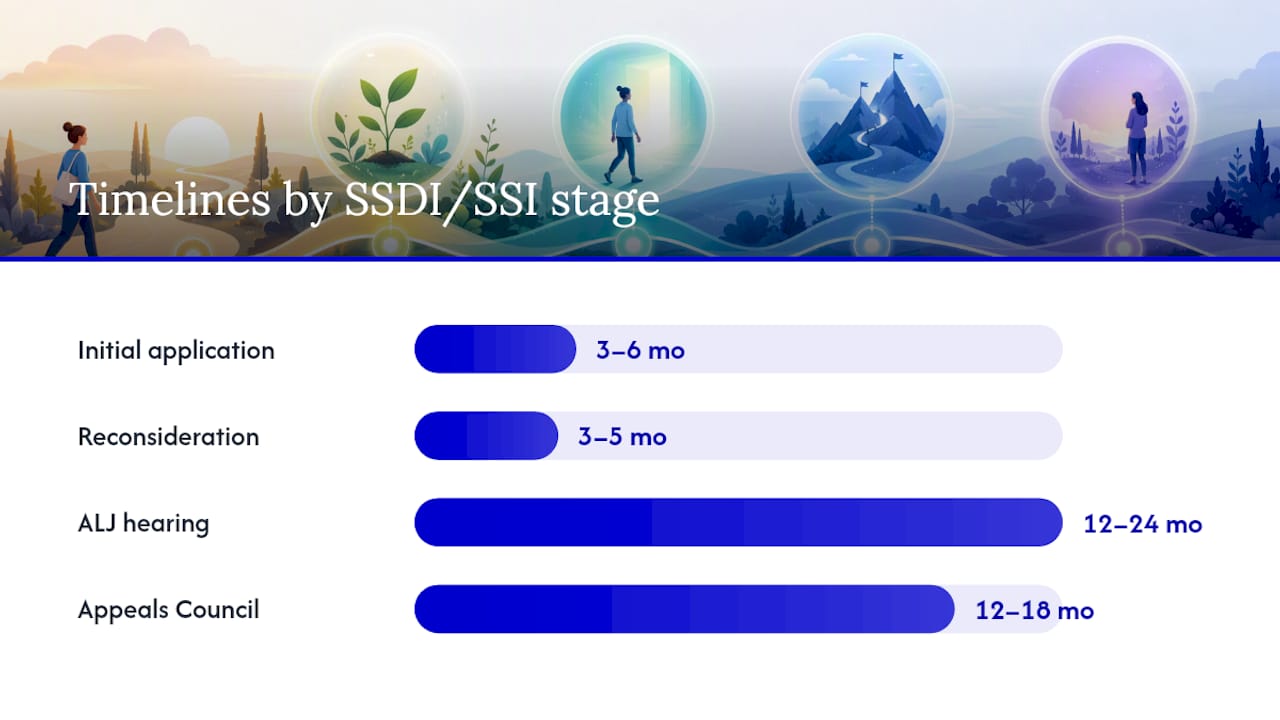
Most IBS claims are denied at the initial application stage. That is not unusual for non-listed impairments, and it does not mean the claim is over. The process has four main stages:
- Initial application. File online at ssa.gov, by phone, or in person at a local SSA office. Gather all medical records, employment history, and clinician contact information before filing. Incomplete applications slow the process significantly.
- Reconsideration. If denied, you have 60 days to request reconsideration. This stage has a high denial rate for non-listed conditions. Use the time between initial denial and reconsideration to collect additional RFC statements, updated medical records, and employer documentation.
- ALJ hearing. If reconsideration is denied, request a hearing before an Administrative Law Judge. This is where most IBS claims that ultimately succeed are won. The ALJ reviews all evidence, hears testimony, and may question a vocational expert about available jobs. Preparing thoroughly for this stage is the single most important factor in the outcome.
- Appeals Council and federal court. If the ALJ denies the claim, further appeals are available, though they are less commonly pursued.
| Stage | Typical timeline | Key deadline | What to do |
|---|---|---|---|
| Initial application | 3–6 months | None to file | Submit complete records |
| Reconsideration | 3–5 months | 60 days from denial | Add RFC, updated records |
| ALJ hearing | 12–24 months after request | 60 days from denial | Prepare testimony, retain counsel |
| Appeals Council | 12–18 months | 60 days from ALJ denial | Review ALJ decision for legal error |
Pro Tip: Request your SSA file after any denial. It shows exactly what records reviewers saw and what they cited as the reason for denial. Gaps in that file are your roadmap for what to add before the next stage.
Workplace protections for people with IBS under the ADA and EEOC guidance
The ADA covers any physical impairment that substantially limits a major life activity. Eating, digestion, bowel function, and concentrating are all recognized major life activities. Courts have found that IBS can meet the ADA standard when symptoms are severe enough, as confirmed by Medical News Today's review of IBS disability definitions.
Employers with 15 or more employees must provide reasonable accommodations unless doing so creates an undue hardship. Common accommodations for IBS include:
- A workstation located near a restroom
- Flexible start and end times to accommodate morning symptom patterns
- Permission to take unscheduled short breaks
- Remote work or hybrid arrangements during flares
- Modified duties that reduce physical demands during severe episodes
The ADA requires an "interactive process," meaning the employer must engage in a good-faith dialogue with you about what accommodations are feasible. You do not need to use the word "disability" in your request; you need to describe your functional limitation and ask for an adjustment. The Job Accommodation Network (JAN) at askjan.org provides free, employer-specific guidance on accommodation options for digestive disorders and can help you frame requests effectively.
Pro Tip: Submit accommodation requests in writing and keep copies. A written record of the request, the employer's response, and any follow-up creates documentation that is useful both for EEOC complaints and as supporting evidence in an SSDI claim. Verbal agreements disappear; written ones do not.
What veterans need to know about VA disability ratings for IBS
The Department of Veterans Affairs recognizes IBS-type conditions as potentially service-connected. VA ratings for IBS typically range from 10% to 30%, depending on symptom severity and the degree to which the condition affects daily functioning and employment, according to Veterans Guide's breakdown of VA IBS ratings.
Key evidence for a VA claim includes:
- Service treatment records showing IBS symptoms during active duty
- A nexus letter from a physician connecting current IBS to service
- Current treatment records documenting ongoing symptom severity
- A personal statement describing day-to-day functional impact
The VA rates IBS based on the frequency and severity of symptoms, including diarrhea, constipation, pain, and the degree to which they interfere with work and daily activities. A 10% rating reflects mild symptoms with occasional disturbance; a 30% rating reflects severe symptoms with diarrhea or alternating diarrhea and constipation, with more than occasional incapacitating episodes. Veterans should document every symptom category, not just the most prominent one, to avoid an underrated claim.
VA rules differ from SSA rules in one important way: the VA uses a percentage rating system that can result in partial compensation, while SSA is an all-or-nothing determination based on inability to work. A veteran can receive a 30% VA rating and still work full time; SSA requires proof that no substantial gainful activity is possible.
A 30–90 day plan to strengthen your IBS disability claim or accommodation request
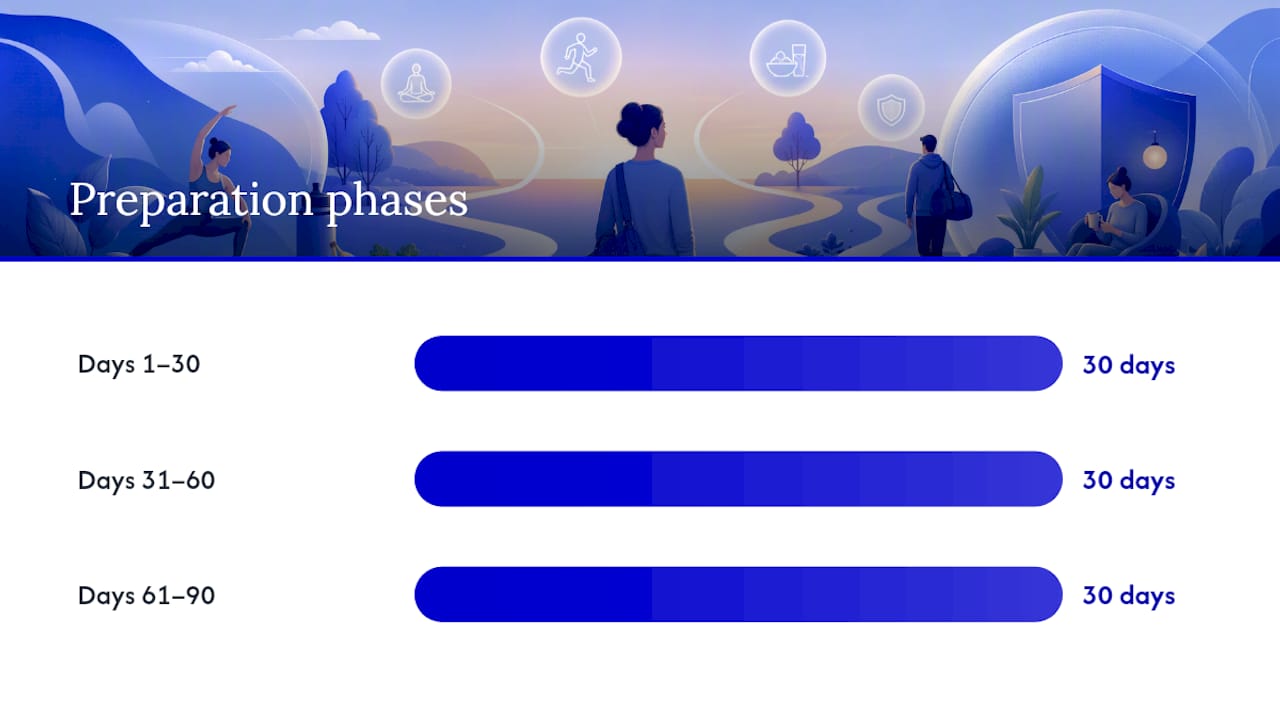
The difference between a weak claim and a strong one is almost always preparation time. Here is a structured plan:
Days 1–30:
- Start a daily symptom log. Record episode frequency, duration, pain level (1–10), activities missed, and any work impact.
- Schedule a follow-up appointment with your treating physician. Bring your symptom log and ask specifically about an RFC statement.
- Submit a written accommodation request to your HR department citing the ADA and describing your functional limitations.
- Gather all existing medical records, including lab results, imaging, and medication history.
Days 31–60:
- Request attendance and performance records from your employer covering the past 12–24 months.
- Ask your physician to complete a formal RFC form. Provide written notes on your worst-day symptoms and how often they occur.
- Collect third-party statements from coworkers, supervisors, or family members who observe your limitations.
- If you have seen a mental health provider for anxiety or depression related to IBS, request those records as well.
Days 61–90:
- Review your documentation set for gaps. Missing records from a treating specialist or a gap in the timeline weakens the claim.
- If you have already been denied, consult a disability attorney before the 60-day appeal deadline.
- If you are a veteran, contact a VA-accredited claims agent or Veterans Service Organization (VSO) to review your service records.
Pro Tip: A sample written accommodation request: "I am writing to request a reasonable accommodation under the ADA. I have a medical condition that affects my digestive system and requires me to access a restroom frequently and without advance notice. I am requesting [specific accommodation, e.g., a workstation near the restroom and permission to take brief, unscheduled breaks]. I am happy to provide supporting documentation from my physician."
When to consult a disability attorney or accredited representative
Legal representation materially improves outcomes at the ALJ hearing stage. The decision to hire counsel is not just about having someone fill out forms; it is about having someone who knows what evidence an ALJ finds persuasive and how to present it.
Situations where counsel tends to make the most difference:
- You have received an initial denial or reconsideration denial
- Your medical records are incomplete, inconsistent, or spread across multiple providers
- You have multiple diagnoses (IBS plus anxiety, depression, or another condition)
- You are approaching an ALJ hearing and have not prepared testimony
- Your treating physician has not provided a formal RFC statement
A disability attorney or accredited representative will organize your records chronologically, obtain RFC statements from treating physicians, prepare you for ALJ testimony, and cross-examine vocational experts who testify about available jobs. Understanding what attorneys do at each stage helps you know what to expect from representation.
Most disability attorneys work on contingency, meaning no fee unless you win. The SSA caps attorney fees at 25% of back pay, up to a statutory maximum. There is no upfront cost.
- Ask any prospective attorney about their experience with non-listed digestive conditions specifically.
- Ask how they handle RFC collection and whether they work directly with treating physicians.
- Confirm their communication process: how often will they update you, and who is your primary contact?
Pro Tip: A free initial consultation is standard. Bring your denial letter, a list of treating providers, and your symptom log. The attorney can assess your claim's strengths and weaknesses in one meeting, which is useful even if you ultimately proceed without representation.
Key Takeaways
IBS can qualify as a disability under the ADA when it substantially limits major life activities, and can qualify for SSDI/SSI when documented functional limitations prevent any sustained work for 12 or more months.
| Point | Details |
|---|---|
| ADA vs. SSA distinction | ADA covers workplace accommodations; SSA requires proof of inability to work for 12+ months. |
| IBS is not SSA-listed | IBS has no Blue Book listing; qualification depends entirely on RFC evidence and functional limits. |
| Documentation is decisive | Longitudinal symptom logs, RFC statements, and attendance records are the strongest evidence for any IBS claim. |
| Appeal stages matter | Most IBS claims are denied initially; the ALJ hearing stage is where well-prepared claims most often succeed. |
| Ssdilawyer connects you | Ssdilawyer matches claimants with experienced SSDI attorneys who handle applications, denials, and ALJ hearings. |
Why documentation matters more than diagnosis in IBS disability claims
The most common mistake in IBS disability claims is treating the diagnosis as the argument. A diagnosis of IBS tells SSA reviewers what condition you have. It does not tell them what you cannot do. Those are two separate questions, and SSA only cares about the second one.
Claimants who document their functional limits consistently, over time, with corroboration from physicians, employers, and third parties, win claims that claimants with identical diagnoses and sparse records lose. The condition is the same. The outcome is not.
There is also a tendency to underestimate the ADA pathway. For many people with IBS, workplace accommodations provide faster, more practical relief than a multi-year SSDI process. A flexible schedule or a workstation near a restroom can make continued employment viable, which is a better outcome than leaving the workforce entirely while waiting for benefits. The two paths are not mutually exclusive, but the ADA option is often pursued too late or not at all.
Mental health conditions that co-occur with IBS, particularly anxiety and depression, are frequently underreported in disability claims. SSA evaluates the combined effect of all impairments, not each one in isolation. A claimant whose IBS alone might not meet the RFC threshold may cross it when anxiety-related concentration limits are added to the record. If you are seeing a mental health provider, those records belong in your claim file.
Ssdilawyer connects you with experienced SSDI attorneys
Navigating an SSDI claim for a non-listed condition like IBS is procedurally demanding. The RFC pathway requires specific medical language, the right documentation sequence, and preparation for an ALJ hearing that most claimants have never experienced before.
Ssdilawyer matches claimants directly with experienced disability attorneys who handle IBS and other non-listed digestive conditions. The matching process is straightforward: a short intake form collects your diagnosis, treatment history, and claim status, and Ssdilawyer connects you with counsel suited to your case. Attorneys in the network work on contingency, so there is no fee unless your claim succeeds. Whether you are filing for the first time, responding to a denial, or preparing for an ALJ hearing, the right attorney changes what is possible. Start your free case evaluation at ssdilawyer.co.
This article provides general legal and medical information, not professional advice. Disability rules and benefit eligibility depend on individual circumstances. Confirm current SSA, ADA, and VA requirements with the relevant agency or a qualified attorney before making decisions about your claim.
Useful sources and official guidance
| Source | What it covers |
|---|---|
| SSA Blue Book — Digestive Disorders | IBD listing criteria and SSA evaluation standards for digestive impairments |
| SSA — How we decide if you are disabled | Qualifying framework, 12-month rule, RFC pathway, and application process |
| Job Accommodation Network (JAN) | ADA accommodation examples, employer guidance, and interactive process resources |
| NCBI/PMC — IBS clinical review | Clinical features, symptom variability, and chronic course of IBS |
| Healthline — Is IBS a disability? | Consumer-facing overview of IBS and SSDI/SSI eligibility |
| Medical News Today — Is IBS a disability? | ADA definitions and workplace protections explained for general readers |
| Veterans Guide — VA Disability Rating for IBS | VA rating criteria, service connection evidence, and claim filing guidance |
| Nolo — Getting disability for IBS | RFC standards, appeals process, and practical legal guidance for IBS claimants |