
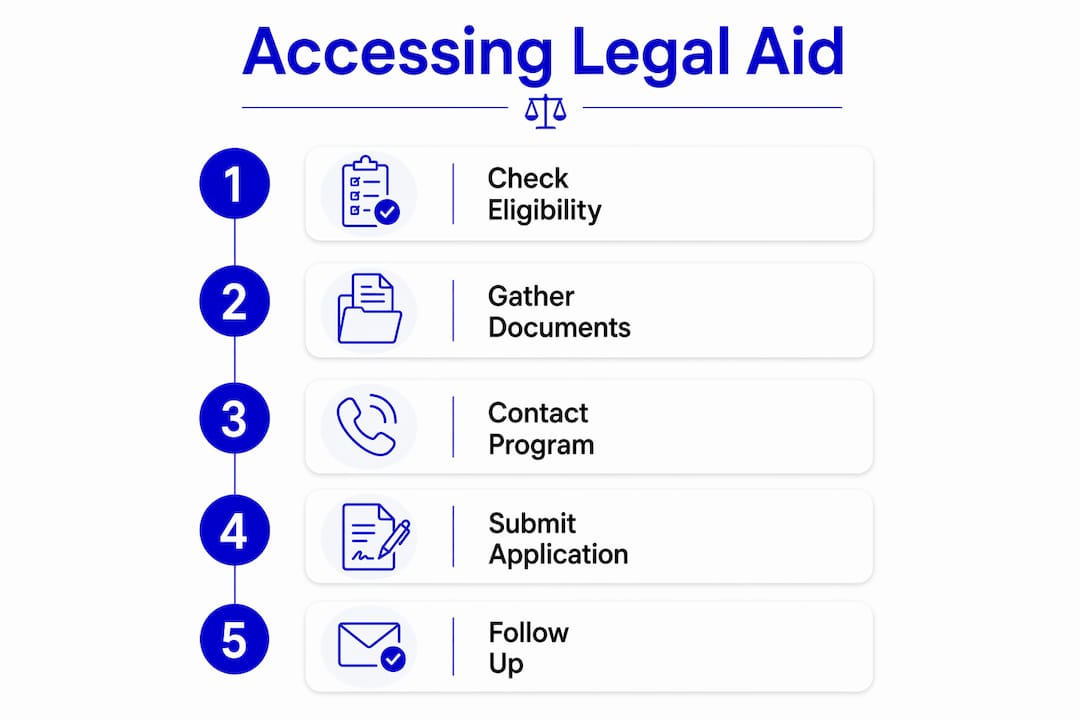
Free or low-cost legal help for SSDI and SSI claims is available right now. Legal aid organizations, Protection & Advocacy (P&A) agencies in every state, pro bono programs, and contingency-fee disability attorneys all provide assistance with applications, denials, and appeals. The immediate first step: call your local legal aid intake line or the Social Security Administration at 1-800-772-1213, and gather your documents before you dial.
Key items to have ready before any intake call:
- Government-issued photo ID
- Recent pay stubs or tax returns (to verify income)
- Any SSA denial or benefit award letters
- Medical records and a list of treating providers
- A brief written timeline of your condition and any prior applications
The Legal Services Corporation (LSC) sets federal income guidance that most legal aid programs follow: households at or below 200% of the Federal Poverty Level qualify for assistance. For a single person in 2026, that ceiling is $31,920 per year. Ssdilawyer.co also offers a free matching service that connects you with experienced disability attorneys when legal aid capacity is limited.
Table of Contents
- Who can help you access legal aid for disability benefits?
- Who qualifies for legal aid: income limits and intake criteria
- How to reach legal aid or P&A and what intake will ask for
- What legal aid and P&A can (and can't) do for your claim
- How to prepare your disability claim: medical evidence and documentation
- Expected timelines, costs, and fee arrangements
- How to choose the right legal help: questions to ask and red flags
- Ssdilawyer.co: get matched with a disability attorney
- Key Takeaways
- What the SSDI system actually rewards
Who can help you access legal aid for disability benefits?
Four distinct types of help exist, and the right choice depends on your situation.

Legal aid organizations are nonprofit law offices funded largely through the Legal Services Corporation. They handle SSDI and SSI applications, appeals, and related civil legal issues. Income limits apply, and capacity is often tight, so they prioritize appeals and hearings where legal intervention is most likely to change the outcome.
Protection & Advocacy (P&A) agencies operate in every U.S. state with a federal mandate focused on disability rights enforcement. They provide free legal help regardless of income in many cases, but their scope varies. Some state P&A agencies do not handle routine SSDI or SSI applications; they focus on rights violations, abuse, institutional complaints, and access issues. Check your state's P&A mandate before calling.
Pro bono programs and law school clinics fill gaps when legal aid is full. State bar associations maintain pro bono panels, and the ABA Free Legal Answers platform connects low-income users with volunteer attorneys online.
Contingency-fee private disability attorneys are the right choice when you face an ALJ hearing, a complex appeal, or when legal aid cannot take your case. They charge no upfront fee; payment comes from a portion of any back pay awarded. Understanding SSDI legal representation benefits can help you decide when private counsel is worth pursuing.
Who qualifies for legal aid: income limits and intake criteria
Federal guidance allows legal aid programs to serve disability benefits applicants with household incomes up to 200% of the Federal Poverty Level.
Most programs also consider:
- Asset limits — some offices apply a modest asset threshold alongside income
- Residency — you must live in the program's service area
- Case type — appeals, hearings, and systemic issues receive priority over first-time applications
- Legal merit — intake staff assess whether representation is likely to affect the outcome
Quick self-check before you call: confirm your gross household income is at or below $31,920 (single person), that your legal problem involves a disability benefit claim or related civil issue, and that you have documentation of the problem (a denial letter, a benefit notice, or medical records).
How to reach legal aid or P&A and what intake will ask for
Legal aid programs accept contact by phone intake line, online application form, or in-person walk-in. The SSA itself accepts disability applications online, by phone at 1-800-772-1213, or at a local Social Security office, Monday through Friday, 8:00 a.m. to 7:00 p.m.
During intake, staff will verify financial eligibility and assess the legal merits of your case. Expect a brief screening call, possible placement on a waitlist, and a triage decision within days to a few weeks depending on the office's caseload.
Documents typically requested at intake:
- Photo ID and proof of address
- Pay stubs, most recent tax return, or benefit award letters (income verification)
- SSA denial notice or correspondence (if applicable)
- Medical records or provider contact information
- Any prior application paperwork
Pro Tip: Write a one-page timeline before you call: dates of diagnosis, treatment, prior applications, and any denial notices. Intake workers move faster when you can answer "when did this happen?" without searching through papers.
What legal aid and P&A can (and can't) do for your claim
Core services legal aid and P&A offices typically provide:
- Help completing SSDI or SSI applications
- Evidence gathering and medical records coordination
- Representation at ALJ hearings and appeals
- Assistance with related civil legal issues (housing, public benefits) that affect eligibility
- Rights enforcement and complaints against institutions (P&A focus)
Limitations matter. Legal aid offices operate under strict capacity constraints and use priority systems. They favor cases where representation is likely to produce a materially different result. A first-time application with no prior denial is less likely to be accepted than a case already in the appeals pipeline.
Approximately 65% of initial Social Security disability applications are denied. That denial rate is precisely why legal aid offices concentrate resources on appeals and hearings rather than initial filings.
Some offices may ask for a small contribution toward case costs (filing fees, record retrieval), even when attorney fees are waived. Confirm this at intake.
How to prepare your disability claim: medical evidence and documentation
Strong documentation is the single most controllable factor in a disability claim. Gather these before any intake appointment:
- Complete medical records from all treating providers (primary care, specialists, mental health)
- Medication lists with dosages and prescribing physicians
- Therapy and treatment notes showing consistent attendance
- A written functional limitations statement from your primary doctor
- A chronological symptom log you maintain yourself
Treatment compliance carries significant weight. Following prescribed treatment plans — medication, therapy, scheduled follow-ups — is a common deciding factor in whether a claim succeeds. Gaps in treatment without a documented reason often lead to denials.
| Evidence type | Why it matters | How to request it |
|---|---|---|
| Medical records | Documents diagnosis, severity, and treatment history | Provider release form or patient portal |
| Treatment notes | Shows consistent care and functional decline | Request from billing or medical records office |
| Doctor's letter | Clinician statement on work limitations carries weight at hearings | Ask your primary care or specialist directly |
| Medication records | Confirms compliance and treatment response | Pharmacy printout or provider records |
| Functional assessment | Describes specific physical or cognitive limits | Request from treating physician or specialist |
Pro Tip: Request records early — providers can take 30 days or more to fulfill requests. Ask your doctor for a concise letter addressing your specific work-related limitations, not just a diagnosis summary. That distinction matters at an ALJ hearing.
Reviewing medical documentation mistakes that commonly harm claims can help you avoid the most frequent errors before submitting anything.
Expected timelines, costs, and fee arrangements
The SSDI and SSI process moves in stages, and most applicants face at least one denial before approval.
- Initial application: Several months for an SSA decision
- Reconsideration: 3–6 months; most reconsiderations are also denied
- ALJ hearing: Often 12–24 months after requesting a hearing
- Appeals Council review: Several additional months if requested
- Federal court: A further year or more if needed
Roughly two-thirds of initial disability applications are denied. Plan for appeals from the start and gather evidence proactively rather than waiting for a denial.
On costs: legal aid representation is free, though small case costs may apply. Private disability attorneys typically work on contingency, meaning no upfront fee. SSA caps contingency fees on past-due benefits under federal rules. For a full breakdown of finding an SSDI attorney with no upfront cost, Ssdilawyer.co provides detailed guidance on what to expect financially.
How to choose the right legal help: questions to ask and red flags
Before committing to any attorney or legal aid program, ask these questions:
- How many SSDI or SSI cases have you handled in the past year?
- What is your typical outcome at the ALJ hearing stage?
- Who will actually work on my case — an attorney or a paralegal?
- What is the fee arrangement, and are there any out-of-pocket costs?
- How long do you expect my case to take from this point?
Red flags to watch for:
- Guarantees of approval — no attorney can promise an outcome
- Vague or verbal-only fee arrangements
- Difficulty reaching your assigned contact after the first meeting
- Pressure to sign quickly without time to review documents
Verify that any private attorney holds a current state bar license and has documented experience with SSDI and SSI claims specifically. General practice attorneys without disability law experience often miss the SSA's specific evidentiary standards. An SSDI case strategy guide can help you understand what a well-prepared attorney should be doing at each stage.
Ssdilawyer.co: get matched with a disability attorney
When legal aid is at capacity or your case requires hearing-level representation, Ssdilawyer.co connects you directly with experienced disability attorneys who handle SSDI and SSI applications, denials, appeals, and ALJ hearings. There is no upfront cost to submit a case inquiry, and attorneys in the network typically work on contingency.
The process is straightforward: submit your case details through the intake form at Ssdilawyer.co, and the matching service identifies attorneys with relevant experience for your specific situation. This is a practical next step when P&A agencies cannot take your case or when you need dedicated representation for a hearing.
Key Takeaways
Accessing legal aid for disability benefits requires knowing the income threshold, contacting the right program early, and preparing documentation before your first call.
| Point | Details |
|---|---|
| Income eligibility ceiling | Legal aid serves applicants up to 200% FPL — $31,920 for a single person in 2026. |
| First contact | Call SSA at 1-800-772-1213 or your local legal aid intake line; have ID, denial letters, and medical records ready. |
| High denial rate | Roughly two-thirds of initial applications are denied; prepare for appeals from the start. |
| Documentation priority | Consistent treatment records and a doctor's functional limitations letter carry the most weight at hearings. |
| Ssdilawyer.co matching | Submit a free case inquiry at Ssdilawyer.co to connect with a contingency-fee disability attorney when legal aid is unavailable. |
What the SSDI system actually rewards
The most common mistake people make when pursuing disability benefits is treating the initial application as the main event. It is not. The ALJ hearing is where most approved claims are won, and the evidence you build from day one determines how that hearing goes.
Legal aid offices know this, which is why they concentrate their limited capacity on appeals rather than first-time filings. If you are at the application stage and legal aid cannot take your case yet, that is not a closed door. Use the time to build your medical record, document treatment compliance, and get a functional limitations letter from your treating physician. By the time you reach a hearing, that preparation is what an attorney will use.
The system is slow and the denial rates are high, but neither fact is arbitrary. The SSA's process has defined stages and defined evidence standards. Working within those standards, with qualified legal help at the right stage, is the most direct path to approval.