
Yes, you can apply for SSDI while receiving unemployment benefits. Federal rules don't ban it, and the Social Security Administration does not count unemployment compensation as wages that reduce your SSDI payment. The real risk isn't legality. It's credibility. Certifying that you're "able and available" for work while claiming you're disabled can undercut your case. Gather your medical records now, and think carefully about how you're answering unemployment eligibility questions each week.
TL;DR:
- Applying for SSDI does not automatically disqualify you if you receive unemployment benefits, but conflicting statements about work ability can harm your credibility at hearings.
- State unemployment offsets can reduce your benefit check but only impact your state payment, not your federally fixed SSDI amount, and rules vary by state.
- Gathering thorough medical records and accurately describing your work capacity are crucial to prevent delays and strengthen your case during application and appeals.
- You should report any approved SSDI benefits to your state unemployment office immediately to avoid overpayment issues.
- Consulting an SSDI attorney experienced with unemployment overlaps can improve your chances of success, especially when credibility or complex records are involved.
Table of Contents
- Does Getting Unemployment Hurt Your SSDI Application?
- Check Your State's Unemployment Offset Rules First
- How to Apply for SSDI: Documents, Steps, and Timing
- How to Keep Your Statements Consistent Across Both Claims
- What Happens After You File, and What to Report
- Balancing Immediate Income Against Your Long-Term SSDI Case
- Get Matched With an SSDI Attorney Who Handles Unemployment Overlap Cases
- Where to Verify These Rules Yourself
- Sources
- FAQ
Does Getting Unemployment Hurt Your SSDI Application?
Not automatically, but it complicates the story you're telling two different agencies. The Social Security Administration confirms there is no federal rule blocking someone from applying for or receiving SSDI while collecting state unemployment, and unemployment checks don't count as wages that lower your SSDI amount.
The friction shows up elsewhere. SSA uses Substantial Gainful Activity, or SGA, as a dollar threshold: earn above it through actual work, and you generally don't qualify as disabled, regardless of what else is on your file. SSA also runs routine records checks and shares data with state agencies, so an unemployment claim sitting alongside your disability application is visible.
Here's the part people miss: an administrative law judge can weigh your unemployment certifications as a credibility factor. If you told the state you were fully able and available for any work, that statement can surface at a hearing. But SSA's own disability program guidance confirms an ALJ cannot deny your claim solely because you received unemployment. Case law requires judges to weigh your full medical record, not one data point.
- Unemployment income does not reduce your federal SSDI check.
- SGA earnings from actual work can disqualify you regardless of unemployment status.
- SSA cross-checks records with state agencies as standard practice.
- A judge can question your credibility over unemployment statements, but cannot deny you for that reason alone.
Check Your State's Unemployment Offset Rules First
Some states reduce your unemployment check when you're also collecting SSDI, and the formulas aren't uniform. This offset hits your state unemployment payment, never your federal SSDI amount. The two programs don't touch each other at the federal level.
Legal guidance on the interaction between the two programs notes that offset rules vary by state and change over time, so a formula you read about last year may not apply today.
- Federal SSDI stays fixed no matter what your state does with unemployment.
- Offset percentages and thresholds differ by state and can shift year to year.
- Call your state unemployment office directly, or check its website, before you count on combined income.
- Save whatever guidance the state gives you in writing.
Don't budget around numbers from a forum post. Call the agency.
How to Apply for SSDI: Documents, Steps, and Timing
You've got three ways to apply for SSDI: online through SSA's portal, by phone at 1-800-772-1213, or by appointment at a local office. SSA's Disability Starter Kit walks you through what to expect before you begin.
- Pull together your ID, proof of citizenship or lawful status, and Social Security number.
- Compile detailed medical records, provider names, and contact information for every doctor who treated the condition.
- List every medication, dosage, and prescribing physician.
- Gather W-2s, tax returns, and a full work history for the past 15 years.
- Complete Form SSA-3368 (the Adult Disability Report) and SSA-827 (medical release authorization).
SSA's application guidance states that initial processing typically runs 6 to 8 months, and every approved claim carries a mandatory five-month waiting period before payments start. If your disability onset date falls further back, you may receive back pay covering the months between onset and approval, once the waiting period is satisfied. For a deeper breakdown of how that timing works, see this guide to SSDI waiting period rules.
Pro Tip: Create a "my Social Security" account online the same day you file. It's the fastest way to track your claim status without waiting on hold.
Complete medical evidence upfront speeds everything. Missing records are the single biggest reason claims stall in review.
How to Keep Your Statements Consistent Across Both Claims
The fix here isn't complicated, it's just tedious. When you search for jobs to satisfy unemployment requirements, target positions that match your actual medical restrictions: part-time, sedentary, remote, whatever your doctor has documented. Log every application with the date, employer, and job title.
- Describe your availability honestly on weekly certifications. If you can only work four hours a day, say so instead of checking "available for any work."
- Write a short, dated explanation of why you filed for unemployment, tying it to income need or a search for accommodated work consistent with your records.
- Keep that explanation ready for both the SSA file and a potential hearing.
- If the unemployment office or SSA flags a discrepancy, respond with medical evidence, not just an explanation.
Pro Tip: A documented job search targeting restricted, accommodated roles can actually strengthen your SSDI case. It shows there were no suitable jobs within your limitations, rather than contradicting your claim.
When the paperwork gets adversarial, that's usually the point to call a disability attorney about your case strategy.
What Happens After You File, and What to Report
Once SSA reviews your claim, expect one of three outcomes: approval, denial, or a request for more medical evidence. Approved claims still wait out the five-month period before the first payment, with back pay covering earlier qualifying months.
- If denied, you can request reconsideration, then an ALJ hearing, then Appeals Council review, and finally federal court if needed; for detailed guidance on appeals and denials in Georgia, see the GAPP Denial Appeal in Georgia: What to File and When. Unemployment-related credibility questions most often surface at the hearing stage.
- If approved, notify your state unemployment office immediately to stop those payments and avoid an overpayment demand later.
- If denied, keep your written unemployment explanation on file. It becomes part of your appeal record.
- Get an attorney involved when credibility disputes or complex appeals are on the table. Timing here matters more than people expect.
Balancing Immediate Income Against Your Long-Term SSDI Case
The tension is real: you need money now, and unemployment is the fastest legal source of it. But every week you wait to file SSDI because you're worried about looking inconsistent is a week you're not building your record, and possibly a week of back pay you're leaving on the table.
My take, after looking at how these cases actually play out: file SSDI as soon as your condition looks likely to last 12 months or more. Don't wait for unemployment to run out first. Tailor your job search to your real limitations, document everything in writing, and treat your unemployment certifications as part of your permanent SSA record, because they often become exactly that. When a case turns on credibility rather than medical facts, that's when a claimant benefits most from talking to a disability attorney rather than navigating a hearing alone. Ssdilawyer exists for that exact scenario.
— Gerard
Get Matched With an SSDI Attorney Who Handles Unemployment Overlap Cases
A matching service can connect you with disability attorneys experienced in addressing unemployment credibility arguments using medical evidence.
If you're facing a denial, a credibility dispute tied to your unemployment certifications, or you just want an attorney's help preparing evidence and testimony before a hearing, that's precisely when a matching service earns its place. Ssdilawyer doesn't charge you to submit your case. Instead, it connects your intake to an experienced SSDI attorney who reviews the specifics and reaches out. If your situation involves overlapping unemployment and disability claims, don't guess at how a judge will read your record. Visit Ssdilawyer's intake page and submit your case details for a free attorney review.
Where to Verify These Rules Yourself
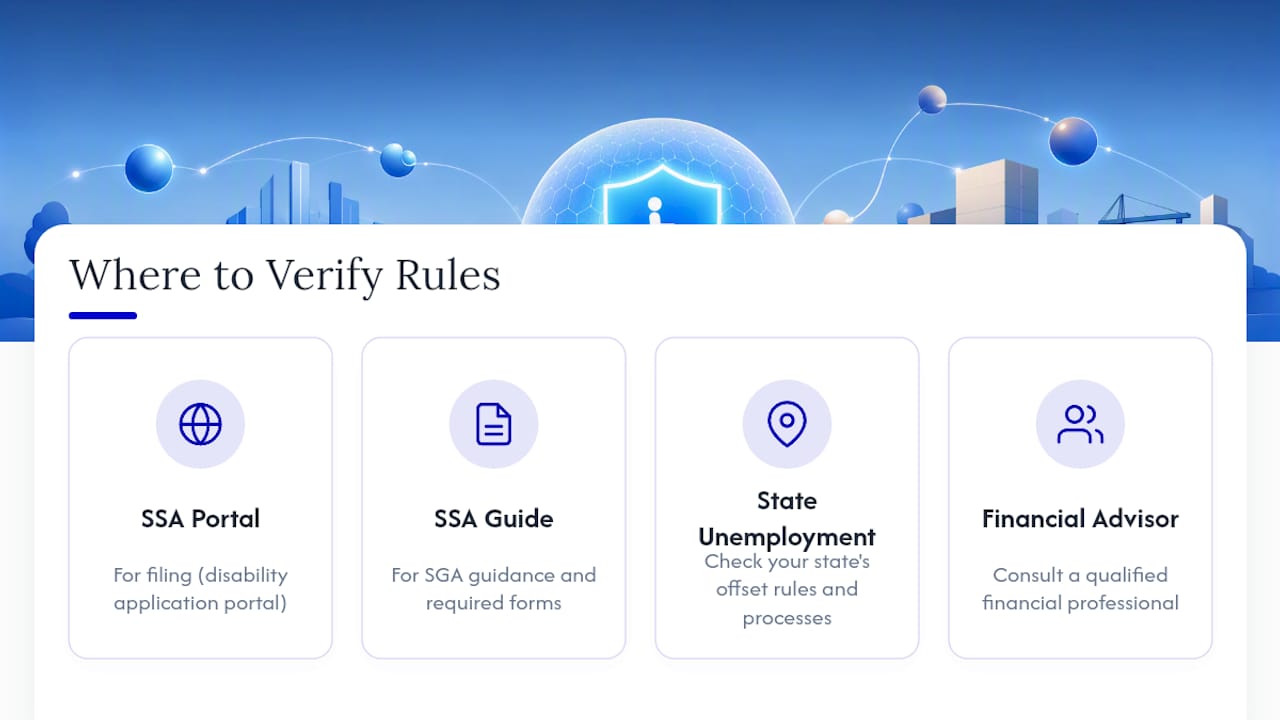
Start with SSA's disability application portal for filing, SSA's disability guide for SGA and forms, and your state unemployment office for offset rules.
This article is general information, not a substitute for advice from a qualified financial advisor. Consult a qualified financial professional about your own circumstances before acting on anything here.
Sources
- Apply Online for Disability Benefits | SSA
- SSDI and Unemployment Benefits: Can You Get Both in 2026? | Disability Exchange
FAQ
Can You Collect Unemployment While Applying for SSDI?
Yes. Nothing in federal law prevents applying for or receiving SSDI while collecting state unemployment, and SSA does not count unemployment compensation as wages that reduce your benefit. The practical concern is credibility, not eligibility.
How Much Is SSDI Per Month?
SSDI payment amounts are based on your individual earnings history and lifetime Social Security contributions, not a flat rate. Because the calculation is personal to each work record, the most accurate figure comes from your Social Security statement or a conversation with SSA directly.
Is It Better to Be on Disability or Unemployment?
It depends on your medical timeline, not your preference. If your condition is likely to last 12 months or longer, filing for SSDI protects potential back pay through the five-month waiting period, while unemployment offers faster but temporary income with no guarantee your health will allow a return to work.
How Do You Apply for Social Security Hardship Payments?
Social Security doesn't offer a separate "hardship payment" program. What most people mean is expedited disability processing, which SSA grants case by case, or standard SSDI, which you apply for online, by phone, or at a local office.