Yes, the Social Security Administration can waive an SSDI overpayment if you show you were not at fault and repaying would be unfair or create financial hardship. Your first move is simple: read your overpayment notice, then either submit Form SSA-632 or call 1-800-772-1213 if the amount is $1,000 or less. Filing on time typically pauses collection while SSA reviews your case.
TL;DR:
- Filing Form SSA-632 promptly and correctly can pause collection while SSA reviews your case, especially if the overpayment is under $1,000.
- Your waiver request must prove you were not at fault and that repaying the debt would cause financial hardship or go against equity and good conscience.
- Assembling documents like recent benefit letters, pay stubs, bills, and bank statements before filing speeds up the review process.
- SSA typically takes 30 days to process waiver requests, with full forgiveness, partial forgiveness, or collection resumption as possible outcomes.
- Large or disputed overpayments may require legal assistance to navigate the process efficiently and avoid delays caused by mismatched requests.
Table of Contents
- What Is an SSDI Overpayment Waiver?
- How Do You File Form SSA-632 for an SSDI Waiver?
- What Documents Does SSA Want to See?
- How Long Does the Waiver Process Take, and What Happens Next?
- Waiver, Appeal, or Repayment Rate Change: Which One Do You Need?
- When Should You Bring in an SSDI Attorney?
- A Practitioner's Take on What Actually Slows Waiver Cases Down
- Get Matched With an Attorney Who Handles SSDI Overpayment Cases
- Sources
What Is an SSDI Overpayment Waiver?
An SSDI overpayment waiver is SSA's formal permission to keep money it says it paid you by mistake, without repaying it. Getting one approved requires meeting a two-part test spelled out in POMS GN 02250.001. You must show you were without fault in causing the overpayment, and you must show that recovery would either defeat the purpose of the Social Security Act or be against equity and good conscience.
Both halves matter. Fault often turns on whether you reported income, work activity, or living arrangements accurately and on time. The second half usually comes down to money: can you cover rent, food, and medical costs if SSA claws back the payment?
Waiver is not always the right move. Consider these distinctions before you file:
- Request a waiver when you accept that you were overpaid but believe repayment isn't fair given your finances or circumstances.
- File an appeal instead when you dispute that an overpayment happened at all, or dispute the amount SSA calculated.
- Ask for a lower repayment rate when you agree you owe the money but the current withholding is too aggressive for your budget.
Small overpayments get easier treatment. SSA's administrative tolerance rules let staff waive amounts of $1,000 to $2,000 without the full paperwork trail, and sometimes over the phone.
How Do You File Form SSA-632 for an SSDI Waiver?
Filing correctly the first time saves months. Here's how to do it through each available channel.
- Get the form. Download SSA-632-BK as a PDF, or log into your mySocial Security account and use the "Upload Documents" feature to submit it electronically.
- Fill in the core sections. You'll list the overpayment amount, explain why you believe you were not at fault, and detail your monthly income, expenses, and assets.
- Sign it correctly. You sign for yourself. If a representative payee, legal guardian, or power of attorney manages your benefits, that person signs and should attach proof of their authority.
- Choose your submission method. Upload it online, mail or fax the completed form to your local Social Security field office, or hand-deliver it in person and ask for a stamped copy.
- Call instead, if eligible. For overpayments of $1,000 or less, you can often resolve the request over the phone at 1-800-772-1213 or by visiting your local office, skipping the paper form entirely.
- Keep proof. Save your mailing receipt, fax confirmation, upload confirmation, or the name of the SSA representative who took your call.
Pro Tip: Call ahead to your local field office before visiting in person. Some offices require appointments for overpayment matters, and showing up without one can mean a wasted trip and a delayed filing date.
Field offices process phone and in-person requests differently depending on staffing and overpayment complexity, so ask for a receipt number or case reference regardless of which path you choose.
What Documents Does SSA Want to See?
SSA's financial review exists to answer one question: can you afford to repay without giving up necessities? The SSA-632-BK instructions list the records examiners commonly request.
Assemble these before you file, not after SSA asks a second time:
- Income proof: recent benefit award letters, pay stubs, and your most recent tax return.
- Expense proof: rent or mortgage statements, utility bills, medical bills, and insurance premium statements.
- Asset records: recent bank statements, property deeds, and vehicle titles or loan documents.
- Household details: who lives with you and whether they contribute to shared expenses.
SSA may ask you to sign an authorization letting it pull financial records directly from banks or other institutions. Refusing that authorization rarely helps your case. Without independent verification, SSA has little reason to believe recovery would leave you unable to cover essentials, and an incomplete financial picture is one of the more common reasons waiver requests stall or get denied.
How Long Does the Waiver Process Take, and What Happens Next?
Timing protects you more than almost any other factor in this process. Requesting a waiver or appeal within 30 days of your overpayment notice generally pauses collection until SSA issues a decision, so you keep your full benefit while your case sits in review.
SSA reaches one of three outcomes:
- Full waiver: SSA forgives the entire overpayment, and you owe nothing.
- Partial waiver: SSA forgives part of the debt and arranges repayment for the rest, often at a reduced monthly rate.
- Denial: SSA resumes collection, which can include withholding future benefits, offsetting your tax refund, or other recovery tools.
If SSA already withheld money before approving your waiver, it typically refunds what it collected. You can also request a waiver even after repayment is underway or finished, so a prior denial or an ongoing repayment plan doesn't close the door permanently.
Waiver, Appeal, or Repayment Rate Change: Which One Do You Need?
Filing the wrong form is the single most common reason waiver cases drag on for months. Match your situation to the right process before you send anything.
- You think SSA made a math or fact error. File an appeal using Form SSA-561 to dispute the overpayment itself or its amount.
- You agree the overpayment happened, but repaying it would hurt. File Form SSA-632 to request a waiver based on lack of fault and hardship.
- You accept you owe the money but the monthly withholding is too steep. File Form SSA-634 to request a change in your repayment rate instead of forgiveness.
A reader who was still working part-time and thinks SSA miscounted their earnings needs an appeal, not a waiver. Someone living on a fixed income who can't absorb a $3,000 clawback needs a waiver. Someone who agrees they owe money but can only spare $20 a month needs a rate change.
When Should You Bring in an SSDI Attorney?
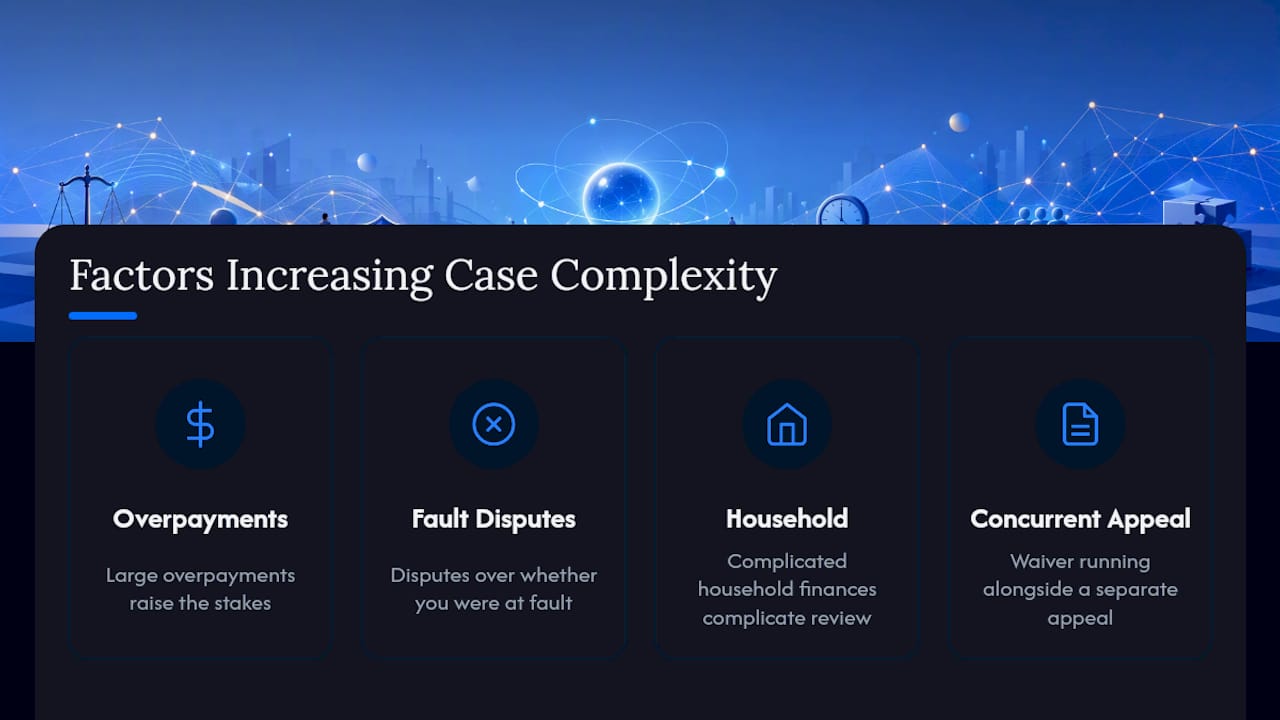
Some waiver cases are straightforward enough to handle alone, especially small-dollar phone requests. Others are not. Large overpayments, disputes over whether you were at fault, complicated household finances, or a waiver running alongside a separate benefits appeal all raise the stakes considerably.
An experienced disability attorney can gather the right financial records, frame your hardship narrative in terms SSA examiners actually credit, and represent you if your case reaches a hearing. Attorneys who focus on SSDI case strategy also know when a waiver is the wrong tool and an appeal or rate change will resolve things faster. For overpayment disputes tangled up with workplace issues, resources on disability discrimination can help clarify related rights.
A Practitioner's Take on What Actually Slows Waiver Cases Down
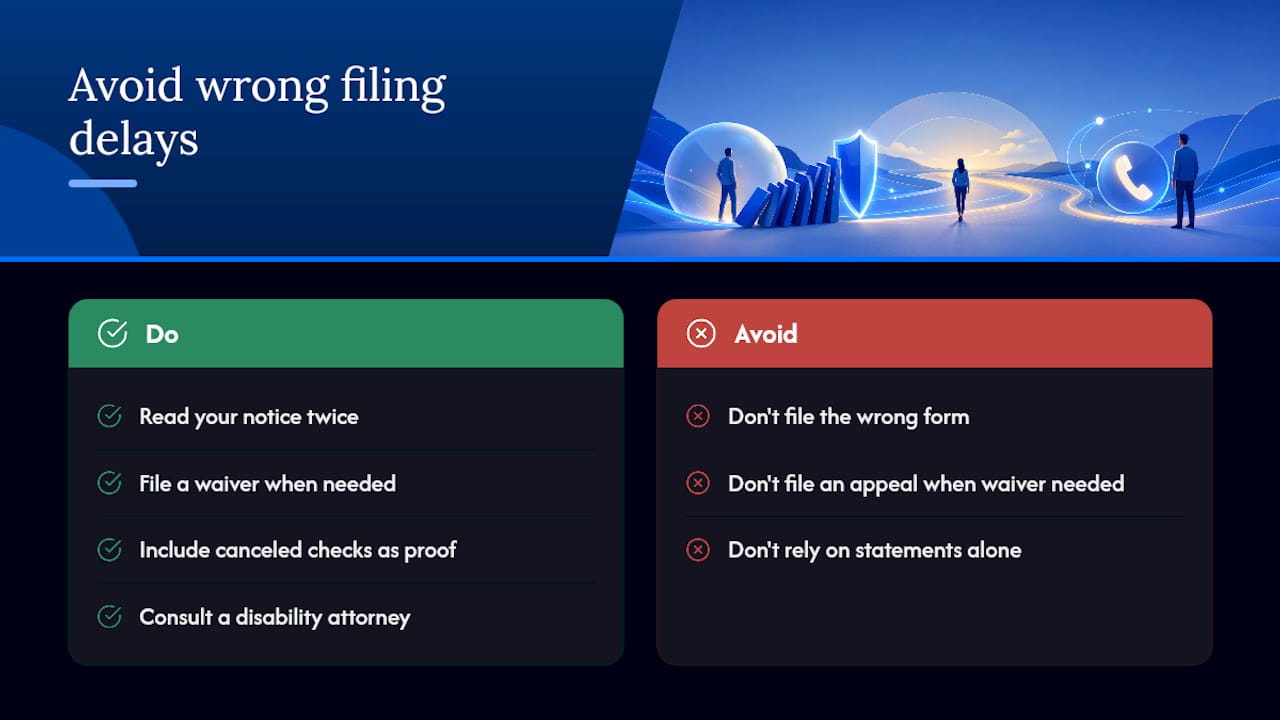
The biggest delay I see isn't paperwork volume. It's people filing an appeal when they needed a waiver, or vice versa, and losing months waiting on the wrong decision before anyone catches the mismatch. Read your notice twice before you pick a form.
The most underused piece of evidence is boring: canceled checks or bank debits showing you paid rent, utilities, and medical bills on time every month. That pattern does more to prove hardship than a written statement ever will. If your case involves a large balance or a fault dispute, a disability attorney can spot which document actually moves an examiner's decision. SSDILawyer.co connects readers with attorneys who handle exactly this kind of case.
— Gerard
Get Matched With an Attorney Who Handles SSDI Overpayment Cases
Filing Form SSA-632 correctly on the first try matters more when the overpayment is large, disputed, or tangled with another appeal. Ssdilawyer is the alternative to guessing your way through SSA paperwork alone. Instead of researching forms and deadlines by yourself, Ssdilawyer connects you directly with experienced disability attorneys who handle waiver requests, appeals, and hearings every day.
If your overpayment notice involves thousands of dollars, alleges fault on your part, or overlaps with a benefits appeal already in progress, a referral is worth requesting now rather than after a denial. Ssdilawyer to get matched with an attorney experienced in SSDI overpayment waivers and find out what your next step should be.
This article is general information, not a substitute for advice from a qualified lawyer. Consult a qualified legal professional about your own circumstances before acting on anything here.
Sources
- Form SSA-632 | Request For Waiver Of Overpayment Recovery Or Change In Repayment Rate
- POMS GN 02250.001 - Waiver Basics - Title II and Title XVI