
An SSDI termination is a formal end to your Title II disability payments, based on the Social Security Administration's decision that you no longer meet the medical, work, or non-medical requirements for benefits. The single most important step when a termination notice arrives is to protect your appeal rights before the clock runs out and to decide right away whether to elect Statutory Benefit Continuation.
Do this immediately, in this order:
- Mark the appeal deadline stated in your notice on a calendar the day you receive it.
- Request reconsideration or a hearing using the exact instructions in the notice.
- File Form SSA-792 to elect Statutory Benefit Continuation if you plan to appeal and want payments to keep coming.
- Gather every medical record, work log, and prior SSA correspondence you have and keep the originals safe.
If any part of this feels unclear or the reason for termination looks disputable, contact a disability attorney through Ssdilawyer before your deadline passes.
Key Takeaways
Protecting SSDI benefits after a termination notice depends on meeting appeal deadlines, electing Statutory Benefit Continuation when eligible, and submitting current medical evidence quickly.
| Point | Details |
|---|---|
| Deadlines come first | Calendar your appeal deadline the day you receive the notice; missing it can end your case. |
| SBC can preserve payments | File Form SSA-792 promptly if you want benefits to continue during your appeal. |
| Evidence must be current | Recent RFC assessments and treating-source statements carry more weight than old records. |
| Know your appeal ladder | Reconsideration, ALJ hearing, Appeals Council, and federal court are your four options. |
| Get legal help early | Ssdilawyer matches claimants with attorneys who handle SSDI cessation appeals specifically. |
Where to Verify These Rules and Download Key Forms
- SSA disability eligibility and termination criteria, including current SGA amounts.
- Continuing Disability Review overview and frequency guidance.
- CFR §404.1596 on suspension and termination timing.
- POMS DI 28010.001 on the Medical Improvement Review Standard and termination effective dates.
- The SSA appeals ladder explained, covering reconsideration through federal court.
- Trial Work Period and work incentive rules for SGA-related terminations.
This article is for general information only and doesn't replace advice from a qualified attorney or a review of the specific rules on your SSA notice.
This article is general information, not a substitute for advice from a qualified lawyer. Consult a qualified legal professional about your own circumstances before acting on anything here.
Table of Contents
- Why the Social Security Administration Terminates SSDI Benefits
- How Continuing Disability Reviews Lead to a Cessation Decision
- What Your Termination Notice Must Tell You
- Your First Two Weeks After a Termination Notice
- The Evidence That Actually Moves a Cessation Appeal
- When to Hire a Disability Lawyer for a Termination Appeal
- Why We Focus on SSDI Cessations
- Get Matched With an Experienced SSDI Attorney
- Sources
Why the Social Security Administration Terminates SSDI Benefits
Termination isn't arbitrary. SSA relies on a specific set of legal grounds, and knowing which one applies to your case shapes your entire appeal strategy.
The most common reason is medical improvement. If your condition has improved enough that you can work again, SSA will cease benefits based on the Medical Improvement Review Standard. The second major reason is work activity. If you're earning above the substantial gainful activity threshold, that income alone can trigger cessation regardless of your medical status.
Pro Tip: For 2026, SGA is generally set at $1,690 a month, or $2,830 for individuals who are blind. Earning close to that line without tracking it carefully is one of the most common, and most avoidable, causes of an unexpected termination notice.
Beyond medical and work-related causes, SSA also terminates benefits for reasons that have nothing to do with your disability:
- Conversion to retirement benefits once you reach full retirement age.
- Death of the beneficiary.
- Fraud or similar fault in how the claim was obtained or maintained.
- Failure to cooperate with SSA requests for information or exams.
Suspension and termination aren't the same thing, and the distinction matters for your finances. SSA can suspend benefits before making a full determination when evidence clearly points to non-disability, but suspension is meant to be temporary. Termination is the formal, final ending, and it typically follows after 12 consecutive months of suspension for noncooperation. Knowing which status you're in tells you how urgent your response needs to be.
How Continuing Disability Reviews Lead to a Cessation Decision
Every SSDI recipient is subject to periodic Continuing Disability Reviews, and the review that triggers a termination follows a predictable sequence: SSA sends a notice, collects updated medical and work evidence, forwards the file to a state Disability Determination Services examiner, and issues a cessation decision with a specific effective date.
How often you get reviewed depends on how likely your condition is to improve.
| Improvement expectation | Typical CDR frequency |
|---|---|
| Improvement expected | Reviewed fairly frequently |
| Improvement possible but unpredictable | Reviewed at moderate intervals |
| Improvement not expected | Reviewed infrequently |
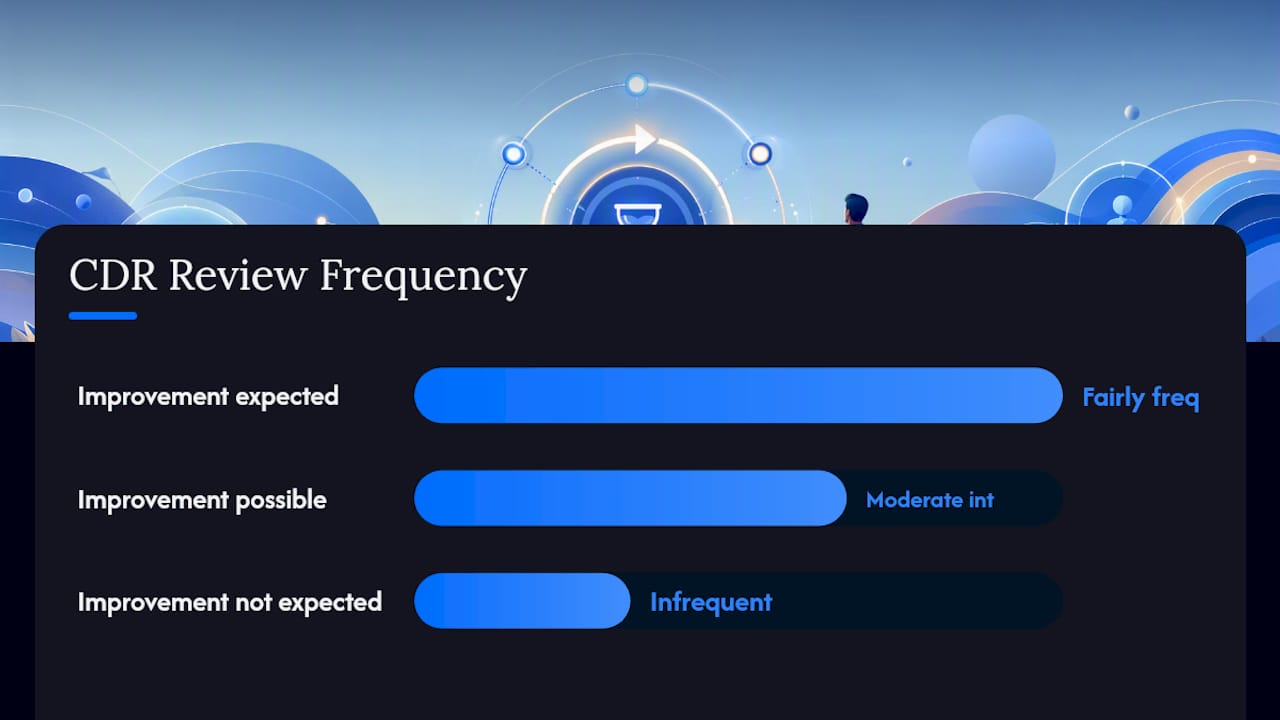
Your award notice states which category applies to you, so it's worth digging out that old paperwork if you're unsure what triggered your current review.
The legal test SSA applies is the Medical Improvement Review Standard, laid out in POMS DI 28010. Examiners compare your current functional capacity against your "comparison point decision," the most recent decision that found you disabled. If your residual functional capacity has genuinely improved and you no longer meet the disability standard, benefits stop, unless you fall under one of the Group I or Group II exceptions that allow continued benefits despite medical improvement (such as vocational therapy success or a prior fraud finding).
Timing matters more than most claimants realize. Under POMS guidance, termination is effective a few months after the month your impairment is found no longer disabling, and payments continue for that month plus a short additional period. That cushion exists so beneficiaries aren't cut off without warning.
What Your Termination Notice Must Tell You
Your notice isn't just a rejection letter. It's a legal document that must spell out specific rights, and scanning it for the right sections in the first few minutes matters more than reading it cover to cover.
Look for these elements immediately:
- The stated reason for cessation (medical improvement, work activity, or a non-medical cause).
- The exact cessation date and the month termination becomes effective.
- Your appeal deadline, usually counted in days from the date on the notice.
- Instructions for filing a request for reconsideration or hearing.
- Eligibility information for Statutory Benefit Continuation and how to elect it.
If you disagree with the decision, you have four levels of administrative appeal: reconsideration, a hearing before an administrative law judge, Appeals Council review, and finally federal district court. Each level has its own deadline, and missing one usually means starting over or losing the right to challenge that particular decision. Our guide to the SSDI appeals process walks through what to expect at each stage.
Statutory Benefit Continuation, elected through Form SSA-792, lets you keep receiving payments while your appeal is pending if you request reconsideration or a hearing within the deadline. SBC rules vary by beneficiary category and can affect Medicare premiums, so read that section of your notice carefully rather than assuming it works the same way for everyone.
Your First Two Weeks After a Termination Notice
The first fourteen days set the tone for your entire appeal. Move through these steps in order:
- Read the notice fully and write the appeal deadline somewhere you'll actually see it.
- Make copies of the original notice before you file, fax, or mail anything.
- Submit your request for reconsideration or hearing using the method the notice specifies.
- File Form SSA-792 if you want payments to continue during the appeal and you meet the eligibility rules.
- Request your complete claim file and medical records from both SSA and the state Disability Determination Services office.
- Contact your treating providers and ask for updated statements describing your current limitations.
- Reach out to a disability attorney, especially if your case involves disputed medical evidence or an SGA calculation.
Pro Tip: Timestamp everything. Keep a simple log with the date you sent each document, the method (fax, mail, online portal), and any confirmation number. If your case ever reaches a hearing, that log can settle disputes about whether something was submitted on time.
The two forms to know by name are SSA-792 for benefit continuation and the appropriate request-for-reconsideration or request-for-hearing form referenced directly in your notice. Our breakdown of what to do within 60 days of a denial letter covers similar notice language if you want a side-by-side comparison.
The Evidence That Actually Moves a Cessation Appeal
Not all documentation carries equal weight. Appeals examiners and administrative law judges respond most to evidence that's recent, specific, and tied directly to function rather than diagnosis alone.

| Evidence type | Why it matters |
|---|---|
| Recent treating-source records | Shows your condition as it stands now, not at your original approval |
| Residual Functional Capacity assessment | Translates diagnosis into concrete work limitations |
| Objective test results (imaging, labs) | Corroborates subjective symptom reports |
| Treating physician statement | Directly addresses whether medical improvement occurred |
| Work and earnings records | Clarifies SGA questions and trial work period usage |
When requesting a statement from a doctor, be specific: ask them to address your current functional limitations, whether your condition has meaningfully improved since your last SSA decision, and what work restrictions they'd document today. A vague "still disabled" note rarely holds up; a functional breakdown does.
Pro Tip: Organize submissions with a short cover letter, a chronological list of records, and labeled exhibits. Reviewers move faster and more favorably through an organized file than a loose stack of pages.
Don't overlook the Trial Work Period, which allows up to nine trial months of unlimited earnings without losing benefits, followed by a 36-month re-entitlement window where SGA rules apply differently. If your termination stems from work activity, this distinction can be the difference between a valid cessation and one worth appealing. For help translating medical records into an appeal-ready format, see how attorneys prepare written disability reports.
When to Hire a Disability Lawyer for a Termination Appeal
Some terminations are straightforward paperwork fixes. Others involve disputed medical evidence, alleged fraud, or a hearing date that's already been set, and those situations call for legal help sooner rather than later.
Consider contacting an attorney immediately if any of the following apply:
- Your file involves complex or conflicting medical records.
- SSA has alleged fraud or failure to cooperate.
- You're unsure whether you qualify for SBC or how to elect it.
- You've already missed, or are close to missing, an appeal deadline.
- An ALJ hearing has been scheduled.
A disability attorney typically files your appeal paperwork, gathers and organizes medical evidence, prepares written arguments and exhibits, represents you at the hearing, and can negotiate SBC or reinstatement issues directly with SSA. Most work on contingency, meaning fees apply only if your appeal succeeds, and an initial consultation usually costs nothing. Read more about what attorneys actually do during an appeal and how representation differs at the reconsideration stage.
Pro Tip: Retain counsel before your hearing is scheduled, not after. Attorneys need time to request records, prepare RFC arguments, and build a written case, and rushing that process in the final weeks limits what they can accomplish for you.
Why We Focus on SSDI Cessations
We built Ssdilawyer around a simple observation: claimants facing a termination notice are often more confused and more time-pressed than those filing an initial application. The deadlines are shorter, the stakes are just as high, and the paperwork, SSA-792 forms, MIRS standards, comparison point decisions, isn't written for a layperson. Our mission is connecting people in that exact situation with attorneys who handle cessation appeals regularly, not occasionally. If your benefits have stopped and you need direction now, our matching service is the fastest way to reach someone who can review your notice today.
Get Matched With an Experienced SSDI Attorney
Ssdilawyer connects you directly with attorneys who focus specifically on Title II appeals, not general practice lawyers handling disability cases as a side matter. That distinction matters when your notice cites a comparison point decision or an SGA calculation most attorneys rarely encounter.
Getting matched starts with a short intake form on our site. Have your termination notice, your Social Security number, and a rough timeline of your medical treatment ready before you start; it speeds up the matching process considerably. Most claimants hear back from a matched attorney within a few business days, well within typical reconsideration deadlines if you act promptly.
There's no fee for the matching service itself, and attorneys in our network generally work on contingency, meaning you owe nothing unless your appeal succeeds. Before committing to representation, ask any attorney about potential conflicts and confirm the fee agreement in writing. If your review process for choosing counsel matters to you, our guide on evaluating an attorney's track record is a useful companion. When you're ready, submit your case details and get matched with an attorney who handles cessation appeals for a living.
Sources
- Disability: How we decide if you still have a qualifying disability | SSA
- § 404.1596. Circumstances under which we may suspend and terminate your benefits before we make a determination. | SSA
- POMS DI 28010.001 — Medical improvement review standard and cessation procedures | SSA POMS
- How to appeal a decision the SSA made — appeals ladder | SSA