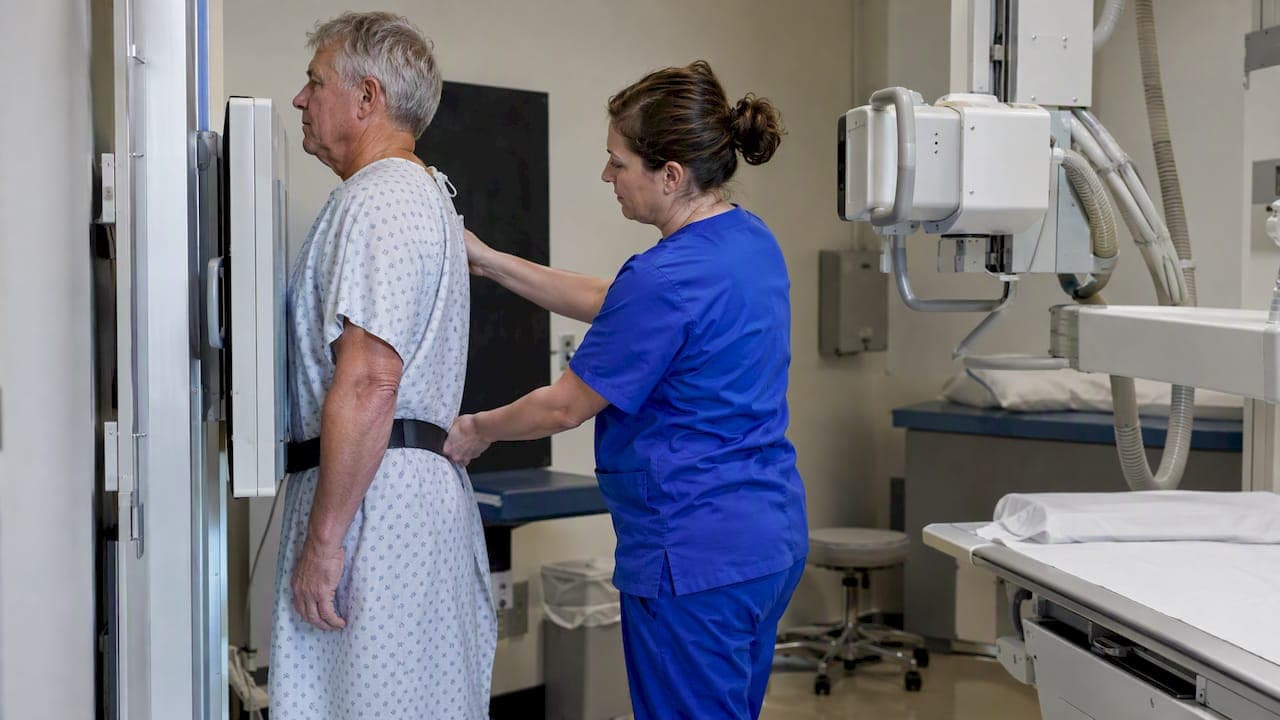
Yes, back pain can qualify for Social Security Disability Insurance (SSDI), but pain alone does not. Social Security looks for a medically documented spine condition, objective findings such as imaging and exam results, and proof that the condition keeps you from working for at least 12 months. Most back pain claims are decided on how well the medical file shows what you can no longer do.
This guide covers how the Social Security Administration (SSA) evaluates back conditions, what evidence matters, what benefits look like, and what to do if you are denied.
TL;DR
- SSA does not award benefits for pain by itself. It requires objective medical evidence of an impairment that could reasonably cause the pain.
- You must be unable to do substantial gainful activity, which means earning more than $1,690 a month in 2026 for non-blind applicants, for at least 12 months.
- Many back claims are won on how the condition limits your ability to work, not by matching a medical listing exactly.
- A denial is common and not final. You have 60 days from receiving the notice to appeal.
- An attorney can be paid only from past-due benefits, and SSA must approve the fee.
Table of Contents
- How Social Security defines disability for back conditions
- Is back pain a disability to Social Security?
- The spine listings: 1.15 and 1.16
- What evidence makes a back pain claim stronger
- What SSDI pays and what comes with it
- How long it takes
- If you are denied
- Working part-time with back pain
- Do you need a lawyer for a back pain claim?
- Our perspective
- Get matched with an SSDI attorney
- FAQ
- Sources
How Social Security defines disability for back conditions
SSDI is for people who worked, paid Social Security taxes, and can no longer work because of a medical condition. SSA's definition of disability has two parts: you cannot engage in substantial gainful activity (SGA) because of a medically determinable impairment, and that impairment is expected to last at least 12 months or result in death.
For 2026, the SGA amount is $1,690 per month for people with disabilities other than blindness. If you regularly earn more than that from work, SSA will generally find you are not disabled, whatever your diagnosis.
Two points shape every back pain claim:
- The condition must be medically determinable. A doctor's diagnosis supported by clinical and imaging evidence, not only your description of symptoms.
- The limits must be severe and lasting. A herniated disc that heals in four months does not meet the 12-month duration rule.
Is back pain a disability to Social Security?
Back pain is a symptom, not a diagnosis. SSA's musculoskeletal disability guidelines treat pain as one element in evaluating a spine disorder. It is not enough to support a finding of disability on its own. SSA wants objective evidence, such as imaging reports and physical exam findings, that shows an impairment which could reasonably produce the pain you describe.
Many applicants are surprised by this. A person can be in severe daily pain and still be denied because the file contains mostly self-reported symptoms and few documented physical signs.
Conditions that commonly appear in back pain claims
The diagnosis behind the pain is what SSA evaluates. Common ones include:
- Herniated or bulging discs
- Degenerative disc disease
- Spinal stenosis
- Radiculopathy (a compressed or irritated nerve root)
- Spondylolisthesis
- Arachnoiditis
- Failed back surgery with continuing symptoms
A diagnosis name is not a guarantee in either direction. What counts is the severity shown in your records.
The spine listings: 1.15 and 1.16
SSA keeps a "Listing of Impairments" describing conditions it considers severe enough to qualify automatically when specific criteria are met. Two apply to the spine, both in the musculoskeletal section:
- Listing 1.15: disorders of the skeletal spine resulting in compromise of a nerve root.
- Listing 1.16: lumbar spinal stenosis resulting in compromise of the cauda equina.
Both ask for a combination of imaging, exam findings, documented functional limitation and, in the current listings, a documented medical need for a walking aid or similar device. Meeting every element for the full 12 months is a high bar, and many people with serious back problems do not meet a listing exactly.
That does not end the claim. If you do not meet a listing, SSA moves on to a residual functional capacity (RFC) assessment: what you can still do despite your impairment, such as how long you can sit, stand, walk or lift. It then considers your age, education and work history. For people aged 55 to 65 whose past jobs were physical, this stage is often where a back claim succeeds, because SSA's rules treat age as a factor when deciding whether you can adjust to other work.
What evidence makes a back pain claim stronger
The claim is built from records. These are the items that carry the most weight:
| Evidence | Why it matters |
|---|---|
| MRI, CT or X-ray reports | Objective proof of the structural problem |
| Physical exam notes | Document reduced range of motion, weakness, reflex changes, positive straight-leg raise, gait problems |
| Treatment history | Shows you follow medical advice: physical therapy, injections, medication, surgery |
| Specialist records | Orthopedic, neurosurgical or pain management notes carry detail a general visit may not |
| Doctor's opinion on limits | A statement on how long you can sit, stand, lift and how often you would miss work |
| Medication side effects | Drowsiness or concentration problems that limit even sedentary jobs |
Gaps in treatment hurt
Long stretches without care make it easy for SSA to conclude the condition is not severe. If cost or access is the reason you stopped treatment, say so, and ask the provider to note it. Consistency across visits matters: if your records say you are "doing well" at every appointment while your application says you cannot sit for 20 minutes, the mismatch will be noticed.
Why exams and opinions can shape the outcome
SSA may send you to a consultative exam with a doctor you have not seen before. These visits are short, and the report can carry real weight. Understanding how an independent medical exam can affect a claim helps you prepare: describe your limits honestly and specifically, including your worst days, and do not downplay symptoms out of habit.
What SSDI pays and what comes with it
SSDI is not a percentage of your last paycheck. Your benefit is based on your lifetime average earnings covered by Social Security. According to SSA's Fast Facts, the average monthly benefit for a disabled worker in 2024 was $1,760 for new awards. That answers the common question about someone who earned $70,000 a year: higher lifetime earnings generally mean a higher benefit, up to a maximum, but there is no simple match to salary. Your own figure appears on your Social Security statement.
Medical coverage works on a delay. SSDI recipients become entitled to Medicare 24 months after their SSDI payments begin. Medicaid is not part of SSDI. It is tied to the separate, needs-based Supplemental Security Income (SSI) program. If you have little income and few resources, you may qualify for SSI as well, and SSA can review both at once.
How long it takes
SSA says decision times vary with the nature of the disability, how quickly medical evidence arrives from your providers, and whether an exam is needed. Initial applications commonly take 6 to 8 months. If you are denied, the first appeal, reconsideration, is a full review by a different examiner, and it adds more time. For a month-by-month picture, see our breakdown of how long an SSDI appeal takes from denial to decision.
If you are denied
A first denial is common, including for people with real spinal conditions. It usually means the file did not prove the case, not that the case lacks merit.
The deadline is strict. You have 60 days from the date you receive the denial notice to appeal, according to SSA. Missing it can mean starting over with a new application, which may cost you months of back pay.
What to do, in order:
- Read the denial letter. It states the reason: not severe enough, able to do past work, able to do other work, or missing evidence. Our guide to your SSA denial letter and the 60-day window explains each part.
- File the appeal before the deadline. In most cases an appeal is the right move rather than a new application. See why to appeal first instead of reapplying and reconsideration versus a new application.
- Fill the gaps. Get updated imaging, specialist notes and a doctor's statement on your work limits.
- Prepare for a hearing. If reconsideration is denied, the next step is a hearing before an administrative law judge. The full appeals process has four levels, and the hearing is where many back claims are decided.
For a broader walk-through, read SSDI denial help: what to do after a denial notice.
Working part-time with back pain
Some people worry that any work will end a claim or later benefits. SSA has rules for this. During the Trial Work Period, you can test your ability to work for 9 months without losing benefits, as long as your earnings are above the monthly threshold, which is $1,210 in 2026. Report your work to SSA. Unreported earnings complicate the 36-month Extended Period of Eligibility that follows. Details are in our guide to the trial work period.
Before you apply, remember the SGA limit of $1,690 a month. Working above it while an application is pending can lead to a denial on that basis alone.
Do you need a lawyer for a back pain claim?
You are not required to have one. But back pain claims are among the more evidence-dependent, and the outcome often depends on what is in the file and how it is presented. An attorney can gather records, ask your doctors for the right kind of statement, argue the RFC and age rules, and handle the hearing. Our overview of the role of a disability attorney in your appeal lists what that work involves, and SSDI case development shows how a file is built.
How attorneys are paid
SSA must approve the fee agreement. If you win, SSA withholds up to 25% of past-due benefits to pay the attorney directly, subject to a cap set by SSA. The figure cited for fee agreements was $9,200 as of 2024. Ask any attorney to confirm the current cap in writing, and what costs, such as records fees, you may owe. Attorneys who do not follow this fee structure can charge differently, so read the agreement before signing.
Our perspective
We see the same pattern in back pain claims. The person is hurting and cannot work, but the file says little. Visits are sparse, notes are brief, and no doctor has described what the person cannot do. The claim is then judged on what is written down, not on what the person lives with.

Three habits help most. See your treating doctors regularly and tell them about all your limits, not only the pain level. Ask a provider to state, in plain terms, how long you can sit, stand and lift. And never let the 60-day appeal deadline pass while you wait for a better file: file first, then add evidence.
Our role is to connect people who need legal help with experienced SSDI attorneys. We are a matching service, not a law firm, and we do not decide who qualifies. That decision belongs to SSA, and what an attorney can do depends on your records. The match costs you nothing.
— Gerard
Get matched with an SSDI attorney
If your back condition keeps you from working, especially if you have been denied or are close to a hearing, we can connect you with an attorney experienced in SSDI applications, appeals and hearings. Submit your case details through the form at SSDILawyer.co and a matched attorney can review your situation. See also how an attorney shapes your case strategy.
FAQ
Can you get Social Security disability for chronic back pain?
Yes, if the pain comes from a medically documented spine condition that keeps you from substantial gainful activity for at least 12 months. SSA does not accept pain alone, so imaging and exam findings are central. Many approvals come through the RFC and age analysis rather than a listing.
Is back pain classed as a disability?
Not automatically. Social Security evaluates the underlying impairment and how much it limits your ability to work. A diagnosis with strong objective evidence and documented limits can qualify. Pain with little supporting evidence usually does not.
How much will I get if I make $70,000 a year?
There is no fixed percentage. SSDI is calculated from your lifetime average earnings covered by Social Security, and higher earners generally receive more, up to a maximum. The average for new awards in 2024 was $1,760 a month, per SSA. Check your Social Security statement for your own estimate.
What insurance comes with SSDI?
Medicare starts 24 months after your SSDI payments begin. It covers hospital insurance, medical insurance and optional drug coverage. Medicaid is not part of SSDI. It is linked to SSI, which is needs-based.
Sources
- SSA: 1.00 Musculoskeletal Disorders, Adult
- SSA Red Book: How Do We Define Disability?
- SSA Red Book: What's New in 2026?
- SSA: Fast Facts & Figures About Social Security, 2025
- SSA Red Book: Overview of our Disability Programs
- SSA FAQ: How long does it take to get a decision?
- SSA Open Data: Average processing time for disability reconsiderations
- SSA Ticket to Work: Trial Work Period fact sheet
- SSA: Disability decision notice and fee information